Real Estate Sales Automation: From Manual Workflows to Structured Sales Systems


The term real estate sales automation is often interpreted too narrowly, usually as a set of tools for automated messages or reminders. In practice, automation has evolved into something much more structural. It defines how sales processes are organized, how decisions are made, and how teams operate at scale.
In earlier market conditions, real estate sales could function without strict systems. Individual agents managed their own pipelines, tracked conversations manually, and relied on personal discipline to follow up with leads. This approach still exists, but it becomes unstable as soon as volume increases. Once multiple channels, projects, and agents are involved, coordination breaks down.
Automation does not simply make these processes faster. It replaces fragmented workflows with a structured system where every action is connected, tracked, and predictable.
Table of Contents

The limitation of manual sales is not effort, but inconsistency. Even within the same company, different agents follow different routines. Some respond instantly, others delay. Some track conversations carefully, others lose context. Over time, this creates uneven performance and lost opportunities.
In high-demand markets, timing becomes critical. A delay of even a few hours can reduce the chance of conversion. Without automation, response speed depends entirely on human behavior, which is inherently unreliable at scale.
There is also the issue of visibility. As pipelines grow, it becomes increasingly difficult to understand what is happening across the business. Managers cannot accurately track performance, identify bottlenecks, or forecast outcomes. Decisions are made based on partial information rather than structured data.
Automation addresses these issues by standardizing the process. It ensures that leads are handled consistently, actions are recorded, and performance becomes measurable.

Automation introduces structure at every stage of the sales cycle. Instead of disconnected actions, the process becomes a continuous system where each step triggers the next.
Lead capture is the first layer where this change becomes visible. In modern real estate environments, inquiries come from multiple sources: websites, portals, advertising campaigns, and messaging platforms. Without automation, these leads are fragmented. With automation, they are consolidated into a single flow and immediately assigned based on predefined rules.
This is followed by communication. Instead of relying on agents to remember follow-ups, automation introduces sequences that ensure consistent engagement. Messages, reminders, and tasks are triggered based on lead behavior and timing. This removes one of the most common causes of lost deals — missed or delayed follow-ups.
As leads move through the pipeline, automation also affects qualification. Not every inquiry has the same value, and treating all leads equally reduces efficiency. By analyzing behavior and engagement, systems can prioritize leads that are more likely to convert, allowing teams to focus their effort where it matters most.
One of the most important shifts introduced by automation is the transition from intuition to data-driven decision-making. In traditional sales environments, performance is often assessed subjectively. Managers rely on feedback from agents, which may not reflect the full picture.
Automation creates a continuous data layer. Every interaction, status change, and conversion is recorded. This allows teams to analyze performance in real time, identify patterns, and adjust strategies accordingly.
For example, if a particular stage consistently shows drop-offs, it becomes visible immediately. If certain channels produce higher-quality leads, resources can be reallocated. This level of clarity is not possible without structured data collection, which automation enables by default.
The impact of automation becomes significantly more pronounced in developer-driven sales models. Unlike agent-based transactions, this involves managing projects where dozens or hundreds of units, construction stages, and complex financial conditions are handled simultaneously.
Without automation, managing this level of complexity leads to fragmentation. Data is stored in multiple places, availability becomes inconsistent, and communication between teams breaks down. This creates operational friction that directly affects sales performance.
Automation connects these layers. Leads are linked to specific units, availability is updated in real time, and every action within the sales process is reflected across the system. This creates a unified environment where teams operate on the same data, reducing errors and improving coordination.
The most visible benefit of automation is time efficiency, but the deeper impact lies in how that time is used. Instead of spending hours on repetitive tasks such as manual follow-ups or data entry, agents can focus on interactions that require human input — negotiations, consultations, and closing.
This shift also improves consistency. Every lead receives timely communication, every stage is properly tracked, and no opportunity is lost due to oversight. Over time, this leads to higher conversion rates and more predictable sales outcomes.
Another important effect is scalability. Without automation, increasing lead volume requires proportional increases in team size. With automation, the same team can handle significantly more activity because the system absorbs much of the operational load.
Automation does not only affect internal processes. It also reshapes the buyer experience. Real estate decisions are both financial and emotional, and communication plays a critical role.
Structured communication ensures that buyers receive timely and relevant information. Updates, reminders, and responses are delivered without delays, creating a smoother experience. This consistency builds trust, which is a key factor in conversion.
At scale, this becomes a differentiator. Companies that manage communication effectively outperform those that rely on manual processes, even when offering similar properties.
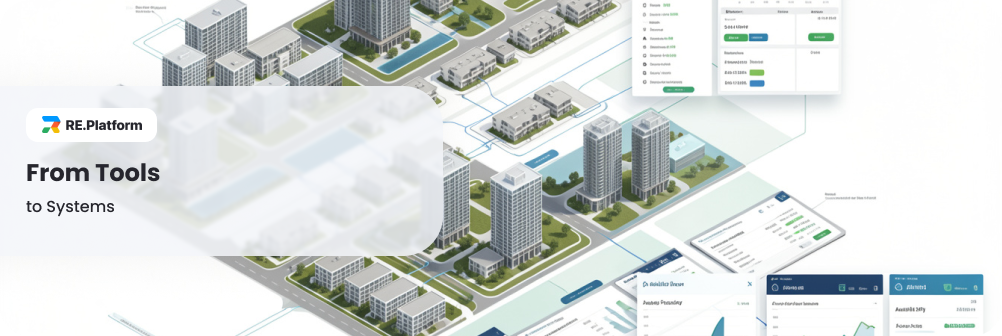
The key shift in 2026 is that automation is no longer perceived as an add-on. It has become the foundation of how sales operate. Instead of supporting existing workflows, it defines them.
This changes how real estate businesses approach growth. Scaling is no longer about increasing headcount, but about improving systems. Companies that invest in structured sales processes can handle higher volumes, maintain consistency, and make better decisions.
At the same time, automation does not replace human interaction. It removes the operational burden that limits performance, allowing teams to focus on the parts of sales that truly require expertise and judgment.
Real estate sales automation is not about technology for its own sake. It is about control, predictability, and the ability to operate efficiently in complex environments. As markets continue to evolve, the difference between high-performing teams and the rest will not be access to leads or inventory. It will be the structure of their sales processes.
Automation sits at the center of that structure, shaping how real estate businesses convert opportunities into results.