Property for Sale in Riyadh: Where to Buy, Prices in 2026, and How to Find Real Projects

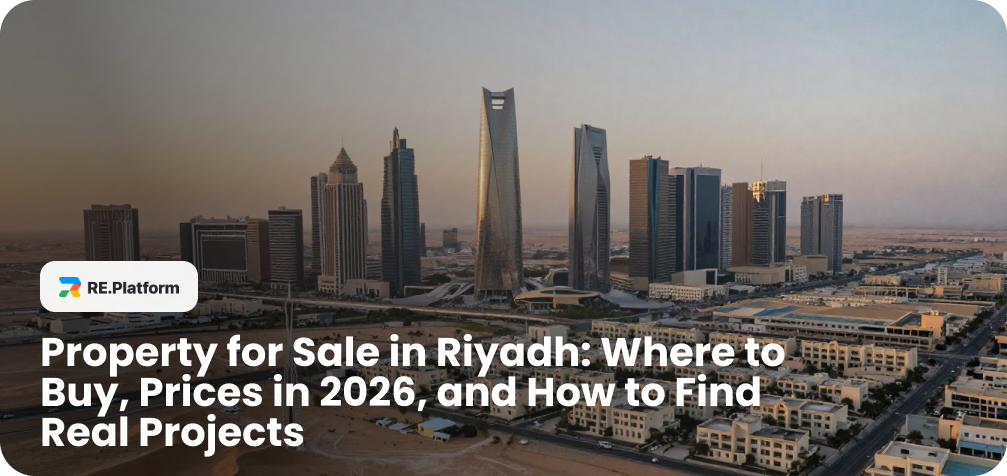
The search for property for sale in Riyadh has changed dramatically over the past two years. What used to be a fragmented process across listing portals is now shifting toward a more structured, project-based approach — especially as Saudi Arabia prepares for broader foreign ownership access and increased international demand.
Riyadh is no longer just a regional capital. It is becoming a large-scale real estate market with distinct zones, price tiers, and development clusters. For buyers and investors, this means one thing: understanding the structure of the market matters more than scrolling through listings.
Table of Contents
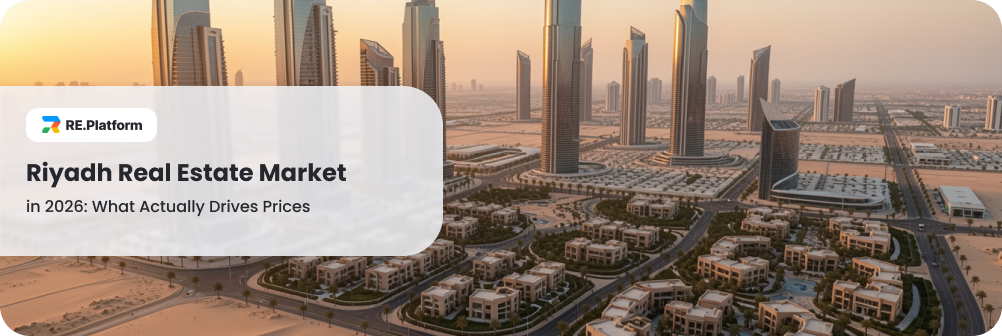
At first glance, the Riyadh market looks wide and accessible. Listings range from affordable apartments in southern districts to high-end villas in the north. But pricing is not random — it is driven by a combination of location, infrastructure access, and developer activity.
In practical terms, the city can be divided into three price dynamics:
| Zone | Market Character | Typical Buyer Profile |
|---|---|---|
| North Riyadh | Premium and luxury developments | Investors, high-income residents |
| East Riyadh | Mixed affordability and growth | Families, mid-range buyers |
| South Riyadh | Entry-level and budget options | First-time buyers |
Northern districts such as Al Malqa, Hittin, and Al Narjis continue to lead in pricing due to proximity to business hubs and new infrastructure. Meanwhile, eastern Riyadh is becoming a transition zone — still affordable, but rapidly developing.
What is important here is that buyers are not just choosing a property — they are choosing a development trajectory.
The phrase property for sale in Riyadh covers a wide range of asset types, each with its own logic of demand and pricing.
Apartments remain the most searched category, especially 1–3 bedroom units in new developments. These are often part of off-plan projects, where pricing is more flexible and payment plans are available.
Villas, on the other hand, dominate the ownership segment for families. In northern Riyadh, modern villa compounds with gated infrastructure and amenities are becoming the standard rather than the exception.
Land and development plots represent a separate investment category. These are rarely visible in traditional listings but are actively traded in growing districts where expansion is expected.
Palaces and ultra-luxury properties exist, but they form a niche market with limited transparency.
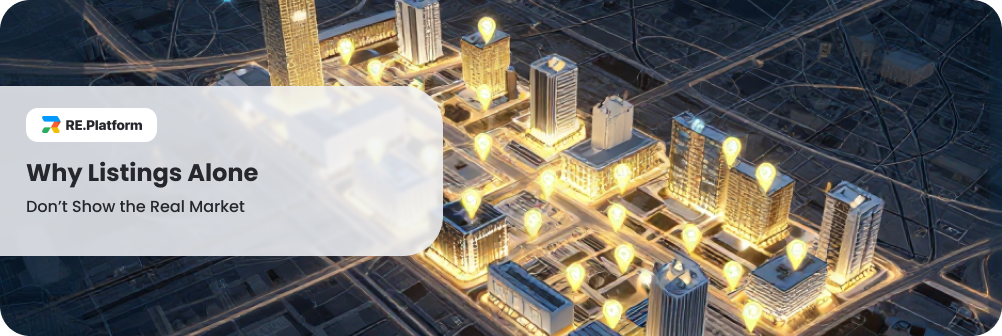
One of the key issues when searching for property for sale in Riyadh is that listing platforms do not reflect the full picture.
Listings are fragmented. Prices are often outdated. The same unit can appear multiple times with different agents. More importantly, listings focus on individual units — while real investment decisions are made at the project level.
This is why buyers increasingly shift toward platforms that aggregate developments instead of listings.
Instead of browsing isolated apartments, it becomes more efficient to explore entire residential projects, compare locations, and understand where construction activity is concentrated.
A practical way to approach this is by using structured tools like
→ https://map.re-platform.io/city/riyadh
This type of interface allows you to:
This is particularly relevant in a market where off-plan projects dominate supply growth.
Public data often shows wide ranges, but real pricing tends to cluster more tightly depending on property type.
| Property Type | Typical Price Range (SAR) | Notes |
|---|---|---|
| Studio / Small Apartment | 350,000 – 700,000 | Mostly in outer districts |
| 1–2 Bedroom Apartments | 500,000 – 1,200,000 | High demand segment |
| 3 Bedroom Apartments | 800,000 – 1,500,000 | Family-oriented |
| Villas | 1,200,000 – 4,000,000+ | Strong variation by location |
Northern Riyadh consistently sits above these averages, while southern districts provide entry-level access.
However, the key shift is not price — it is the structure of deals. Many developers now offer staged payments, making higher-value properties accessible with lower upfront capital.
Search behavior around property for sale in Riyadh shows clear patterns.
Buyers are not just typing “apartment for sale”. They are combining location, format, and intent:
This reflects a deeper shift: people are searching for projects, not just properties.
Districts attracting the most attention include:
These areas are not only residential zones — they are development clusters where infrastructure, retail, and lifestyle elements are built simultaneously.
Despite rapid growth, Riyadh is still considered an early-stage market compared to Dubai or other mature hubs.
This creates a specific type of opportunity.
Demand is rising due to population growth and economic expansion. Supply is increasing through large-scale developments. At the same time, transparency is still evolving — which means informed buyers can identify opportunities before they become obvious.
ROI levels around 4–6% are often cited, but the real upside is capital appreciation in developing districts.
Again, this is difficult to see through listings alone — but becomes clearer when analyzing project distribution across the city.
The traditional approach — browsing listings and comparing prices — is no longer sufficient.
A more effective workflow looks different: Start with understanding where development is happening. Then identify projects in those areas. Only after that compare specific units.
This is exactly why project-level exploration tools are gaining traction. Instead of asking “what property is available,” the better question becomes:
“Where is the market expanding right now?”
To explore this visually and structurally, you can use:
→ https://map.re-platform.io/city/riyadh
It provides a clearer view of how Riyadh’s real estate landscape is evolving — something that listings alone cannot offer.