Saudi Arabia Residential Real Estate Market 2026: Demand, Regulation, and a New Sales Reality


Saudi Arabia’s residential real estate market is entering a pivotal stage in 2026. What was once a largely domestic, relationship-driven market is now transforming into a structured, data-driven, and increasingly international ecosystem. Urban expansion, population growth, and regulatory reform are reshaping how residential property is developed, sold, and evaluated across the Kingdom.
Riyadh and Jeddah remain at the center of this transformation, but emerging suburban zones and coastal cities are becoming equally relevant. For buyers and developers alike, understanding how demand is evolving — and how the market actually functions — is becoming essential for making informed decisions in 2025–2026.
For international investors observing Saudi Arabia from the outside, the question is no longer whether the market is worth attention. The real challenge is understanding how it works, where opportunities are concentrated, and how new rules change the investment landscape.
Table of Contents
Saudi cities are growing at a pace not seen before. This growth is driven by a combination of internal migration, private-sector job creation, and the development of new economic zones aligned with Vision 2030. Residential demand in 2026 is shaped by three structural trends.
Buyers are increasingly prioritizing quality of life over raw square meters. Demand is strongest in neighborhoods that offer:
Controlled access and privacy
Organized street layouts
Green areas and community facilities
Schools, retail, and healthcare within 5–10 minutes
This pattern is clearly visible in northern Riyadh and newly developed coastal districts in Jeddah, where master-planned residential projects are absorbing demand faster than fragmented developments.
As private-sector employment expands, demand for mid- to high-quality apartments and townhouses remains strong. Executives and senior professionals tend to favor gated compounds and premium residential zones in Riyadh, Jeddah, and the Eastern Province, reinforcing rental stability in these areas.
Regulatory changes expected to take effect in January 2026 are reshaping buyer expectations. The ability for non-residents to own property in designated zones is increasing interest from investors across the GCC, Europe, and Asia — directly influencing liquidity, pricing, and sales velocity.
The Saudi residential market in 2026 is not driven by speculation. Instead, pricing behavior reflects structured demand and government-led urban planning. After several years of rapid growth, prices are expected to stabilize, with consistent appreciation in specific asset classes.
Expected trends include:
Villas in prime northern Riyadh districts: 4–8% annual growth
Apartments in northern Jeddah: 3–6% annual growth
Townhouses in developing suburban zones: high demand with limited supply
Premium coastal apartments: lifestyle-driven demand rather than short-term flipping
Areas benefiting from new transport links, commercial hubs, and infrastructure investment continue to outperform the broader market.
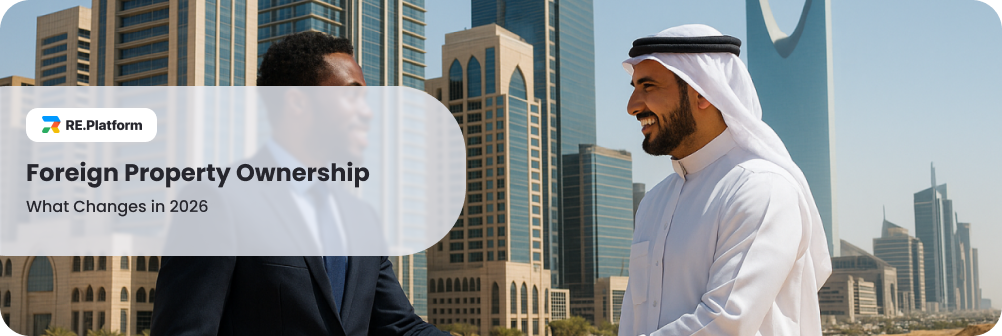
For decades, non-Saudi buyers faced strict limitations. Ownership was typically restricted to corporate structures, long-term leases, or special investment licenses.
The new foreign ownership framework, effective January 2026, changes this fundamentally.
What is now allowed:
Foreign individuals and entities may own residential and commercial property in designated zones
Non-residents may own one residential property outside designated zones for personal use
Foreign companies and funds can acquire property for business purposes
Digital fractional ownership is formally recognized
What remains restricted:
Ownership in Mecca and Medina remains limited to Muslims
All purchases must comply with zones defined by REGA
Transaction fees may reach up to 5%
Registration in the national real estate registry is mandatory
This reform is expected to significantly increase transparency and professionalize sales processes across the sector.
Saudi Arabia continues to outperform many global residential markets in rental yields.
| Market | Average Gross Rental Yield |
|---|---|
| Saudi Arabia | ~7% |
| London | 2–4% |
| New York | 3–5% |
| Singapore | 2.5–3.5% |
An additional advantage for investors is the absence of income tax on rental revenue, making net returns particularly attractive when combined with long-term appreciation.
In September 2025, a five-year rent freeze was introduced in Riyadh, preventing rent increases until 2030.
Why this matters:
Existing investors benefit from income stability, though without short-term upside
New investors can set initial rent at market level before the freeze applies
The policy discourages speculative rent inflation and promotes long-term holding
Similar measures may be extended to other cities depending on local market conditions.
Residential buyers in 2026 are more informed and selective. Their decision-making is driven by:
Location-based value — proximity to business districts, schools, healthcare, and major roads
Community quality — privacy, greenery, and neighborhood management
Future growth potential — preference for expanding districts over mature zones
Modern living standards — smart systems, security, energy efficiency, and premium finishes
| Asset Type | Location | Why It Stands Out | Investor Profile |
|---|---|---|---|
| Townhouses | Strategic suburban zones near Riyadh | Fast absorption, limited supply, strong mid-term rental demand driven by young families and professionals | Long-term yield-focused investors |
| Apartments | Northern Jeddah | Balanced pricing, proximity to new business districts, consistent demand from expats | First-time investors, income-oriented buyers |
| Premium Villas | Expanding districts of Northern Riyadh | Scarcity of high-quality stock, infrastructure-led appreciation, strong resale potential | Capital growth investors |
| Coastal Residential | Eastern Province (Al Khobar and surrounding areas) | Lifestyle-driven demand, executive tenants, limited coastal supply | Mixed-use and lifestyle investors |
| Master-Planned Communities | Emerging urban expansion zones | Integrated infrastructure, schools, retail, predictable demand | Institutional and portfolio investors |
Short-term flipping is becoming less common. Long-term ownership aligned with infrastructure growth is now the dominant strategy.
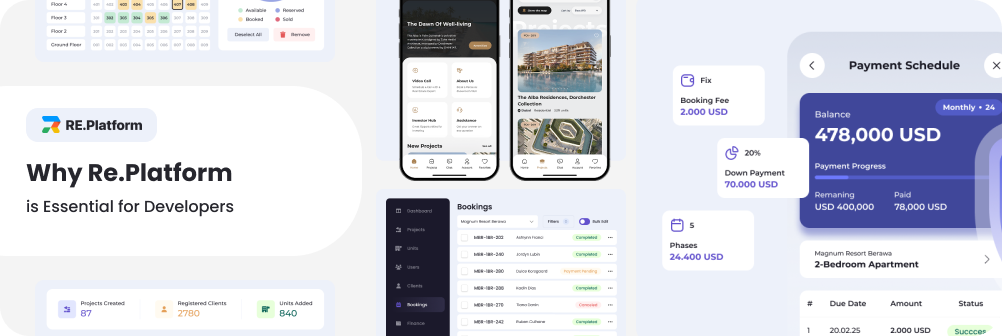
As the residential market becomes more complex and international, sales operations are under pressure. Many developers still rely on fragmented tools, manual inventory tracking, and static presentations.
RE.Platform addresses this gap by providing a unified Real Estate CRM built specifically for developers — enabling structured inventory management, transparent pricing, and scalable sales processes aligned with international buyer expectations.
In a market where regulation, buyer behavior, and competition are evolving simultaneously, modern sales infrastructure is no longer optional.
| Feature | Benefit for Developers |
|---|---|
| Interactive Property Catalog | Showcase every property interactively with live data and filtering by price, area, layout, or status. |
| Developer-Focused CRM | Manage leads, deals, and client communications efficiently, with full integration into the catalog and booking system. |
| AI Assistants & Chatbots | Provide instant, 24/7 support for potential buyers, answer queries, and route hot leads to sales managers. |
| Online Booking & Payments | Enable secure online bookings, payment processing, and contract generation to streamline sales. |
| Sales Reports & Analytics | Monitor performance in real-time, track KPIs, and make data-driven decisions for maximum ROI. |
| Mobile Apps (iOS & Android) | Offer international buyers seamless mobile access, boosting visibility and engagement. |
With these capabilities, developers can attract, engage, and convert foreign buyers efficiently, turning the policy shift into real business growth.
Saudi Arabia’s residential real estate market in 2026 offers a rare combination of strong rental yields, predictable growth, and regulatory openness to international capital. The market is no longer experimental — it is maturing fast.
For investors and developers who understand how demand, regulation, and sales operations intersect, 2026 represents a genuine opportunity.
The market is opening. Those prepared for its new rules will move first — and move faster.