How CRM Helps Businesses Grow: From Fragmented Operations to Scalable Systems


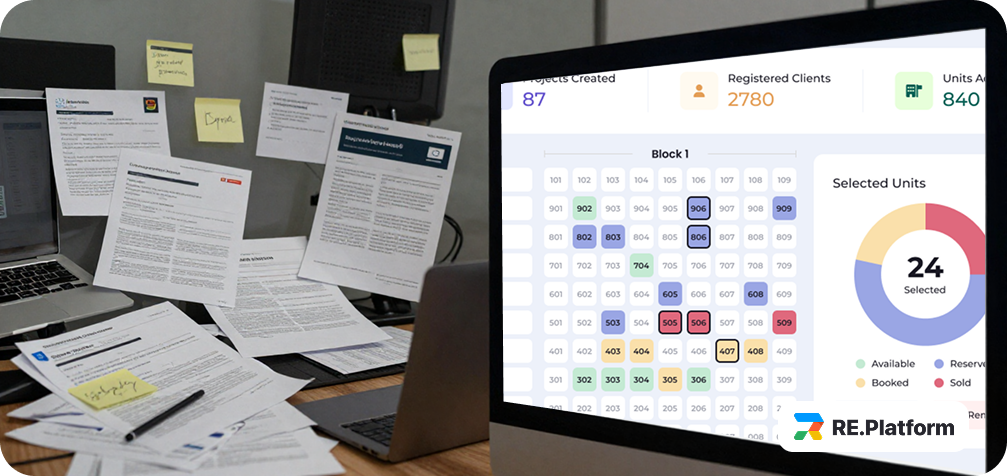
There is a specific moment in most growing companies when effort stops being enough.
In the early stages, everything works on proximity. Founders know every client personally. Sales conversations happen in shared chats. Marketing campaigns are tracked in spreadsheets. Customer issues are solved by whoever notices them first. Revenue may increase, but the structure behind it remains fragile.
Then complexity rises. More leads. More employees. More channels. More expectations. What used to feel manageable becomes noisy. Conversations get lost. Follow-ups are delayed. Managers ask for updates that no one can confidently provide. At that point, the problem is no longer sales or marketing — it is operational architecture.
This is where CRM systems stop being optional software and start becoming core infrastructure.
This article explains how CRM helps businesses across different industries move from fragmented workflows to structured, scalable execution — and why CRM adoption has become a baseline requirement rather than a competitive advantage.
Table of Contents
Businesses rarely notice how much time is lost inside unstructured processes. A sales manager manually checking whether a colleague already contacted a lead. A marketing specialist exporting data to build a report that should have existed automatically. A director asking three departments for numbers that do not match.
Individually, these frictions seem minor. Collectively, they consume strategic focus.
Companies operating without CRM often rely on personal discipline rather than systemic enforcement. If an employee forgets to follow up, there is no mechanism to catch it. If someone leaves the company, part of the client history leaves with them. Reporting becomes reactive and retrospective instead of real time.
Operational chaos does not always reduce revenue immediately. What it reduces first is predictability. And predictability is what allows businesses to scale.
When implemented correctly, CRM does not simply store contact information. It defines how work flows.
Leads enter through predefined channels. They are assigned automatically according to rules. Sales stages are standardized. Required fields prevent incomplete data. Tasks are triggered by behavior, not memory. Communication history is centralized.
This structural discipline changes management behavior. Instead of asking, “What is happening with this deal?”, leaders see it. Instead of chasing updates, they analyze patterns: where deals stall, which channels convert, which managers outperform.
One mid-market B2B company reported that after implementing CRM properly, pipeline forecasting variance dropped dramatically. Before CRM, projections were optimistic estimates. After CRM, they were based on stage probability and historical velocity. The result was not only better reporting, but better strategic planning.

While the structural logic of CRM is universal, its application varies depending on the business model.
In retail and e-commerce, CRM primarily strengthens customer lifecycle management. The focus shifts from isolated transactions to long-term relationships. Companies begin tracking behavior over time: frequency, product preference, engagement history. Campaigns become behavior-driven rather than generic. Over time, retention improves because communication becomes relevant.
In B2B environments, the emphasis is pipeline transparency. Long sales cycles involve multiple touchpoints and stakeholders. Without CRM, memory fills the gaps. With CRM, every interaction becomes part of a structured timeline. Managers no longer rely on subjective deal confidence; they rely on stage progression and historical data.
Service businesses experience a different shift. CRM centralizes context. Support teams no longer operate blindly. They see previous interactions, service history, and open tasks instantly. Response becomes faster and more consistent. Customer experience stabilizes.
Real estate presents perhaps the clearest example of why generic systems are often insufficient. Developers manage multiple projects, hundreds of units, staged releases, and long buyer journeys. Here, traditional “deal-centric” CRM logic fails to capture operational reality.
That is why solutions such as CRM for Real Estate are designed around inventory, unit status, reservation logic, and project-level reporting. Instead of forcing real estate workflows into abstract pipelines, these systems reflect how developers actually operate. The benefit is not only sales control but strategic visibility: which projects move faster, which unit types convert better, where marketing quality differs.
One overlooked impact of CRM is cultural. Before structured systems, performance conversations are often emotional. Managers argue about effort. Sales teams defend subjective deal confidence. Marketing debates attribution.
After CRM adoption, discussions become analytical. Data reduces ambiguity. Performance gaps become visible and measurable. Accountability becomes structural rather than personal. Over time, companies shift from reactive firefighting to proactive optimization. Instead of asking why revenue dropped last quarter, they see early signals in pipeline velocity or lead quality.
CRM does not eliminate problems. It surfaces them early.
It is important to acknowledge that not all CRM implementations succeed.
Failure usually does not happen because the software is inadequate. It happens because processes were unclear before digitization. If a company does not understand its own sales stages, automating them only digitizes confusion.Another frequent mistake is excessive customization. Businesses attempt to mirror every minor variation inside the system, creating complexity that discourages daily use. CRM adoption depends on usability and leadership commitment.
Successful companies treat CRM not as an IT installation but as an operational redesign.
Over time, CRM becomes more than an efficiency tool. It becomes a decision engine.
When leadership evaluates expansion into new markets, they analyze conversion patterns stored in CRM. When pricing strategies are reconsidered, historical deal data provides context. When hiring decisions are made, workload metrics support planning.
Businesses that rely on structured data adapt faster. They know their numbers not quarterly, but continuously. In this sense, CRM is not about software. It is about institutional memory and scalable structure.
Is CRM only relevant for sales-driven companies?
Any organization interacting with customers, partners, or clients benefits from structured relationship management. Sales may be the entry point, but marketing, service, and leadership gain equally.
How quickly can CRM improve efficiency?
Operational clarity often improves within months, especially in response time and reporting accuracy. Strategic benefits accumulate over time.
Do small companies need CRM, or only large enterprises?
Small companies arguably benefit the most because they build scalable foundations before complexity becomes overwhelming.
Is industry-specific CRM necessary?
In sectors with unique workflows — such as real estate or project-based businesses — tailored solutions reduce friction and improve adoption.