How Digital Transformation Is Reshaping the Real Estate Development Market in KSA

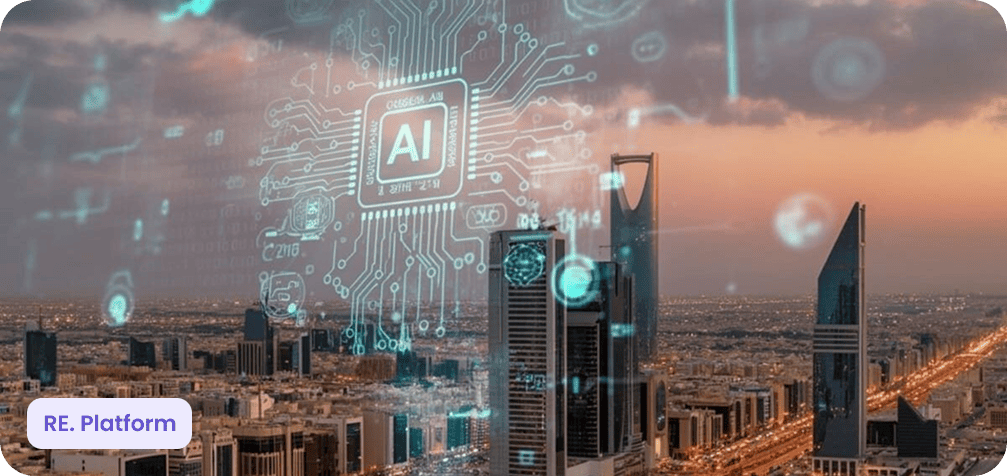
The real estate development sector in the Kingdom of Saudi Arabia is undergoing one of the fastest digital shifts in the world. As Vision 2030 accelerates the diversification of the national economy, developers are facing new expectations regarding efficiency, transparency, service quality, and long-term asset performance. Digital transformation is no longer perceived as an optional enhancement—today, it is a strategic requirement for companies that aim to grow, compete, and remain relevant in a market that is modernizing at record speed.
Across KSA, major developers are gradually replacing legacy processes with integrated digital ecosystems. Technologies such as AI-powered analytics, digital twins, IoT-driven building management, blockchain-based contracts, automated facility operations, and advanced customer platforms are redefining how assets are designed, constructed, marketed, and maintained. The result is a new generation of real estate projects—more efficient, profitable, data-driven, and fully aligned with the expectations of investors, end users, and government authorities.
This article explores how digital transformation is reshaping the Real Estate Development market in KSA, what technologies are driving change, and how companies like Polygant support developers in accelerating digital maturity at scale.
Table of Contents
Real estate has always been a data-intensive and operationally complex sector. However, the rapid pace of Saudi Arabia’s infrastructure expansion, alongside stronger government regulation and rising customer expectations, has made traditional development methods insufficient.
| Factor | Description | Impact on Developers |
|---|---|---|
| Vision 2030 Execution | Large-scale national projects and smart cities require advanced technology adoption across development cycles. | Developers must meet digital compliance and efficiency standards. |
| Smart City Integration | Projects like NEOM, AMAALA, and Diriyah Gate demand next-generation digital infrastructure. | Developers must integrate data platforms, IoT, and automation from early design stages. |
| Market Competition | Increased competition from global players and regional developers. | Digital capabilities become a core differentiator. |
| Investor Expectations | Investors now demand transparency, risk mitigation, and predictive analytics. | Data-driven reporting and automated project tracking become essential. |
| Customer Behavior Shift | Buyers prefer digital-first interactions, immersive property exploration, and smart living experiences. | Developers must deliver omnichannel digital customer journeys. |
The conclusion is straightforward: without a solid digital strategy, real estate developers risk losing contracts, investors, and market relevance.
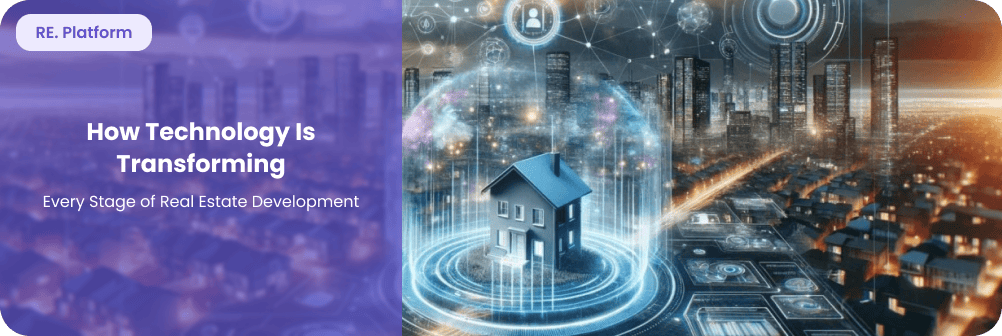
Digital transformation in real estate is not limited to asset management or marketing. It affects the entire lifecycle—from land acquisition to long-term facility operations. Below are the core transformation layers shaping the market today.
Traditional feasibility assessments rely heavily on manual surveys and fragmented data. Today, developers in KSA are leveraging tech-driven tools to make decisions faster and with higher accuracy.
AI-powered predictive analytics for land valuation
Satellite and GIS mapping systems to accelerate due diligence
Automated risk modeling platforms to evaluate development scenarios
Market intelligence dashboards for demand forecasting
These solutions reduce feasibility study timelines from months to weeks.
Digital twins are becoming a standard in new KSA megaprojects. They allow developers, investors, and regulators to collaborate on a single source of truth.
Real-time simulation of structural and mechanical performance
Multi-stakeholder coordination with fewer design conflicts
Energy optimization and sustainability modeling
Lifecycle cost forecasting and maintenance planning
The value lies not only in precise design but also in long-term asset performance.
Construction remains one of the least digitized segments globally, yet in KSA the shift is accelerating.
AI-driven scheduling and risk forecasting
Real-time site monitoring via IoT sensors and drones
Automated procurement and supply chain tracking
Digital SOPs and quality-control workflows
As a result, developers report faster delivery, fewer delays, and stronger cost discipline.
The customer experience in real estate is undergoing a complete overhaul. Buyers and investors now expect digital-first engagement throughout their journey.
Virtual property tours and 3D visualizations
Automated booking and reservation portals
Smart pricing engines with dynamic adjustment
Centralized CRM platforms connected to marketing channels
This approach increases conversion rates and reduces customer acquisition costs.
Smart operations have become essential for long-term asset performance. IoT-enabled buildings reduce operational costs and improve user satisfaction.
Predictive maintenance using IoT sensors
Energy management and consumption analytics
Automated access control and visitor management
Integrated dashboards for facility teams
Developers who deploy smart FM systems significantly improve asset ROI.
The following table summarizes the digital technologies most frequently adopted by real estate developers in the Kingdom:
| Technology | Purpose | Impact on Real Estate Developers |
|---|---|---|
| AI & Machine Learning | Forecasting, demand modeling, risk mitigation | Higher accuracy in planning, pricing, and project management |
| Digital Twins | Asset modeling and simulation | Reduced rework, better coordination, lifecycle optimization |
| IoT Sensors | Real-time building operation monitoring | Lower energy costs, predictive maintenance, enhanced safety |
| Blockchain-Based Transactions | Secure contracts, automated workflows | Faster deals, reduced fraud, improved legal transparency |
| Smart CRM and Customer Platforms | Omnichannel customer management | Higher conversions, improved customer satisfaction |
| Construction Automation | Streamlining building processes | Faster delivery and reduced human error |
| Cloud-Based Ecosystems | Unified data flow across departments | Seamless multi-team collaboration |
These technologies are not exclusive to megaprojects—they are becoming increasingly accessible to mid-sized developers as well.
Beyond efficiency and cost reduction, digital transformation provides strategic advantages that reshape entire business models.
Stronger compliance with national digital requirements
Higher investor trust due to transparent, real-time reporting
Improved project planning accuracy
Lower operational and energy costs across assets
Faster go-to-market and higher customer acquisition rates
More predictable, stable, and scalable long-term revenue
In other words, digital transformation strengthens every layer of a developer’s value chain.
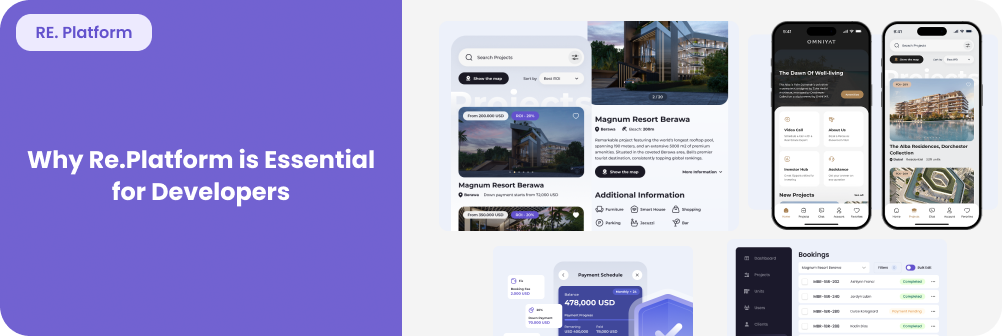
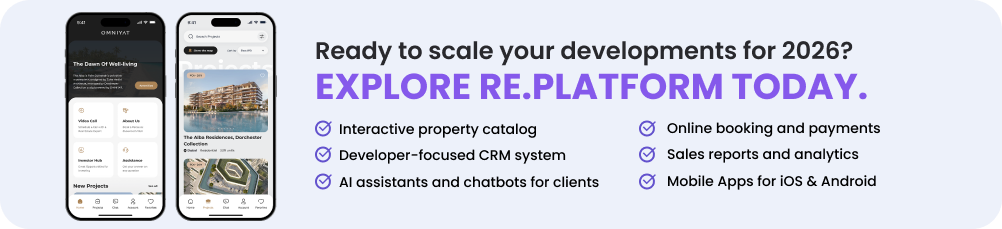
RE.Platform is designed to equip developers with all the tools needed to succeed in a newly internationalized market:
| Feature | Benefit for Developers |
|---|---|
| Interactive Property Catalog | Showcase every property interactively with live data and filtering by price, area, layout, or status. |
| Developer-Focused CRM | Manage leads, deals, and client communications efficiently, with full integration into the catalog and booking system. |
| AI Assistants & Chatbots | Provide instant, 24/7 support for potential buyers, answer queries, and route hot leads to sales managers. |
| Online Booking & Payments | Enable secure online bookings, payment processing, and contract generation to streamline sales. |
| Sales Reports & Analytics | Monitor performance in real-time, track KPIs, and make data-driven decisions for maximum ROI. |
| Mobile Apps (iOS & Android) | Offer international buyers seamless mobile access, boosting visibility and engagement. |
With these capabilities, developers can attract, engage, and convert foreign buyers efficiently, turning the policy shift into real business growth.
Digital transformation is reshaping the Real Estate Development market in KSA at an unprecedented pace. As the Kingdom continues to build the world’s most advanced infrastructure and smart urban environments, developers must evolve into fully digital, data-driven organizations to remain competitive.
Technologies such as AI, digital twins, IoT, and smart platforms are no longer future concepts—they are essential tools influencing planning, construction, marketing, operations, and long-term asset performance. Companies that invest in digital transformation today will lead the market tomorrow.
RE.Platform supports developers in KSA by delivering practical, scalable, and strategically grounded digital solutions that align with market expectations and national transformation goals. The future of real estate in the Kingdom is digital, intelligent, and experience-centric—and Replatformt is ready to guide developers through every step of that journey.