How to Choose a Real Estate CRM: A Practical Guide


Choosing the right software can quietly define the future of a real estate business. In an industry where timing, relationships, and data accuracy directly impact revenue, a CRM is no longer just a contact list — it is the operational backbone of the agency.
Today’s market offers dozens of CRM solutions promising automation, growth, and better conversions. Yet many agencies still struggle with poor adoption, fragmented data, or tools that simply don’t match how real estate actually works. This guide breaks down what a real estate CRM really is, how developers and agencies use it in practice, and how to choose a system that supports growth instead of slowing it down.
Table of Contents
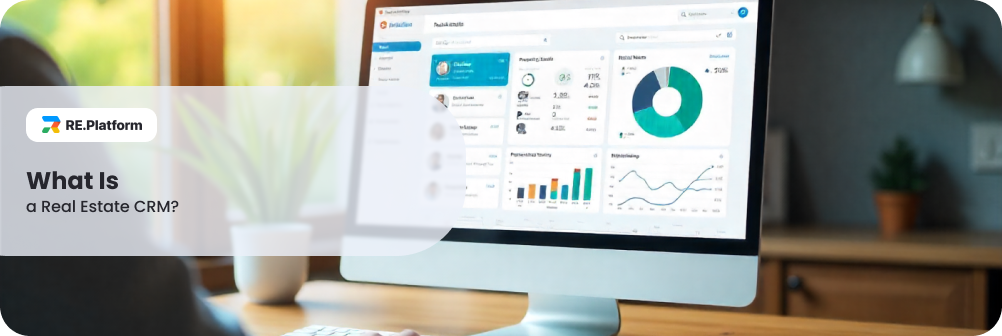
A real estate CRM is often described as a database for contacts, but in practice it plays a much larger role in how modern real estate businesses operate. At its core, it is the system where every interaction, relationship, and opportunity is brought together into a single, structured environment. Instead of scattered spreadsheets, inboxes, and notes, agents and developers work from one source of truth that reflects the full lifecycle of a client relationship.
In a real estate context, a CRM stores far more than names and phone numbers. It captures the history behind each lead and client — when the first contact happened, which properties they viewed, how they prefer to communicate, and what stage of the transaction they are currently in. Over time, this data turns into a valuable asset, allowing teams to understand not only who their clients are, but also how they behave and what motivates their decisions.
What truly differentiates a real estate CRM from a generic customer management system is its ability to support the transaction-driven nature of the industry. Buying, selling, or leasing property is rarely a linear process. It involves long decision cycles, multiple touchpoints, and coordination between agents, clients, lenders, and legal parties. A purpose-built CRM is designed to manage this complexity by connecting conversations, tasks, documents, and timelines in a way that reflects how real estate deals actually unfold.
Equally important is the role a CRM plays after a deal is closed. In many agencies, past clients represent the most valuable source of future business, whether through repeat transactions or referrals. A real estate CRM helps maintain these relationships by keeping client history accessible and enabling thoughtful, timely follow-ups based on real events rather than generic marketing blasts. Over time, this turns one-time transactions into long-term client relationships.
In short, a real estate CRM is not just a tool for managing leads — it is the operational backbone of a modern real estate business. When implemented correctly, it supports growth, improves client experience, and gives teams the visibility they need to make better decisions at every stage of the property lifecycle.

One of the biggest operational challenges in real estate is scattered data. Emails live in inboxes, call notes in spreadsheets, property preferences in agents’ heads. A CRM solves this by acting as a single source of truth.
When integrated with listing platforms or IDX websites, a CRM can also show:
which listings a lead viewed
how often they return to certain properties
what price ranges attract the most attention
This context allows agents to have more relevant conversations — and faster conversions.
Modern CRMs automatically log:
emails
calls
chat conversations
form submissions
This visibility prevents leads from falling through the cracks and ensures timely follow-ups.
More advanced systems support automated lead routing, assigning inquiries based on:
agent availability
location expertise
deal type (rent, resale, commercial)
The result is faster response times and better lead-to-agent matching.
Real estate sales depend on consistency. CRMs help enforce it.
Automation features typically include:
follow-up reminders
email and SMS sequences
post-viewing messages
milestone-based re-engagement
For example, a CRM can automatically:
remind an agent to follow up after a showing
trigger anniversary messages after a deal closes
re-engage past clients at predictable lifecycle points
This keeps relationships active without increasing manual workload.
Managing contracts, disclosures, and transaction documents manually is risky and time-consuming.
A CRM with built-in transaction management allows teams to:
store documents securely
track deal stages
reduce duplicate data entry
maintain compliance records
This frees agents to focus on revenue-generating activities instead of paperwork.
Without data, growth decisions are guesswork.
CRM reporting tools help agencies monitor:
lead conversion rates
agent productivity
deal velocity
commission distribution
These insights allow leadership to:
reward top performers
identify training gaps
adjust processes before problems scale
Real estate work happens outside the office. A CRM must reflect that reality.
Strong mobile support means agents can:
log notes immediately after meetings
update deal stages on the go
access client history during showings
Offline access is equally important, especially when connectivity is unreliable. If a CRM is difficult to use on mobile, adoption will suffer — regardless of how powerful it looks on paper.

Choosing a real estate CRM is less about finding the platform with the longest feature list and more about understanding how your business actually operates day to day. Many agencies make the mistake of starting with vendor comparisons before clearly defining their own needs — and that’s usually where problems begin.
The first step is to take an honest look at your agency’s structure. A team of five agents handling residential rentals will require a very different system than a large brokerage managing commercial deals across multiple cities. Transaction volume, deal complexity, reporting requirements, and even internal communication habits all influence which CRM will feel intuitive rather than burdensome. A system that doesn’t align with existing workflows often creates friction instead of efficiency, no matter how advanced it looks.
Integration is another factor that tends to be underestimated. A CRM rarely works in isolation. It needs to connect smoothly with listing platforms, transaction management tools, analytics systems, and sometimes financial or compliance software. When integrations are weak or require manual workarounds, agents end up duplicating tasks, which defeats the purpose of automation and leads to poor adoption across the team.
Usability matters just as much as functionality. In real estate, time is fragmented — agents move between showings, calls, meetings, and site visits. If a CRM requires too many clicks or feels confusing on mobile, it will be ignored. The best systems are the ones agents actually want to use because they simplify daily work rather than adding another layer of complexity.
This is why testing a CRM in real conditions is critical. Demos and sales presentations rarely reflect real-world usage. Running a short pilot with real data and a small group of agents quickly reveals whether the system supports your processes or forces you to change them. Feedback from those users often highlights issues that would otherwise only surface months after full deployment.
Finally, think long-term. A CRM should support growth, not just current operations. As your agency scales, adds new services, or expands into new markets, the system should be flexible enough to evolve without requiring a complete replacement. Choosing a CRM is a strategic decision — one that impacts efficiency, client experience, and revenue far beyond the first year of use.
| Feature | Why It Matters |
|---|---|
| Contact Management | Centralized client profiles, tagging, and history |
| Marketing Automation | Consistent lead nurturing and follow-ups |
| Scalable Communication | Mass email, SMS, and call tools |
| Integrations | Sync with listings, finance, and reporting systems |
| Dual Lead Assignment | Faster deals by involving agents and lenders simultaneously |
| Mobile Access | Real-time updates from anywhere |
| Reporting & Analytics | Data-driven decisions and fair compensation |
These features separate real estate-specific CRMs from generic business platforms.
A real estate CRM is not just another software subscription — it is infrastructure. The right system improves visibility, consistency, and client experience across every stage of the transaction.
Agencies that invest time in choosing a CRM aligned with their workflows, team structure, and growth strategy gain more than efficiency. They build resilience, scalability, and long-term competitive advantage in an increasingly data-driven market.