Key Features of the Real Estate Market in Saudi Arabia: Trends, Regulations, and Opportunities

The real estate market in Saudi Arabia is undergoing one of the most profound transformations in decades. Driven by sweeping reforms, mega-projects and a shifting regulatory landscape, the Kingdom is rapidly evolving from a largely closed domestic market into a hotspot for both regional and international real estate investment. For developers, investors, and proptech platforms, understanding these changes isn’t optional — it’s essential.
This article explores the distinctive characteristics of the Saudi real estate market, examines how the Vision 2030 and proptech trends shape demand, outlines current legal frameworks (as of 2025), and highlights why now is a critical moment to engage.
Table of Contents
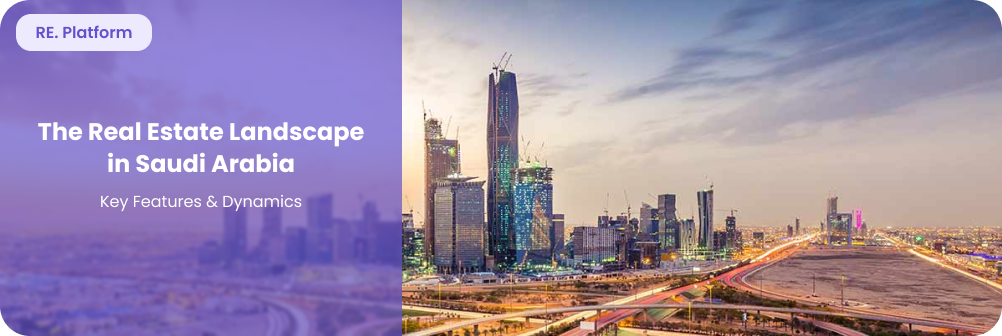
Saudi Arabia’s real estate market is unique compared to global norms — shaped by its demographics, economic ambitions, and urbanization policies. Some of the standout features:
Rapid population growth and urbanization — demand for housing and infrastructure remains high.
Government-led mega-projects & infrastructure investments — large-scale initiatives that catalyze development far beyond standard supply-and-demand cycles.
Fragmented but evolving regulatory environment — recent reforms have begun to open up the market to foreign investors (with caveats).
Strong demand in residential, commercial, and mixed-use real estate — covering housing, offices, retail, and tourism-driven assets.
Growing appetite for modern, technology-enabled developments — luxury, smart buildings, mixed-use compounds, digital booking/management systems.
According to local real estate analyses, price growth across major cities remains robust, driven by limited supply relative to demand, and by the inflow of capital into new urban and commercial zones.
Below is a quick breakdown of demand drivers vs supply constraints.
| Demand Drivers | Supply Constraints / Market Challenges |
|---|---|
| Young and growing population demographics | Limited availability of modern housing stock in many urban areas |
| Vision 2030 mega-projects (new cities, entertainment/tourism zones) | Regulatory complexity and evolving laws, especially for foreigners |
| Rising middle class & growing purchasing power | Infrastructure gaps: transport, utilities, smart-home readiness |
| Demand for commercial & mixed-use spaces (offices, retail, hospitality) | High cost of construction materials and rising labor costs |
| Increasing digital adoption among consumers & buyers | Traditional sales models → resistance to digital transformation among some developers/agents |
This mismatch between strong demand and constrained supply — combined with high barriers to entry — has created a market ripe for transformation and innovation.
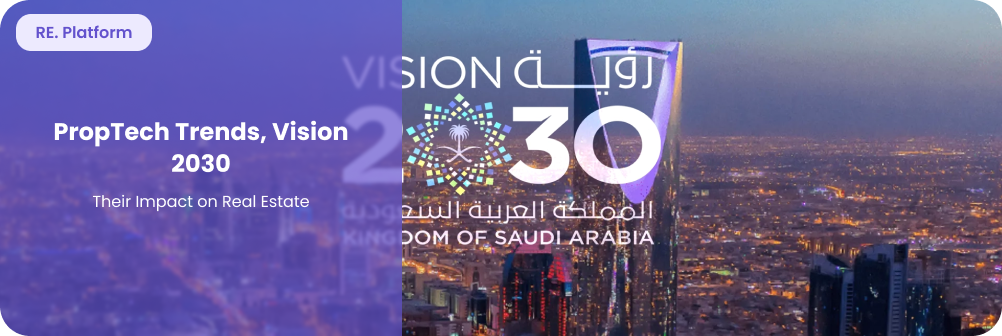
The Kingdom’s long-term strategy under Vision 2030 aims to diversify away from oil, and real estate is a central pillar. Massive investments into infrastructure, tourism, entertainment, and new city development are transforming urban landscapes.
With these changes, the digital evolution of real estate — PropTech — becomes more than optional: it becomes a necessity. Here’s how PropTech + Vision 2030 shape the market:
Smart cities & modern infrastructure: Mega-projects such as upcoming urban centers and coastal developments demand state-of-the-art residential and commercial assets — and buyers expect digital conveniences (online booking, virtual tours, smart homes, remote management).
Transparency and formalization: As regulations tighten and more foreign investment flows in, there’s a growing need for transparent systems — digital registration, e-contracts, secure payments — favoring developers using robust proptech platforms.
Scale & efficiency: Rapid demand puts pressure on developers to deliver quickly and manage large portfolios; digital tools (CRM, property catalogs, analytics) help manage scale, compliance, and client servicing efficiently.
Global investment readiness: As foreign buyers are gradually allowed (see below), developers with tech-ready infrastructure will have a competitive edge in attracting international clients.
In this environment, PropTech becomes a strategic asset — not just a “nice-to-have”, but a differentiator that can determine success or failure in Saudi real estate markets.
As of 2025, Saudi regulations still impose certain constraints on property ownership — especially for non-Saudis. But reforms underway indicate a trajectory toward gradual liberalization, potentially reshaping investor access.
Key details as of 2025:
The Kingdom is preparing to allow non-Saudi citizens to own certain properties under regulated conditions from 2026.
Ownership rights for foreigners will be limited to designated zones; the exact geographic map is still to be officially released.
Religious cities — such as the holy cities of Mecca and Medina — remain subject to special restrictions, so foreign direct ownership there is heavily regulated or prohibited.
Buyers — especially foreigners — may face additional fees, registration requirements, and compliance obligations compared to domestic buyers.
Despite these caveats, the new legal reforms mark a historic pivot. Opening up to foreign investment aligns with broader economic diversification goals and invites capital inflow, which in turn increases demand for residential, commercial, and mixed-use developments.
For developers operating with foresight, this transitional period offers a window to prepare: register projects, build transparent sales & management processes, and adopt proptech solutions that streamline every phase — from lead capture to contract signing and post-sale management.
An important recent development: the capital city, Riyadh, has enacted a five-year freeze on rent increases for both residential and commercial properties. This measure aims to stabilize the market amid rapid price surges.
While this may restrain short-term rental yield growth, it also signals growing government intervention and regulation — making compliance, transparency, and value-added features (through quality, services, technology) more important than ever. Developers who invest in digital management, maintenance, tenant services, and long-term value will win trust and loyalty in a regulated environment.
High demand + limited supply: demographic growth plus rising purchasing power create sustained demand.
Regulatory shift toward openness: upcoming reforms unlock new buyer categories, including foreigners.
Infrastructure & mega-projects fueling growth: Vision 2030 projects will raise land and property values.
PropTech readiness becomes competitive advantage: developers using modern digital tools will stand out to investors and clients alike.
If you plan to develop, invest, or manage real estate projects in Saudi Arabia, entering the market now — while demand is ramping but competition among developers is still establishing — could yield substantial gains.
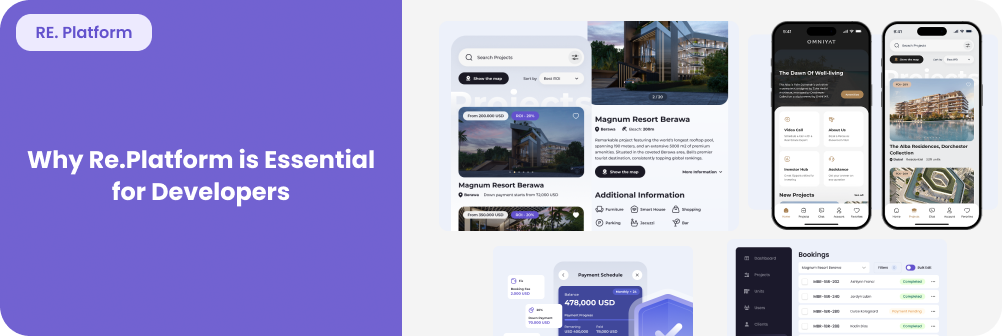
Re.Platform is designed to equip developers with all the tools needed to succeed in a newly internationalized market:
| Feature | Benefit for Developers |
|---|---|
| Interactive Property Catalog | Showcase every property interactively with live data and filtering by price, area, layout, or status. |
| Developer-Focused CRM | Manage leads, deals, and client communications efficiently, with full integration into the catalog and booking system. |
| AI Assistants & Chatbots | Provide instant, 24/7 support for potential buyers, answer queries, and route hot leads to sales managers. |
| Online Booking & Payments | Enable secure online bookings, payment processing, and contract generation to streamline sales. |
| Sales Reports & Analytics | Monitor performance in real-time, track KPIs, and make data-driven decisions for maximum ROI. |
| Mobile Apps (iOS & Android) | Offer international buyers seamless mobile access, boosting visibility and engagement. |
With these capabilities, developers can attract, engage, and convert foreign buyers efficiently, turning the policy shift into real business growth.
The Saudi real estate market in 2025-2026 stands at the threshold of dramatic change. A unique combination of demographic pressure, broad economic reforms, major infrastructure and urban development under Vision 2030, and growing openness to international investment makes this a transformative era.
While regulations remain in flux and challenges exist — from legal clarity to compliance and competition — the long-term trends point toward growth, demand diversification, and rising asset values.
For developers and investors, success will not just depend on building more — but on building smarter. Those who adopt proptech tools, prepare for foreign demand, and deliver transparency, flexibility and modern customer experience will be best positioned for the next wave of growth in one of the world’s most dynamic real estate markets.