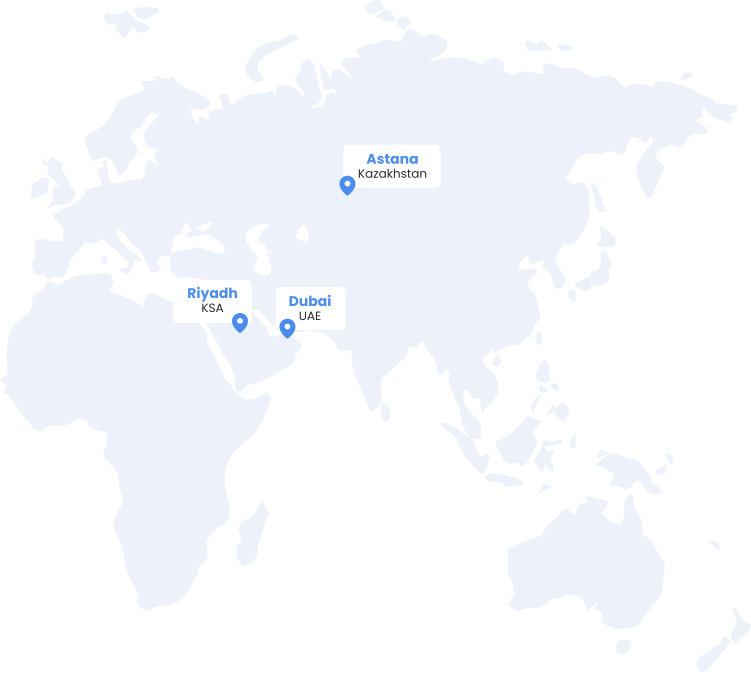
What Real Estate Developers Will Face After Opening Property Sales to Foreign Buyers


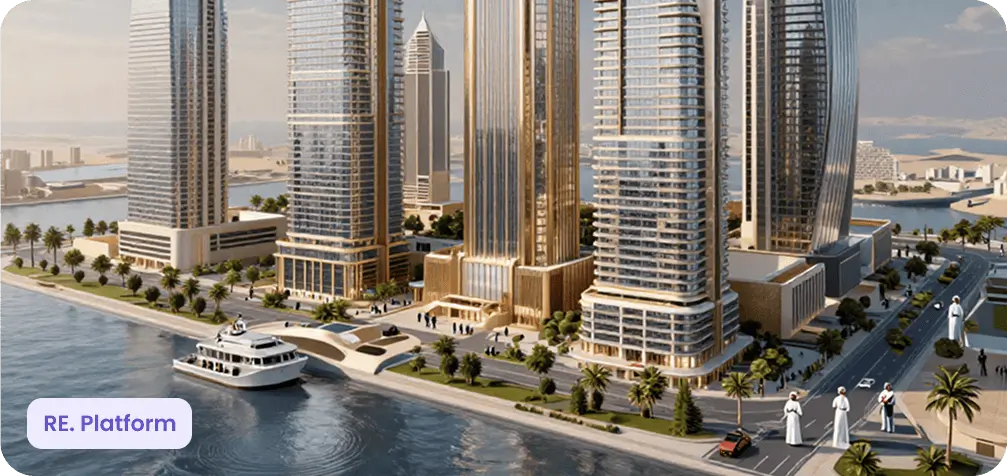
Starting from 2026, Saudi Arabia is opening its real estate market to foreign buyers — a move that fundamentally reshapes how developers must think about sales, marketing, and operations.
For decades, property ownership in the Kingdom was almost entirely restricted to Saudi nationals, with only limited exceptions for specific categories of investors and corporate structures. This created a domestic-focused market, where sales processes, customer experience, and even digital infrastructure were built for a local audience that shared language, legal understanding, and offline purchasing habits.
That model is about to break.
Under the new regulatory framework, non-Saudi citizens will be allowed to purchase certain types of residential and commercial properties in designated zones. While the final list of approved areas and ownership conditions is still being formalized, the direction is clear: Saudi real estate is entering the global investment arena. Foreign buyers — from the GCC, Europe, Asia, and beyond — will be able to legally acquire property, subject to registration, compliance checks, and additional documentation requirements.
This is not just a legal update. It is a structural shift in demand.
Foreign buyers behave differently. They do not rely on local brokers, personal connections, or offline negotiations. They expect clear information, transparent pricing, English-language interfaces, online reservations, digital contracts, and predictable transaction flows. In short, they expect the same digital experience they already use when buying property in Dubai, London, or Singapore.
And this is where the problem begins. And this is why real estate developers need to move from house to control.
Table of Contents
Despite the scale of the upcoming change, a large share of Saudi developers are still operating with systems designed for a closed, domestic market.
Sales websites often function as static brochures rather than transaction platforms. Property information is fragmented across PDFs, WhatsApp messages, and sales managers’ inboxes. Unit availability is updated manually. Pricing logic is opaque. English versions of sites — if they exist at all — are incomplete, outdated, or poorly localized.
This setup may work when buyers walk into a sales office and rely on human managers to guide every step of the process. It does not work when demand comes from abroad.
A foreign buyer cannot wait days for a manager to confirm availability. They will not tolerate unclear reservation rules or missing documentation. And they will not commit capital without seeing a transparent, structured, and trustworthy digital sales flow.
In practice, this means that many developers risk losing international demand not because their projects are weak — but because their digital infrastructure cannot convert interest into transactions.
Selling to foreign buyers also introduces a new layer of operational complexity that many developers underestimate.
Compliance requirements increase. Documentation must be standardized. Payments must be traceable. Sales reporting must work in real time, not at the end of the month. Management needs visibility across multiple markets, currencies, and buyer profiles.
Without a unified digital system, teams end up compensating with manual processes — spreadsheets, email chains, duplicated data, and human reconciliation. This not only slows down sales but actively erodes margins through errors, delays, and missed opportunities.
What looks like “lack of digital maturity” on the surface is, in reality, a revenue leakage problem.
To compete effectively in the post-2026 environment, developers must treat digital infrastructure as core revenue infrastructure, not an auxiliary function.
A modern real estate digital ecosystem must include:
| Capability | Why It Matters |
|---|---|
| Interactive unit catalog | Builds trust and buyer autonomy |
| Online booking & payment | Converts intent instantly |
| Developer-focused CRM | Reflects object-driven sales logic |
| Real-time analytics | Enables fast decision-making |
| Multilingual interface | Serves international buyers |
| AI & automation | Scales communication without headcount |
Developers who implement this stack will convert demand faster, manage portfolios more efficiently, and operate with predictability.
Those who do not will face rising CAC, longer sales cycles, and margin erosion.
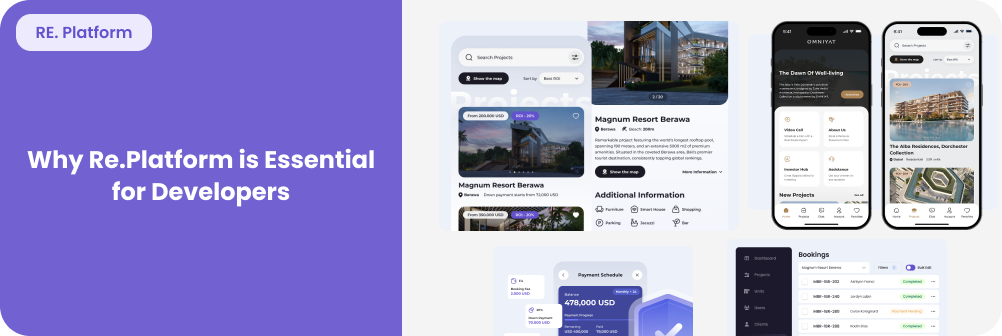
RE.Platform is designed to equip developers with all the tools needed to succeed in a newly internationalized market:
| Feature | Benefit for Developers |
|---|---|
| Interactive Property Catalog | Showcase every property interactively with live data and filtering by price, area, layout, or status. |
| Developer-Focused CRM | Manage leads, deals, and client communications efficiently, with full integration into the catalog and booking system. |
| AI Assistants & Chatbots | Provide instant, 24/7 support for potential buyers, answer queries, and route hot leads to sales managers. |
| Online Booking & Payments | Enable secure online bookings, payment processing, and contract generation to streamline sales. |
| Sales Reports & Analytics | Monitor performance in real-time, track KPIs, and make data-driven decisions for maximum ROI. |
| Mobile Apps (iOS & Android) | Offer international buyers seamless mobile access, boosting visibility and engagement. |
With these capabilities, developers can attract, engage, and convert foreign buyers efficiently, turning the policy shift into real business growth.
The opening of Saudi Arabia’s real estate market to foreign buyers in 2026 is not just a regulatory milestone. It is a structural shift in how real estate must be sold.
Demand will increase.
Expectations will rise.
Competition will intensify.
Developers who rely on outdated processes, manual sales, and weak digital infrastructure will struggle to capture international demand.
Those who invest early in a unified digital ecosystem will gain speed, transparency, and trust — the three currencies that define success in global real estate markets.
The market is opening.
The question is whether your sales infrastructure is ready.