Browse by category


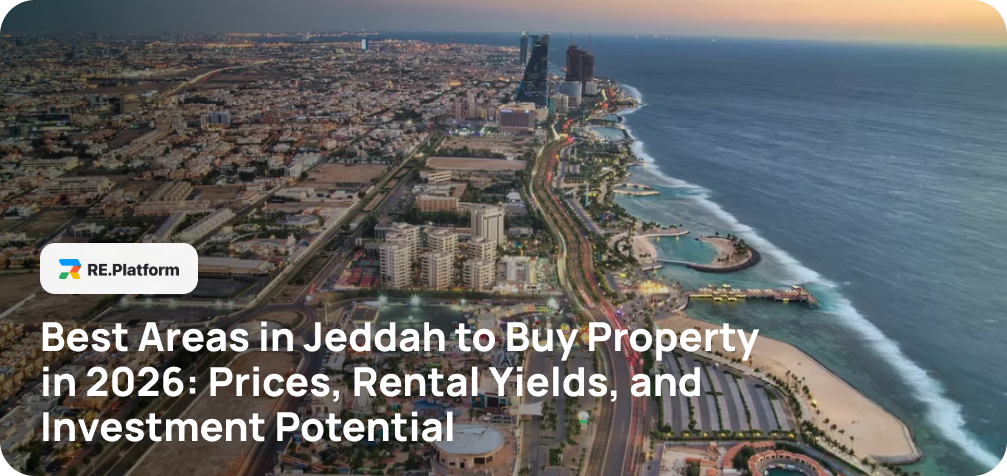
Just a few years ago, many international investors viewed the real estate market of Jeddah as a relatively local Saudi market — fragmented, difficult to navigate, and driven primarily by domestic demand.
In 2026, that perception has changed dramatically.
Today, Jeddah stands at the center of Saudi Arabia’s economic transformation and has become one of the Kingdom’s most strategically important urban markets. Several major pillars of Saudi Vision 2030 converge here simultaneously: tourism expansion, infrastructure modernization, international investment inflows, private-sector growth, and the development of new lifestyle-oriented urban districts along the Red Sea coast.
For many foreign investors, Jeddah increasingly resembles the early-growth phase that once defined Dubai: a market that has not yet reached peak valuation levels, but is already experiencing significant capital reallocation into real estate.
What makes the city particularly interesting is that Jeddah does not operate as a single-market environment.
Different districts follow entirely different investment dynamics.
Some investors focus on premium waterfront apartments designed for long-term capital appreciation. Others build portfolios of mid-market rental units targeting Saudi families and expatriate professionals, generating annual rental yields of 8–10%. A separate group of investors is entering districts undergoing early-stage redevelopment and gentrification, expecting strong appreciation after infrastructure projects are completed.
That is why, in Jeddah, the question of where to buy is often far more important than what to buy.
Table of Contents
Why International Investors Are Focusing on Jeddah
The surge of interest in Jeddah is directly connected to Saudi Arabia’s changing economic model.
As the Kingdom gradually reduces its dependence on oil revenues, enormous volumes of capital are being redirected into:
- tourism,
- real estate,
- logistics,
- infrastructure,
- smart city development,
- and urban transformation projects.
Jeddah has become one of the primary beneficiaries of this transition.
The city plays several strategic roles simultaneously.
First, it serves as the main logistics and port hub on Saudi Arabia’s western coast.
Second, it functions as the primary gateway for millions of religious pilgrims traveling to Mecca and Medina.
Third, it is evolving into one of the Kingdom’s most important tourism and lifestyle destinations along the Red Sea corridor.
Against this backdrop, the Saudi government has launched infrastructure programs worth tens of billions of dollars.
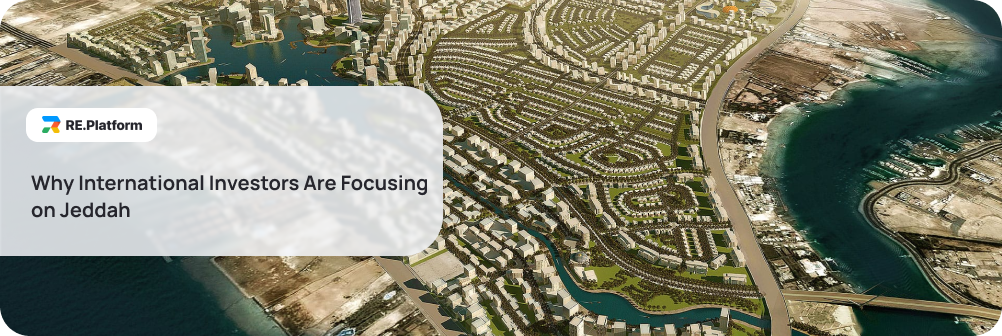
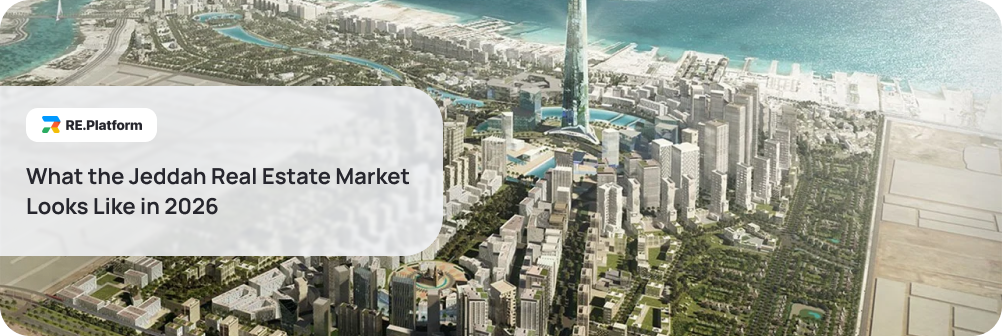
The most important among them is the Jeddah Central Development project.
With an estimated value of approximately SAR 75 billion, the project includes the redevelopment of a massive 5.7 million square meter coastal zone. This is not simply another construction initiative — it is effectively the creation of an entirely new waterfront urban ecosystem.
The project includes:
- more than 17,000 new residential units,
- luxury residences,
- commercial districts,
- a stadium,
- an opera house,
- an oceanarium,
- hospitality developments,
- public spaces,
- and a fully modernized waterfront promenade.
In practical terms, this means that large parts of Jeddah are already being revalued by the market in anticipation of future infrastructure growth.
What the Jeddah Real Estate Market Looks Like in 2026
Unlike Dubai, where many market segments are already mature, Jeddah is still in an intermediate growth phase.
That distinction matters enormously for investors.
The city combines several characteristics simultaneously:
- relatively accessible pricing compared to other GCC luxury markets;
- high long-term growth potential;
- strong domestic housing demand;
- limited supply of high-quality inventory;
- rapidly improving infrastructure;
- gradually increasing foreign capital participation.
At the same time, the market remains highly segmented.
At first glance, property prices in Jeddah may appear substantially lower than in Dubai or Doha. Technically, that is true. But internally, the pricing differences between districts are enormous.
An apartment in Al Shati may cost five or six times more than a comparable property located in inland districts such as Al Faisaliyah or Al Marwah.
The reason goes far beyond district prestige alone.
In Jeddah, property values are heavily influenced by:
- proximity to the Corniche,
- infrastructure quality,
- age of residential inventory,
- transport accessibility,
- mixed-use development density,
- modern residential compounds,
- expatriate demand,
- and future redevelopment potential.
Al Shati: Jeddah’s Most Prestigious Waterfront District
When discussing luxury real estate in Jeddah, Al Shati remains the city’s dominant premium market.
The district stretches along the Red Sea coastline and functions as Jeddah’s primary waterfront cluster — comparable to premium coastal districts seen in Dubai or Doha.
One of the most important characteristics of Al Shati is limited supply.
That supply constraint continues pushing values upward.
In 2026, average prices typically range between SAR 9,000 and SAR 16,000 per square meter, while ultra-premium sea-view apartments can exceed SAR 20,000 per square meter.
The highest valuations are usually attached not simply to large units, but to properties combining multiple premium features:
- direct sea views,
- high-floor positioning,
- modern residential towers,
- private amenities,
- proximity to marinas and waterfront promenades,
- branded residence concepts,
- serviced management structures.
Al Shati is also attracting increasing attention from international private investors and family offices seeking long-term exposure to Saudi Arabia’s growing luxury property sector.
Al Shati Investment Snapshot
| Metric | Outlook |
|---|---|
| Segment | Luxury waterfront |
| Typical Buyers | HNWIs, family offices |
| Price Range | SAR 9,000–20,000+ / sqm |
| Strategy | Long-term appreciation |
| Risk Level | Low to medium |
Al Hamra: One of Jeddah’s Most Liquid Rental Markets
If Al Shati represents luxury coastal living, Al Hamra represents liquidity and rental demand.
The district benefits from a central location, close proximity to business areas, and extremely strong demand for furnished apartments.
Because of this, Al Hamra remains especially popular among:
- expatriates,
- senior executives,
- international corporate employees,
- business travelers,
- short-term rental tenants.
The district contains a large concentration of furnished apartments suitable for both long-term leasing and hospitality-oriented rental models.
Property prices in Al Hamra typically range between SAR 7,500 and SAR 13,000 per square meter in 2026.
What makes the area particularly attractive is that demand remains consistently strong despite relatively high pricing, primarily because of continuous corporate and business-related tenant flows.
For many investors, Al Hamra represents a balance between stable cash flow and long-term capital appreciation.
Al Zahra: Stable Family-Oriented Upper-Middle Market
Jeddah’s property market cannot be analyzed exclusively through the lens of luxury waterfront real estate.
One of the most resilient parts of the market today is the family-oriented middle and upper-middle residential segment.
That is where Al Zahra stands out.
The district continues to grow because of several interconnected factors:
- strong transport accessibility,
- modern residential compounds,
- proximity to schools and healthcare infrastructure,
- family-oriented urban planning,
- a calmer environment compared to central business districts.
Unlike Al Shati, where demand is partially driven by status and waterfront positioning, Al Zahra grows primarily because of genuine domestic housing demand.
That makes the district more resistant to speculative volatility and short-term market cycles.
Which Areas in Jeddah Deliver the Highest Rental Yields?
One of the most common mistakes foreign investors make is focusing exclusively on expensive waterfront districts.
In reality, the highest rental yields often come from entirely different areas.
In 2026, some of the strongest-performing rental districts include:
- Al Salamah,
- Al Rawdah,
- and Al Faisaliyah.
These middle-income residential districts generate highly stable long-term rental demand from:
- Saudi families,
- young professionals,
- mid-income expatriates,
- employees of private companies.
Al Salamah: One of the Strongest Rental Markets in Jeddah
Al Salamah is widely viewed as one of the best districts for long-term rental-focused investment strategies.
Many local investors actively build apartment portfolios here because the district combines:
- strong infrastructure,
- livability,
- stable occupancy,
- and relatively accessible acquisition prices compared to premium waterfront zones.
Gross rental yields can reach 9–10% annually, which remains exceptionally strong by GCC standards.
Unlike tourism-oriented districts where occupancy fluctuates seasonally, Al Salamah benefits from stable year-round demand driven by families and working professionals.
Al Salamah Investment Snapshot
| Metric | Outlook |
|---|---|
| Segment | Mid-income residential |
| Rental Yield | Up to 9–10% |
| Demand Type | Long-term domestic demand |
| Risk Level | Moderate |
| Strategy | Cash-flow investment |
Al Balad: A Bet on Gentrification and Tourism Growth
One of Jeddah’s most interesting long-term appreciation plays is Al Balad.
This is not a traditional residential investment market.
Instead, it represents a large-scale urban revitalization story.
Jeddah’s historic center is undergoing an extensive restoration and gentrification process supported by government investment in:
- heritage preservation,
- tourism infrastructure,
- cultural districts,
- hospitality development.
That transformation is already beginning to reshape demand patterns.
What was once viewed primarily as an aging historical district is increasingly attracting:
- boutique hospitality projects,
- short-term rental operators,
- tourism-focused investors,
- restaurants and lifestyle brands,
- cultural real estate concepts.
Comparable transformations have already occurred in historic districts across Dubai, Doha, and several major European cities.
As a result, many investors view Al Balad as an early-stage redevelopment market with significant future appreciation potential.
What Investors Need to Understand Before Entering the Jeddah Market
The biggest mistake foreign buyers make in Jeddah is attempting to analyze the city through the same frameworks used for Dubai or European markets.
Jeddah functions differently.
The market remains in a deep transitional phase, where ultra-modern residential towers may stand directly beside aging inventory that is rapidly losing competitiveness.
The gap between neighboring buildings can become enormous — not only in quality, but also in liquidity, rental demand, and long-term appreciation potential.
Another critical point is that Jeddah should not be viewed exclusively as a luxury real estate story.
Although waterfront developments receive most of the international media attention, some of the strongest and most stable cash-flow opportunities actually come from middle-income family districts with strong domestic rental demand.
That is one of the defining characteristics of Jeddah in 2026: premium real estate and high-yield investment opportunities do not always overlap.
The Real Cost of Buying Property in Jeddah
Another common mistake among international buyers is focusing only on the advertised property price.
In reality, total acquisition costs are almost always significantly higher.
In 2026, additional transaction expenses typically range between 8% and 15% of the property value.
These may include:
- registration fees,
- legal documentation,
- brokerage commissions,
- renovation costs,
- furnishing,
- engineering upgrades,
- service charges,
- rental preparation expenses.
For example, a SAR 750,000 property may require an additional SAR 75,000–90,000 in post-acquisition costs.
Luxury properties often involve even higher expenditures, especially for premium furnishing and full interior modernization.
Where Is Property Still Affordable in Jeddah?
Despite the market’s rapid growth, Jeddah still offers relatively accessible entry points for investors.
Some of the more affordable districts in 2026 include:
| District | Average Price per sqm | Key Characteristics |
|---|---|---|
| Al Faisaliyah | SAR 2,800–4,500 | Older residential stock |
| Al Marwah | SAR 3,000–4,800 | Large housing supply |
| Al Safa | SAR 3,200–5,000 | Family-oriented middle segment |
These districts are particularly attractive for investors focused on rental income rather than prestige assets.
They may not offer luxury waterfront lifestyles, but they provide something equally important for investment property: stable tenant demand.
Jeddah Property Price Comparison by District in 2026
| District | Market Position | Average Property Prices | Average Price per sqm |
|---|---|---|---|
| Al Shati | Luxury waterfront | SAR 1.5M–8M | SAR 9,000–16,000 |
| Al Hamra | Premium near Corniche | SAR 1.2M–6M | SAR 7,500–13,000 |
| Al Khalidiyah | Established premium segment | SAR 1M–5M | SAR 6,500–11,000 |
| Al Muhammadiyah | Elite northern district | SAR 900K–3.5M | SAR 5,800–9,500 |
| Obhur Al Shamaliyah | Villas & waterfront lifestyle | SAR 1.2M–6.5M | SAR 6,000–12,000 |
| Al Salamah | Expat-friendly rental district | SAR 520K–1.5M | SAR 4,800–7,800 |
| Al Naim | Middle-income residential | SAR 500K–1.6M | SAR 4,600–7,500 |
| Al Rawdah | Central family district | SAR 450K–1.2M | SAR 4,500–7,000 |
| Al Zahra | Upper-middle family segment | SAR 420K–1.1M | SAR 4,200–6,800 |
| Al Safa | Budget residential segment | SAR 250K–750K | SAR 3,200–5,000 |
| Al Marwah | Affordable housing | SAR 240K–700K | SAR 3,000–4,800 |
| Al Faisaliyah | Inland value market | SAR 220K–650K | SAR 2,800–4,500 |
Jeddah Is No Longer Saudi Arabia’s “Secondary Market”
Only a few years ago, most international investors viewed Jeddah as secondary to Riyadh — a Red Sea city with tourism potential, but without the institutional depth of the capital.
That is no longer the case.
In 2026, Jeddah is increasingly becoming one of Saudi Arabia’s most important residential and lifestyle investment markets.
Several major forces are reshaping the city simultaneously:
- Vision 2030 infrastructure spending,
- tourism expansion,
- waterfront redevelopment,
- Jeddah Central,
- domestic migration,
- international business growth.
At the same time, the market remains significantly less overheated than certain districts in Dubai or Doha, leaving meaningful room for future price appreciation.
For investors, this creates a rare situation: a market already experiencing strong structural growth, while still remaining below its potential long-term valuation ceiling.
Which Areas in Jeddah Look Most Promising in 2026?
The Jeddah market has now clearly divided into several investment categories.
For premium property and long-term capital appreciation, investors continue focusing on:
- Al Shati,
- Al Hamra,
- and northern coastal districts.
These areas offer the strongest liquidity, highest-quality developments, and the most limited premium supply.
For rental income and cash-flow strategies, districts such as:
- Al Salamah,
- Al Rawdah,
- and Al Faisaliyah
often provide more attractive investment economics because of stronger domestic rental demand and lower acquisition costs.
Meanwhile, areas surrounding Al Balad and the broader Jeddah Central corridor are increasingly attracting investors seeking early-stage redevelopment opportunities tied to tourism and infrastructure expansion.
The market itself is also becoming more sophisticated and competitive.
Successful investing in Jeddah now depends not only on district selection, but also on project quality, developer reputation, infrastructure positioning, and understanding the actual tenant profile driving demand in each segment.