Browse by category


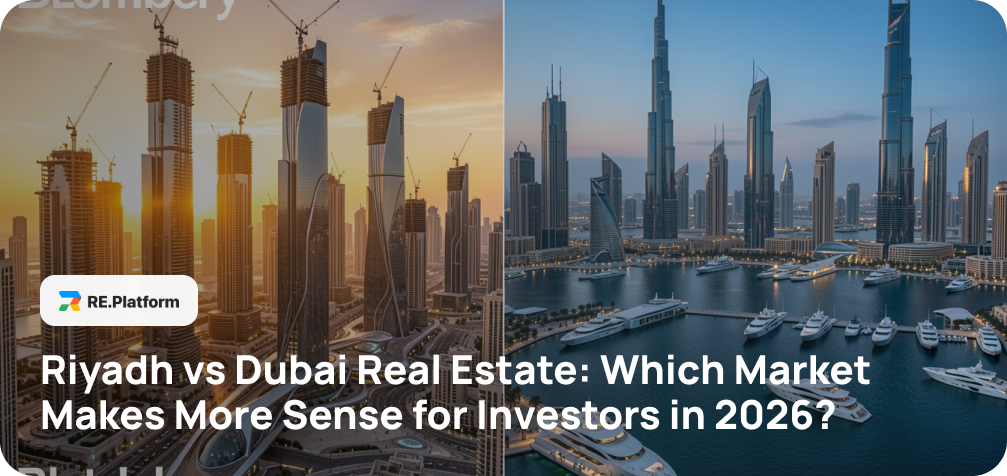
For more than two decades, Dubai has dominated nearly every conversation about real estate investment in the Middle East. The city built a global property brand around luxury towers, tax efficiency, international buyers, and a lifestyle-oriented expat economy that few emerging markets could replicate.
But in 2026, the conversation has started to shift.
Riyadh is no longer viewed simply as Saudi Arabia’s administrative capital. It is becoming one of the most aggressively transforming real estate markets anywhere in the world. Institutional money is moving into the Kingdom at unprecedented scale. International developers are entering the market. Foreign investors are paying closer attention. Large corporations are relocating regional headquarters to Saudi Arabia. Entire districts are being rebuilt around Vision 2030 priorities.
As a result, investors increasingly ask the same question:
Should capital still go into Dubai — or does Riyadh now offer stronger long-term upside?
The answer is more complicated than the headlines suggest.
Dubai and Riyadh are not competing versions of the same market. They operate under different economic models, different buyer behavior, different stages of maturity, and very different long-term investment dynamics. One is a globally liquid international hub with a mature real estate ecosystem. The other is a rapidly expanding capital city still in the middle of structural transformation.
Understanding that difference is what separates speculative hype from informed investment strategy.
Table of Contents
Why Investors Are Comparing Riyadh and Dubai in 2026
A few years ago, comparing Riyadh and Dubai in real estate discussions would have sounded unusual. Dubai was viewed as the region’s established investment center, while Saudi Arabia remained comparatively closed, conservative, and difficult for international buyers to navigate.
That perception has changed rapidly.
Saudi Arabia’s Vision 2030 strategy has fundamentally altered the scale of infrastructure spending, economic diversification, and urban development inside the Kingdom. Riyadh alone is undergoing one of the largest urban expansion cycles in the GCC, supported by government-backed megaprojects, transportation investments, financial sector growth, and large-scale population targets.
The government’s push to attract foreign companies into Riyadh has also accelerated housing demand across both ownership and rental segments. Senior professionals relocating into the Kingdom are creating pressure in areas that previously saw relatively moderate international demand.
At the same time, Dubai has reached a different stage of its market cycle. It remains highly international, highly liquid, and exceptionally attractive for global investors, but prices across prime districts have risen significantly since 2021. Many investors now question whether Dubai still offers the same growth potential it did several years ago.
This is exactly where Riyadh enters the discussion.
For some investors, Riyadh represents an earlier-stage growth story with potentially higher upside. For others, Dubai still offers a far safer and more transparent environment for capital preservation.
The debate is no longer theoretical. It has become one of the defining real estate investment discussions across the GCC.
Describe what you are interested in and we will contact you.
Looking to buy property in Riyadh?
Riyadh vs Dubai Property Prices
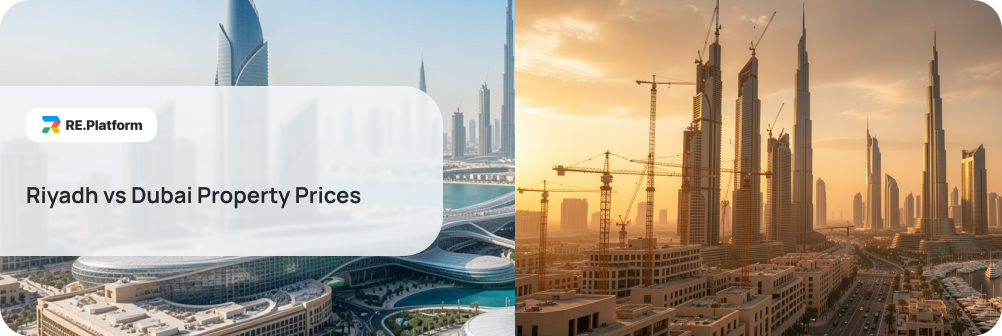
One of the biggest differences between both markets is pricing structure.
Dubai’s property market is broader, more international, and generally more liquid. Buyers can access everything from entry-level apartments to ultra-luxury branded residences with relatively transparent pricing across most districts.
Riyadh, meanwhile, remains less globally standardized. Pricing varies significantly depending on district, developer quality, infrastructure maturity, and proximity to emerging commercial hubs.
Still, Riyadh is rapidly moving upward — especially in northern districts and premium mixed-use developments.
| Segment | Riyadh | Dubai |
|---|---|---|
| Entry-level apartments | Lower entry prices | Higher average pricing |
| Luxury apartments | Rapidly growing segment | Mature luxury market |
| Villas | Strong local demand | International lifestyle demand |
| Branded residences | Emerging category | Established market |
| Prime district growth | Aggressive appreciation | More stabilized growth |
In practical terms, Dubai still offers greater diversity for international investors. However, Riyadh increasingly attracts buyers searching for long-term appreciation rather than immediate lifestyle liquidity.
This distinction matters.
Dubai often behaves like a global real estate marketplace. Riyadh behaves more like a transforming domestic economy opening itself to international capital.
That creates different investment psychology entirely.
Rental Yields and ROI: Which Market Performs Better?
Rental yields are one of the main reasons Riyadh has entered international investment conversations so aggressively.
For years, Dubai dominated the GCC rental yield discussion because of strong tourism flows, a large expat population, and active short-term rental demand. In many districts, Dubai still provides relatively attractive returns compared to major global cities.
But Riyadh’s dynamics are different.
The Saudi capital is currently experiencing structural housing pressure tied to:
- corporate relocation,
- workforce expansion,
- population growth,
- government spending,
- and limited high-quality supply in several premium districts.
This has pushed rental prices upward in multiple areas across the city.
In some segments, especially newer apartments in high-demand northern Riyadh locations, projected gross rental yields can appear extremely attractive on paper. That is exactly why many investors now market Saudi Arabia as a “10% ROI opportunity.”
The reality is more nuanced.
Some projects may indeed generate unusually strong returns during the current expansion phase. But investors also need to distinguish between:
- projected ROI,
- stabilized long-term ROI,
- and marketing-driven assumptions used in off-plan sales campaigns.
Dubai generally offers more predictable rental behavior because the market is significantly more mature. Riyadh may offer stronger upside potential in specific growth zones, but volatility and execution risk remain higher.
That makes Riyadh potentially more attractive for growth-focused investors — while Dubai often remains preferable for investors prioritizing stability and liquidity.
Foreign Ownership Rules: Dubai Is Easier — But Riyadh Is Changing
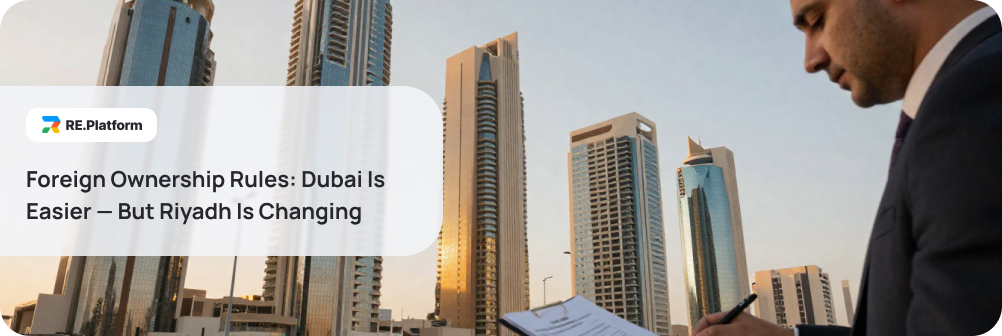
Dubai still holds a major advantage in terms of accessibility for foreign buyers.
The emirate spent years building one of the world’s most investor-friendly property acquisition systems. Freehold ownership zones are clearly defined, transaction processes are internationally familiar, and foreign investors can generally purchase property with relatively straightforward procedures.
Saudi Arabia is evolving quickly, but the market remains more complex.
Foreign ownership regulations are gradually opening, especially under broader economic diversification policies, yet restrictions, licensing frameworks, and eligibility conditions still vary depending on:
- residency status,
- property type,
- geographic area,
- and intended usage.
This is one of the biggest misconceptions international investors still have about Saudi Arabia.
Many headlines create the impression that the market has become fully open overnight. In reality, the transition is happening progressively, and the regulatory environment still requires careful navigation.
That said, investor sentiment is changing because the direction of policy is increasingly clear: Saudi Arabia wants more international capital participation in its real estate ecosystem.
For long-term investors, that trajectory matters almost as much as the current rules themselves.
Lifestyle, Infrastructure, and Expat Demand
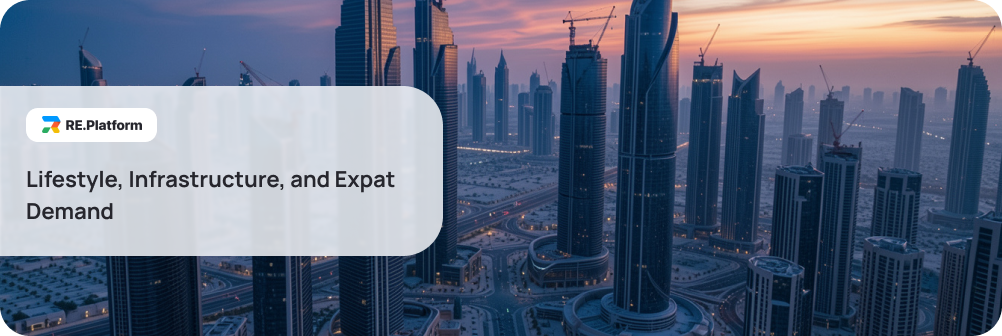
Dubai remains one of the most globally integrated cities in the world.
Its infrastructure, hospitality ecosystem, international schooling network, tourism industry, and lifestyle positioning are already mature. For many investors, especially those planning relocation or international mobility, Dubai still offers a more familiar and internationally comfortable environment.
Riyadh operates differently.
The city is transforming at extraordinary speed, but it is still in transition. Infrastructure expansion, entertainment growth, public realm modernization, metro development, and mixed-use district creation are all happening simultaneously.
That creates both opportunity and friction.
Some investors view Riyadh’s transformation phase as precisely the reason to enter early. Others prefer Dubai because the ecosystem is already fully operational and globally proven.
This divide increasingly shapes investment decisions across the GCC.
Dubai appeals strongly to lifestyle-driven international buyers. Riyadh increasingly attracts strategic investors focused on long-term economic expansion.
Why Some Investors Believe Riyadh Has More Upside
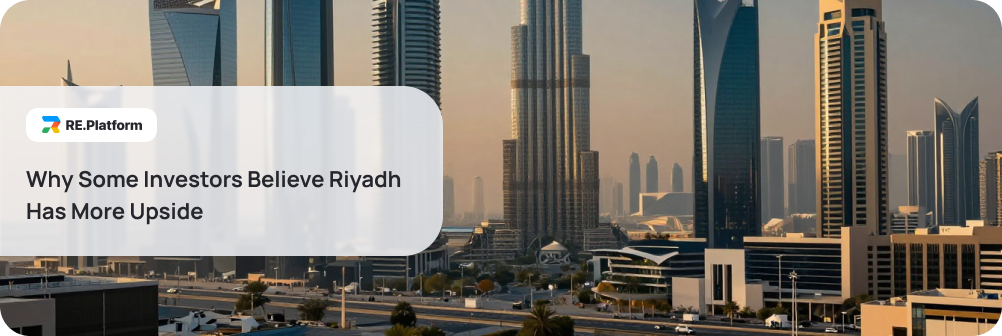
The core bullish argument around Riyadh is relatively simple:
Dubai is already mature. Riyadh is still accelerating.
Many investors believe Saudi Arabia is entering the early stages of a multi-decade urban expansion cycle supported by:
- sovereign capital,
- demographic growth,
- infrastructure megaprojects,
- institutional investment,
- and large-scale economic diversification.
That creates the perception of “early positioning.”
In markets like Dubai, much of the explosive growth narrative has already been realized over the past two decades. Riyadh, meanwhile, is only beginning to build its global real estate identity.
This is why international attention toward areas in northern Riyadh has intensified so dramatically in recent years. Investors increasingly view certain districts not simply as residential zones, but as long-term strategic growth corridors tied to broader economic transformation.
Whether that optimism ultimately proves fully justified remains uncertain.
But there is little doubt that Riyadh has become one of the most closely watched emerging real estate markets globally.
Why Dubai Still Dominates Global Real Estate Investment
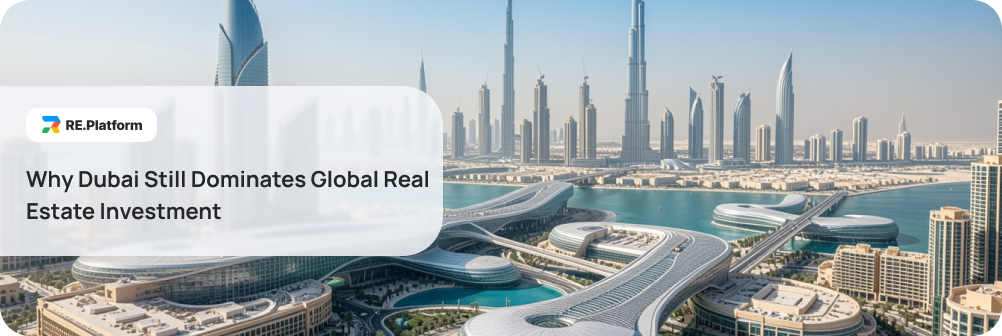
Despite the excitement surrounding Riyadh, Dubai continues to dominate the region in several critical areas.
The city offers:
- deeper international liquidity,
- stronger legal familiarity,
- broader financing accessibility,
- mature luxury inventory,
- global buyer diversity,
- and significantly higher transaction transparency.
For international investors seeking:
- capital mobility,
- stable international demand,
- luxury asset liquidity,
- or globally recognizable real estate branding,
Dubai still remains exceptionally difficult to compete with.
This is especially true in ultra-prime property categories, where Dubai has already established itself among the world’s leading luxury residential markets.
In many ways, Riyadh and Dubai currently attract different investor profiles entirely.
Average Property Prices: Riyadh vs Dubai
| Property Type | Riyadh Average Price | Dubai Average Price |
|---|---|---|
| 1-bedroom apartment | SAR 700K–1.2M | AED 1M–1.8M |
| Luxury apartment | SAR 2M–5M+ | AED 3M–10M+ |
| Villa | SAR 2.5M–8M+ | AED 3M–20M+ |
| Branded residence | Emerging segment | Highly developed |
| Prime district apartment price per sqm | Lower overall | Higher overall |
Answers to Possible Questions
Is Riyadh cheaper than Dubai for real estate?
In many segments, yes. Entry-level and mid-market residential properties in Riyadh are generally cheaper than comparable assets in prime Dubai districts. However, premium Riyadh projects are rising rapidly in price.
Can foreigners buy property in Riyadh?
Foreign ownership in Saudi Arabia is expanding, but regulations still depend on residency status, location, and property type. Investors should carefully review current legal frameworks before purchasing.
Which city offers higher rental yields?
Riyadh currently attracts attention for potentially higher gross yields in some growth districts, while Dubai generally offers more stable and predictable rental performance.
Is Dubai still better for expats?
For international lifestyle relocation, Dubai remains more globally integrated and expat-oriented. Riyadh, however, is rapidly evolving and attracting growing international demand.
Will Riyadh become the next Dubai?
Not exactly. Riyadh and Dubai operate under very different economic and urban models. Riyadh is developing its own investment identity rather than simply replicating Dubai.
Is Saudi Arabia real estate a good investment in 2026?
Saudi Arabia has become one of the world’s most closely watched emerging real estate markets due to Vision 2030, infrastructure expansion, and foreign investment reforms. However, investment outcomes still depend heavily on location, timing, and project quality.
Riyadh is not trying to become another Dubai.
Dubai was built as a global commercial and lifestyle hub. Riyadh is evolving as the economic and political center of the largest economy in the Arab world.
So, Which Market Makes More Sense in 2026?
There is no universal answer.
The better market depends entirely on investment strategy, risk tolerance, and time horizon.
| Investor Goal | Better Fit |
|---|---|
| Stable international liquidity | Dubai |
| Early-stage growth exposure | Riyadh |
| Mature expat ecosystem | Dubai |
| Long-term market upside | Riyadh |
| Luxury lifestyle investment | Dubai |
| Speculative growth positioning | Riyadh |
| Established regulatory clarity | Dubai |
| Vision 2030 expansion exposure | Riyadh |
Dubai remains the GCC’s most globally integrated real estate market.
Riyadh, however, may become the region’s most important growth story over the next decade.
Riyadh vs Dubai Real Estate in 2026
| Factor | Riyadh | Dubai |
|---|---|---|
| Market Stage | Rapid growth / transformation | Mature global market |
| Foreign Buyer Accessibility | Expanding, but still limited in some areas | Highly accessible |
| Entry Prices | Lower in many segments | Higher in prime areas |
| Rental Yield Potential | Higher upside in selected districts | More stable yields |
| Luxury Market | Fast-growing | Globally established |
| Expat Infrastructure | Developing rapidly | Fully mature |
| Long-Term Growth Narrative | Very strong | More stabilized |
| Liquidity | Lower | Significantly higher |
| Regulatory Transparency | Improving | Mature framework |
| Investor Profile | Growth-focused | Stability-focused |
And that distinction is exactly why investors around the world are increasingly comparing both cities side by side.