Browse by category


A few years ago, most conversations about Riyadh real estate were focused on the city as a whole.
Today, the conversation has shifted almost entirely toward one part of the capital: North Riyadh.
From luxury apartments and gated villa communities to business districts, branded residences, and massive mixed-use developments, northern Riyadh has rapidly become the center of attention for investors, developers, expatriates, and high-income Saudi buyers alike.
And the numbers behind that attention are difficult to ignore.
Property prices in several northern districts have risen aggressively over the past few years. New infrastructure continues expanding across the area. International brands are entering the market. Luxury developers are concentrating some of their largest projects there. And for many buyers entering Riyadh for the first time, North Riyadh increasingly represents the “future version” of the city.
That is one of the biggest reasons the area has become such a dominant topic across Saudi Arabia’s real estate market.
For some investors, North Riyadh is where the Kingdom’s strongest long-term growth story is unfolding. For others, it has already become too expensive too quickly. But regardless of perspective, one thing is clear:
North Riyadh is no longer just another part of the city. It has become the center of Riyadh’s real estate conversation.
Table of Contents
What Makes North Riyadh Different From the Rest of the City
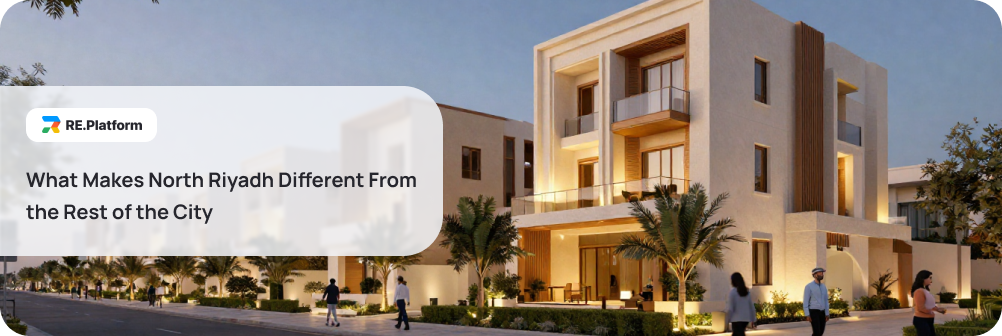
North Riyadh is no longer viewed simply as a residential expansion zone.
Over the past several years, the area has evolved into Riyadh’s most modern urban corridor — combining luxury housing, business infrastructure, international schools, retail, entertainment, transportation, and large-scale mixed-use development in a way that does not yet fully exist in many other parts of the capital.
For many residents, the difference becomes obvious almost immediately.
Compared to older central districts or more traditional southern areas of Riyadh, North Riyadh feels significantly newer, more internationally oriented, and far more integrated around modern urban planning principles.
That transformation is one of the biggest reasons both local high-income buyers and international residents continue concentrating there.
| Infrastructure Element | What Makes North Riyadh Stand Out |
|---|---|
| Residential Communities | Modern villas, compounds, branded residences, gated communities |
| Business Infrastructure | KAFD, corporate offices, multinational headquarters |
| Transportation | Direct Riyadh Metro access and major highway connectivity |
| International Schools | Strong concentration of private and international education |
| Retail & Lifestyle | Luxury malls, dining districts, entertainment infrastructure |
| Urban Planning | Wide roads, modern zoning, newer master-planned districts |
| Expat Environment | One of Riyadh’s most internationally oriented residential areas |
| Investment Activity | Highest concentration of premium residential development |
One of the biggest factors behind North Riyadh’s rapid growth is infrastructure concentration.
The area now contains some of Riyadh’s most important business and lifestyle districts, including KAFD — the King Abdullah Financial District — which has become Saudi Arabia’s flagship financial and mixed-use development. KAFD itself functions as far more than a business district, combining offices, luxury residences, hospitality, retail, and public infrastructure into a highly integrated urban environment.
Transportation has also become a major advantage.
The launch of Riyadh Metro significantly improved accessibility across northern Riyadh, especially around KAFD and major commercial corridors. The metro system now spans six lines and 85 stations across Riyadh, while KAFD Metro Station has become one of the city’s main transportation hubs connecting multiple lines together.
For families and expatriates, another major reason North Riyadh dominates demand is daily livability.
The northern districts contain a large share of Riyadh’s international schools, premium compounds, newer retail projects, private healthcare facilities, restaurants, and entertainment infrastructure. Areas like Hittin, Al Malqa, Al Nakheel, Al Yasmin, and KAFD increasingly attract professionals working in finance, consulting, technology, and multinational corporate sectors relocating into Riyadh.
This combination of:
- modern infrastructure,
- business concentration,
- luxury residential growth,
- and lifestyle-oriented development
is what increasingly separates North Riyadh from the rest of the city.
For many buyers entering Riyadh today, North Riyadh no longer represents just another group of districts.
Increasingly, it represents the part of the capital where Riyadh’s future is being built fastest.
Which Areas in North Riyadh Are Growing the Fastest?
One of the biggest reasons North Riyadh dominates today’s real estate conversation is that not all districts inside the area are growing equally.
Some neighborhoods are rapidly turning into premium investment zones with rising prices, expanding infrastructure, luxury residential projects, and strong demand from both Saudi buyers and internationally oriented investors.
Based on local market performance, transaction activity, infrastructure expansion, and buyer demand trends across 2025, several districts continue standing out as the strongest-performing parts of North Riyadh.
Al Narjis: North Riyadh’s Rising Star
Among all northern districts, Al Narjis continues attracting some of the strongest buyer attention in Riyadh.
The area combines modern urban planning, wide roads, growing infrastructure, and relatively newer residential inventory compared to older premium districts nearby. Demand remains especially strong among younger Saudi families and upper-middle-income buyers searching for modern housing environments with easier access to schools, business districts, and major road connections.
One of the key reasons investors continue focusing on Al Narjis is that many still believe the district has not yet fully peaked in terms of pricing compared to more established luxury areas nearby.
That “still-growing” perception continues fueling demand.
Al Malqa and Hittin: Riyadh’s Established Luxury Core
If Al Narjis represents growth momentum, Al Malqa and Hittin represent established prestige.
These districts have become some of the most expensive and recognizable residential areas anywhere in Riyadh, known for luxury villas, high-end compounds, premium apartments, and proximity to major commercial corridors and business infrastructure.
For many buyers, these neighborhoods function less as speculative investment zones and more as long-term wealth-preservation assets inside Riyadh’s luxury market.
Prices remain among the highest in North Riyadh, but demand also tends to remain significantly more stable compared to rapidly emerging outer districts.
That stability is one of the biggest reasons wealthy Saudi families, executives, and high-net-worth buyers continue concentrating there.
Al Qairawan and Al Yasmin: The Next Expansion Corridor
Al Qairawan and Al Yasmin are increasingly viewed as the natural continuation of Riyadh’s northern luxury expansion.
Compared to districts like Al Malqa or Hittin, prices in these areas still remain relatively more accessible while offering many of the same advantages:
- modern planning,
- newer infrastructure,
- expanding retail,
- and proximity to northern growth corridors.
Demand has been rising especially quickly for premium apartments, gated communities, and integrated residential compounds targeting younger affluent buyers and internationally oriented residents.
Many local investors believe these districts could experience some of North Riyadh’s strongest long-term capital appreciation as surrounding infrastructure and commercial development continue expanding over the next several years.
North Riyadh’s Fastest-Growing Districts in 2026
| District | Main Market Positioning |
|---|---|
| Al Narjis | High-growth modern residential district |
| Al Malqa | Established luxury residential hub |
| Hittin | Premium villas and high-income buyers |
| Al Qairawan | Expanding upscale residential corridor |
| Al Yasmin | Fast-growing mixed residential demand |
What makes North Riyadh especially important is that these districts are no longer developing independently.
Increasingly, they are becoming part of a much larger luxury, business, and infrastructure corridor that is reshaping how both local and international buyers view the future of Riyadh real estate.
How Expensive Is It to Live in North Riyadh?
One of the biggest reasons North Riyadh keeps dominating Saudi Arabia’s real estate conversation is simple: this is where much of the city’s modern lifestyle infrastructure is concentrated.
For many residents, North Riyadh feels noticeably different from older parts of the capital. The area is filled with newer residential districts, large-scale compounds, international schools, private clinics, luxury retail, cafes, restaurants, and business hubs connected to KAFD and Riyadh’s northern expansion corridor.
That concentration of infrastructure has pushed both property prices and rental costs significantly higher over the past few years.
In districts like Al Malqa, Hittin, and parts of Al Yasmin, luxury villas now regularly sell for several million Saudi riyals, while modern apartments near business corridors continue attracting strong demand from professionals and investors.
At the same time, North Riyadh has also become one of the city’s most comfortable areas for expatriates and internationally oriented residents. Wider roads, newer urban planning, metro connectivity, and easier access to commercial districts make the area far more convenient for daily life compared to many older neighborhoods in Riyadh.
That combination of convenience, prestige, and infrastructure is exactly why demand across North Riyadh continues growing despite rapidly rising prices.
Average Residential Prices in North Riyadh (2025–2026)
| District | Average Apartment Price | Average Villa Price |
|---|---|---|
| Al Malqa | SAR 1.4M–1.5M | SAR 3.9M–4.0M |
| Hittin | SAR 1.3M–1.8M | SAR 4M+ |
| Al Narjis | SAR 1M–1.4M | SAR 2.8M–3.5M |
| Al Yasmin | SAR 1.2M–1.6M | SAR 3.7M–6.5M |
| Al Qairawan | SAR 1.5M–1.6M | SAR 3M+ |
Average Rental Costs in North Riyadh
| Property Type | Typical Annual Rent |
|---|---|
| 1–2 Bedroom Apartment | SAR 50K–90K |
| Luxury 3-Bed Apartment | SAR 120K+ |
| Compound Apartment | SAR 130K–180K |
| Family Villa | SAR 250K+ depending on location |
What Does Everyday Life in North Riyadh Actually Cost
Living in North Riyadh is noticeably more expensive than in many other parts of the Saudi capital — especially inside premium districts such as Al Malqa, Hittin, Al Yasmin, and areas surrounding KAFD.
But for many residents, the higher cost is directly tied to the quality of infrastructure, convenience, and overall lifestyle the area offers.
| Expense Category | Typical Monthly Cost |
|---|---|
| Groceries for 1 person | SAR 800–1,200 |
| Groceries for family of 4 | SAR 3,000–4,000 |
| Utilities & Internet | SAR 600–1,000 |
| Gym Membership | SAR 250–500 |
| Dining Out (mid-range lifestyle) | SAR 1,500–3,000 |
| Fuel & Transportation | SAR 400–1,200 |
| International School Tuition | SAR 45K–120K annually per child |
| Private Healthcare Visit | SAR 150–700 per appointment |
One of the biggest advantages of North Riyadh is that daily life is significantly easier compared to older districts of the city.
Most modern neighborhoods are built around:
- large road networks,
- newer commercial infrastructure,
- easier highway access,
- and proximity to major business corridors.
The expansion of Riyadh Metro has also started changing transportation patterns across northern Riyadh, especially near KAFD and surrounding business districts. While Riyadh remains heavily car-oriented overall, metro connectivity is gradually making daily commuting more manageable for professionals living in the north of the city.
At the same time, the area’s popularity has pushed living costs sharply higher over the past several years.
North Riyadh Is Where Riyadh’s Future Feels the Most Visible
The reason everyone keeps talking about North Riyadh is not simply because property prices are rising.
It is because the area increasingly feels like the part of the city where Riyadh’s transformation becomes most tangible in everyday life.
Over the past several years, North Riyadh has evolved far beyond a traditional residential expansion zone. It has become a concentration point for luxury real estate, business infrastructure, international schools, premium retail, modern compounds, new transportation projects, and some of the city’s most ambitious urban development.
For many residents, professionals, and investors, this part of Riyadh already feels noticeably different from the rest of the capital.
That difference matters.
People are not moving to North Riyadh only because they expect prices to increase. They are moving there because the area increasingly offers a version of Riyadh that feels newer, more connected, more internationally oriented, and significantly more convenient for modern urban living.
That is also why demand continues growing despite rapidly rising prices.
Some buyers view North Riyadh as a long-term investment story. Others simply see it as the most comfortable place to live inside the Saudi capital. But both groups are ultimately reacting to the same reality:
North Riyadh is no longer developing like a normal suburban district.
Increasingly, it is becoming the center of Riyadh’s economic, residential, and lifestyle gravity — and that is exactly why so much attention is now concentrated there.