Browse by category


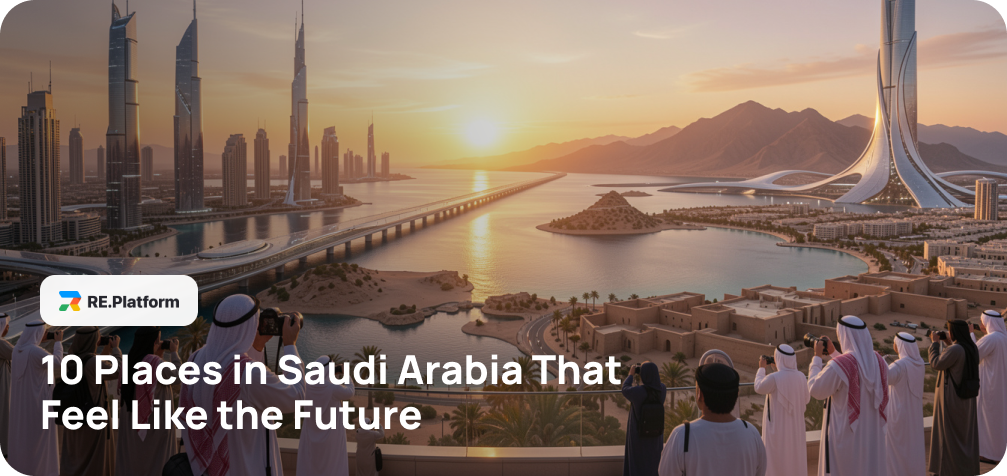
For many people outside the Middle East, Saudi Arabia still exists somewhere between stereotype and mystery.
Some imagine endless desert landscapes. Others associate the country almost entirely with oil, business, or religion. But over the past several years, Saudi Arabia has started changing faster than most outsiders expected — and in some places, the transformation feels almost surreal.
Across Riyadh, the Red Sea coast, AlUla, and several entirely new urban developments, the Kingdom is building places that look radically different from the image many people still have in mind.
Futuristic architecture is rising in the middle of the desert. Luxury destinations are appearing on previously untouched coastlines. Massive entertainment districts, financial hubs, mirrored skyscrapers, underground metro stations, and ultra-modern residential communities are reshaping entire parts of the country almost simultaneously.
And that is exactly why Saudi Arabia has become one of the most talked-about countries in the world right now when it comes to architecture, urban transformation, and large-scale development.
Some of these places already exist. Others are still under construction. But together, they are changing how millions of people around the world see Saudi Arabia for the first time.
Here are 10 places in Saudi Arabia that genuinely feel like they belong in the future.
Table of Contents
The Line — Saudi Arabia’s Most Controversial City of the Future
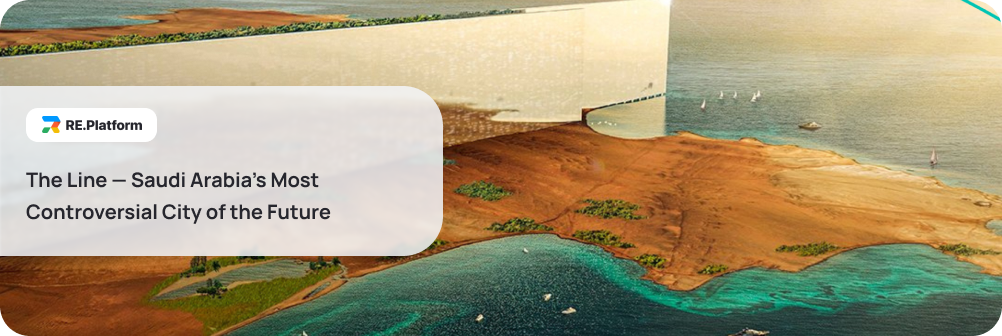
Few projects anywhere in the world have generated as much fascination, skepticism, hype, and debate as The Line.
Announced as part of the broader NEOM development, The Line is not simply another luxury megaproject or futuristic smart city. Saudi Arabia is attempting to build something that fundamentally challenges how modern cities are designed.
The concept sounds almost unreal even by Gulf standards:
a linear city stretching roughly 170 kilometers through the desert, built around a mirrored architectural structure, powered by advanced infrastructure systems, and designed around the idea of zero cars, zero traditional streets, and ultra-high-density vertical living.
And whether people view the project as visionary or overly ambitious, one thing is undeniable:
The Line has already become one of the most recognizable urban development concepts on the planet.
Why The Line Feels So Different From Traditional Cities
Most modern cities expand horizontally over time.
Roads become larger. Traffic becomes worse. Infrastructure spreads outward. Commutes get longer. Urban density becomes increasingly inefficient.
The Line attempts to reverse that entire model.
Instead of building another sprawling metropolis, Saudi Arabia’s vision is based on compressing residential districts, transportation, offices, retail, entertainment, and public infrastructure into a vertically layered urban corridor connected by ultra-high-speed transit.
According to the project’s concept, residents would theoretically be able to access most daily services within just a few minutes without relying on cars.
That alone is one of the reasons The Line continues attracting massive international attention from architects, urban planners, investors, technology companies, and media worldwide.
The Line by the Numbers
| Indicator | Estimated Scale |
|---|---|
| Planned Length | ~170 km |
| Estimated Population Capacity | 9 million residents |
| Target Transportation Time Across City | ~20 minutes |
| Car Usage | Zero private cars planned |
| Location | NEOM Region, Saudi Arabia |
| Core Design | Linear mirrored megastructure |
Even by Saudi Arabia’s current development standards, The Line operates on an entirely different scale.
And that scale is exactly what continues driving global fascination around the project.
Some observers see The Line as the future of urban living. Others question whether such an ambitious city can realistically function at full scale. But regardless of the debate, the project has already succeeded at one thing: changing the global conversation around architecture and city-building.
KAFD — The Futuristic Financial District Transforming Riyadh
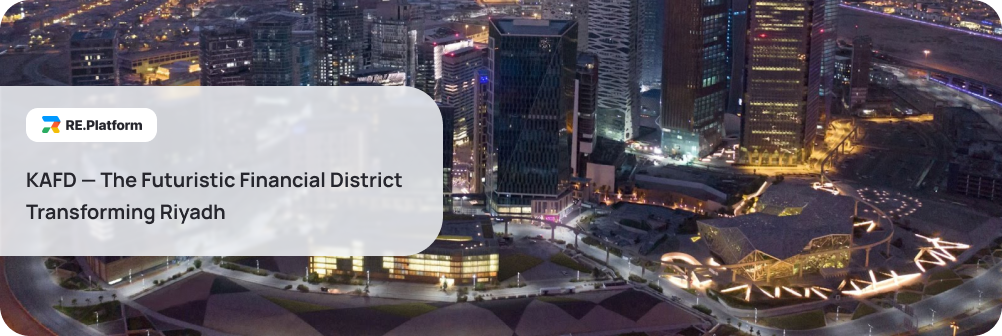
If The Line represents Saudi Arabia’s vision of the future, KAFD represents the part of that future that already exists today.
Located in the northern part of Riyadh, the King Abdullah Financial District — better known as KAFD — has rapidly become one of the most recognizable urban projects in the Middle East. And for many first-time visitors, the area feels surprisingly disconnected from the traditional image most people still associate with Saudi Arabia.
Glass towers dominate the skyline. Driverless metro infrastructure moves beneath futuristic architecture. Luxury hotels, financial institutions, fine dining, residential towers, and public plazas are integrated into a highly modern urban environment that looks closer to Singapore or Hong Kong than to what many outsiders expect from Riyadh.
That contrast is exactly why KAFD became one of the most photographed and talked-about places in Saudi Arabia.
More Than Just a Business District
At first glance, KAFD looks like a traditional financial center built around offices and corporate towers.
In reality, the project was designed as a fully integrated urban district combining:
- finance,
- luxury residential living,
- hospitality,
- retail,
- entertainment,
- and transportation infrastructure.
That mix is one of the biggest reasons KAFD feels radically different from older business districts across the region.
Instead of functioning only during office hours, the area was planned as a long-term mixed-use environment where people can work, live, socialize, and move around within the same urban ecosystem.
Why KAFD Feels So Futuristic
Part of what makes KAFD stand out is the architectural consistency across the district.
Unlike many cities where towers are built independently over decades, KAFD feels intentionally designed as a single futuristic environment. The district combines angular glass skyscrapers, shaded pedestrian bridges, modern public spaces, digital infrastructure, and large-scale transit integration into one highly coordinated urban landscape.
At night, the area becomes even more surreal.
Illuminated towers, reflective facades, massive digital screens, luxury retail spaces, and the futuristic metro station architecture create an atmosphere that feels far removed from the traditional image of Riyadh many people still have in mind.
That visual identity is one of the main reasons KAFD exploded across social media and international architecture publications over the past several years.
KAFD by the Numbers
| Indicator | Estimated Scale |
|---|---|
| Total Area | ~1.6 million sq. meters |
| Number of Buildings | 95+ |
| Office Space | ~3 million sq. ft |
| Residential Units | Thousands of apartments and serviced residences |
| Metro Connectivity | Major Riyadh Metro hub |
| Main Purpose | Financial, business, and mixed-use district |
The Mukaab — Saudi Arabia’s Giant Cube-Shaped Megastructure
Some projects become famous because of their size.
Others become famous because people genuinely cannot believe they are real.
The Mukaab somehow became both.
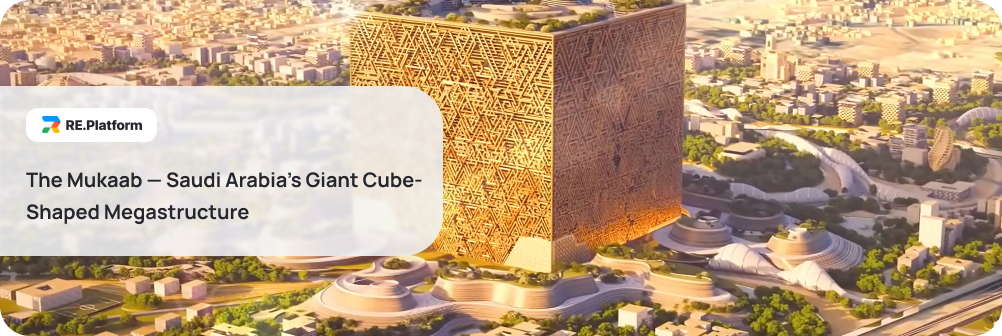
Announced as the centerpiece of Riyadh’s massive New Murabba development, The Mukaab is one of the most visually bizarre and ambitious architectural projects currently planned anywhere in the world. The structure is designed as an enormous cube-shaped megabuilding so large that multiple skyscrapers could theoretically fit inside it.
And that scale is exactly why the project immediately exploded across global media, architecture communities, and social platforms.
For many people seeing the renderings for the first time, The Mukaab looked less like a traditional building and more like something from a science fiction film.
A Structure Designed to Redefine Urban Scale
Unlike conventional skyscrapers built vertically, The Mukaab is designed almost like an entire city compressed into one gigantic architectural object.
The project is expected to combine:
- luxury residences,
- hotels,
- retail,
- entertainment,
- office space,
- cultural venues,
- and immersive digital environments
inside a single ultra-massive structure positioned at the center of New Murabba.
The concept itself reflects Saudi Arabia’s growing preference for projects that prioritize spectacle, scale, and global visibility rather than traditional urban development alone.
Why The Mukaab Became So Viral Online
Part of the reason The Mukaab spread so aggressively online is because the human brain struggles to process its scale correctly.
Most skyscrapers still follow familiar architectural logic:
a tower rises vertically into the skyline.
The Mukaab completely breaks that expectation.
The building appears almost unreal in renderings — a gigantic geometric structure dominating the surrounding cityscape like a futuristic monument rather than a normal piece of urban infrastructure.
That visual shock factor made the project instantly recognizable.
And unlike many traditional skyscrapers, The Mukaab is being designed not only as architecture, but as an experience-driven destination filled with immersive technology, entertainment infrastructure, luxury hospitality, and large-scale public environments.
The Mukaab by the Numbers
| Indicator | Estimated Scale |
|---|---|
| Planned Height | ~400 meters |
| Planned Width | ~400 meters |
| Main Location | New Murabba, Riyadh |
| Expected Capacity | Tens of thousands of residents and visitors |
| Core Function | Mixed-use mega destination |
| Main Architectural Feature | Giant cube-shaped structure |
AlUla — The Ancient Desert City That Feels Almost Unreal
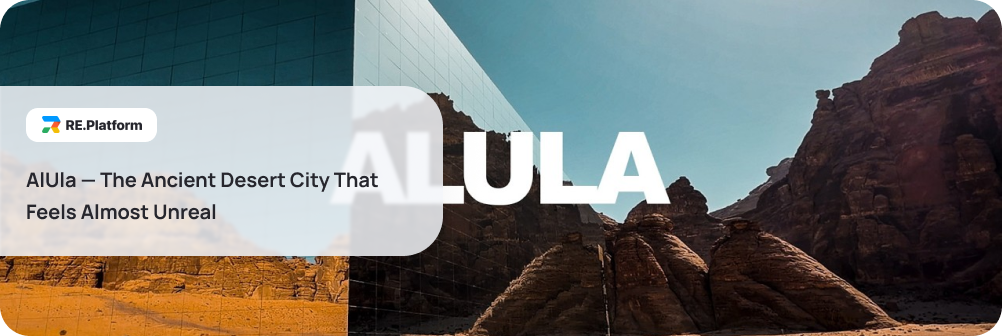
Long before Saudi Arabia became associated with futuristic megaprojects and mirrored skyscrapers, there was AlUla.
And despite all of the Kingdom’s ultra-modern developments, AlUla remains one of the most visually surreal places anywhere in the country.
Located in northwestern Saudi Arabia, the region combines massive sandstone cliffs, ancient tombs, desert canyons, luxury resorts, archaeological sites, and landscapes so unusual that many visitors compare them to scenes from another planet.
That contrast is exactly what makes AlUla so fascinating.
Unlike projects such as The Line or KAFD, AlUla does not feel futuristic because of technology or architecture alone. It feels futuristic because the landscape itself looks almost impossible.
A Place Where Ancient History Meets Ultra-Luxury Tourism
For decades, much of AlUla remained relatively unknown outside the region.
Today, the area has become one of Saudi Arabia’s flagship tourism and luxury development destinations, attracting travelers, architects, luxury hospitality brands, filmmakers, influencers, and international media from around the world.
The Saudi government has invested heavily into transforming AlUla into a global tourism destination while preserving its historical and natural identity.
That balance between ancient heritage and modern luxury is what makes the region feel so unique compared to almost anywhere else in the Middle East.
Why AlUla Became One of Saudi Arabia’s Most Photographed Places
Part of AlUla’s rise came from social media and visual storytelling.
Massive rock formations rising from the desert.
Luxury resorts hidden between canyons.
Mirrored architecture reflecting endless sandstone landscapes.
Concerts and art installations placed in the middle of ancient valleys.
Very few places in the world combine:
- archaeology,
- untouched desert scenery,
- ultra-luxury tourism,
- and cinematic visual identity
on the same scale.
That uniqueness helped transform AlUla from a relatively unknown historical region into one of the most recognizable travel destinations in Saudi Arabia.
AlUla by the Numbers
| Indicator | Estimated Scale |
|---|---|
| Historical Age | Thousands of years |
| UNESCO Heritage Sites | Multiple |
| Main Landmark | Hegra (Madain صالح) |
| Tourism Positioning | Luxury desert tourism destination |
| Main Landscape | Sandstone mountains and desert valleys |
| Global Reputation | One of Saudi Arabia’s most visually iconic locations |
The Red Sea Project — Saudi Arabia’s Ultra-Luxury Coastal Escape
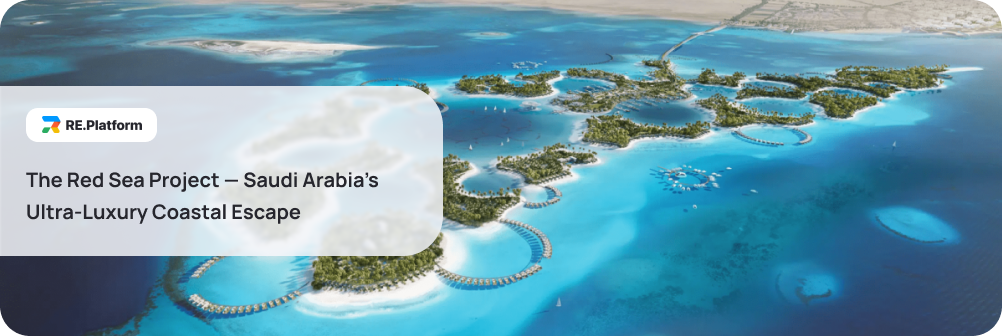
For decades, when people imagined luxury island tourism, they usually thought about destinations like the Maldives, Seychelles, or parts of the Mediterranean.
Saudi Arabia was almost never part of that conversation.
The Red Sea Project is trying to change that completely.
Stretching across a massive section of Saudi Arabia’s western coastline, the development is designed as one of the world’s largest ultra-luxury tourism destinations — combining private islands, futuristic resorts, crystal-clear waters, desert landscapes, luxury marinas, and high-end hospitality infrastructure into an entirely new type of travel experience for the region.
And visually, the project already feels unlike almost anything most people associate with Saudi Arabia.
A Side of Saudi Arabia Most People Never Expected
One of the reasons The Red Sea Project became so globally discussed is because it completely challenges international stereotypes about the Kingdom.
Instead of skyscrapers or desert megacities, visitors see:
- turquoise water,
- luxury beach resorts,
- overwater villas,
- coral reefs,
- yacht marinas,
- and private islands surrounded by untouched coastline.
For many international audiences, the visuals looked closer to the Maldives or futuristic eco-resorts than to traditional perceptions of Saudi Arabia.
That contrast alone made the project go viral across travel media and social platforms.
Why The Red Sea Project Feels So Futuristic
Part of what makes the project stand out is the combination of luxury tourism and environmental design.
Unlike many older coastal developments built around mass tourism, The Red Sea Project was designed around lower-density hospitality, controlled visitor numbers, sustainability initiatives, and highly integrated resort architecture.
Many of the resorts themselves feel almost cinematic:
modern villas suspended above water, desert-inspired minimalist architecture, hidden island retreats, and futuristic luxury compounds placed directly along untouched coastline.
The result feels less like a traditional resort destination and more like a glimpse into what future luxury tourism could look like in the Middle East.
The Red Sea Project by the Numbers
| Indicator | Estimated Scale |
|---|---|
| Total Area | ~28,000 sq. km |
| Number of Islands | 90+ |
| Planned Hotels | 50+ luxury resorts |
| Main Focus | Ultra-luxury tourism and hospitality |
| Main Location | Saudi Arabia’s west coast |
| Key Positioning | Sustainable luxury destination |
Boulevard World — Riyadh’s Massive Entertainment City That Feels Like a Parallel Universe
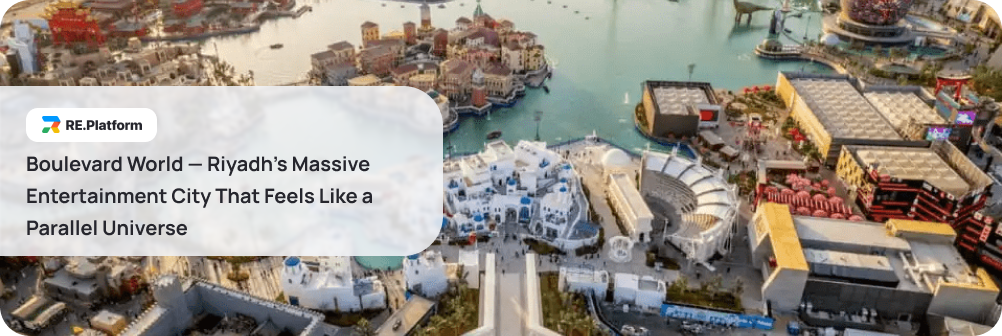
Few places in Saudi Arabia surprise first-time visitors as much as Boulevard World.
Located inside Riyadh’s rapidly expanding entertainment district, the project looks less like a traditional public attraction and more like an enormous futuristic city built entirely around spectacle, technology, tourism, and immersive experiences.
And that is exactly why the area became one of the most viral destinations in Saudi Arabia over the past several years.
For many international visitors, Boulevard World feels almost impossible to reconcile with the older global image of Riyadh. Giant digital screens, artificial lagoons, international themed districts, massive entertainment venues, luxury restaurants, interactive attractions, and futuristic public spaces combine into an environment that feels closer to a sci-fi entertainment hub than a traditional urban district.
A Different Version of Riyadh
One of the biggest reasons Boulevard World attracts so much attention is because the scale of the entertainment infrastructure feels unusually ambitious even by global standards.
Entire themed zones inspired by cities and cultures from around the world were built inside one massive entertainment destination. Visitors move through giant immersive environments filled with architecture, lighting, technology, performances, restaurants, gaming attractions, shopping districts, and large-scale public events happening simultaneously.
At night, the area becomes even more surreal.
Massive illuminated pathways, digital projections, futuristic fountains, floating attractions, live performances, and highly stylized architecture transform the district into one of the most visually intense environments anywhere in Riyadh.
For many visitors, it feels less like a normal entertainment area and more like a glimpse into how Saudi Arabia imagines future urban leisure infrastructure.
Boulevard World by the Numbers
| Indicator | Estimated Scale |
|---|---|
| Main Location | Riyadh |
| Core Function | Entertainment and tourism mega district |
| Main Attractions | Themed zones, restaurants, events, gaming, retail |
| Visitor Profile | Families, tourists, expatriates, young professionals |
| Peak Activity | Riyadh Season |
| Main Identity | Large-scale immersive entertainment destination |
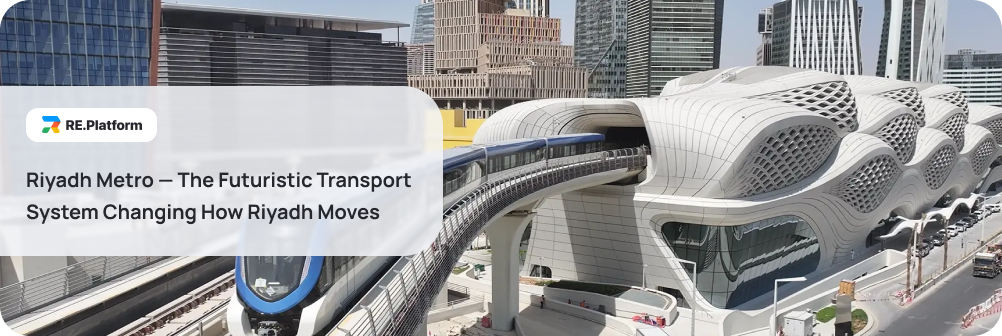
Riyadh Metro — The Futuristic Transport System Changing How Riyadh Moves
For decades, Riyadh was known as one of the world’s most car-dependent capitals.
Massive highways dominated the city. Daily traffic became part of everyday life. And for many outsiders, the idea of Riyadh developing a futuristic large-scale public transportation system seemed almost unrealistic.
Today, that perception is changing rapidly.
The Riyadh Metro has become one of the most ambitious urban transportation projects ever built in the Middle East — and visually, some parts of the system already look more like science fiction movie sets than traditional metro infrastructure.
For many first-time visitors, the stations themselves are almost as impressive as the transportation network behind them.
A Metro System Built for a Future Version of Riyadh
Unlike older metro systems that evolved gradually over decades, Riyadh Metro was designed as a massive integrated network from the beginning.
The project connects large parts of the capital through six metro lines, dozens of major stations, advanced transit infrastructure, and highly modern architectural design intended to support Riyadh’s long-term urban expansion.
But what makes the metro especially unique is not only its scale.
It is the way the system visually reflects Saudi Arabia’s broader transformation strategy.
Several stations feature ultra-modern architecture with flowing geometric structures, enormous open interiors, futuristic lighting systems, and highly stylized public spaces that feel radically different from the traditional image most people still associate with Riyadh.
The KAFD Metro Station in particular became globally recognizable almost immediately after images of the structure started circulating online.
Why Riyadh Metro Feels So Futuristic
Part of the reason the metro system generated so much international attention is because Riyadh skipped several stages of traditional urban transportation evolution.
Instead of gradually modernizing older infrastructure over many decades, the city launched an enormous next-generation transit system almost all at once.
That created a very unusual visual contrast:
futuristic metro architecture appearing in a city that many outsiders still imagine primarily through highways and desert landscapes.
The stations themselves became social media attractions almost immediately.
Massive curved ceilings, ultra-clean minimalist interiors, advanced lighting systems, digital infrastructure, and highly cinematic architectural design helped turn several stations into some of the most photographed urban spaces in Saudi Arabia.
Riyadh Metro by the Numbers
| Indicator | Estimated Scale |
|---|---|
| Total Metro Lines | 6 |
| Total Stations | 85+ |
| Main Coverage | Riyadh metropolitan area |
| Main Transportation Goal | Reduce traffic congestion |
| Largest Hub | KAFD Metro Station |
| Global Positioning | One of the largest metro projects in the world |
Diriyah — Where Saudi Arabia’s Past and Future Collide
Some places in Saudi Arabia feel futuristic because of technology.
Diriyah feels futuristic because of contrast.
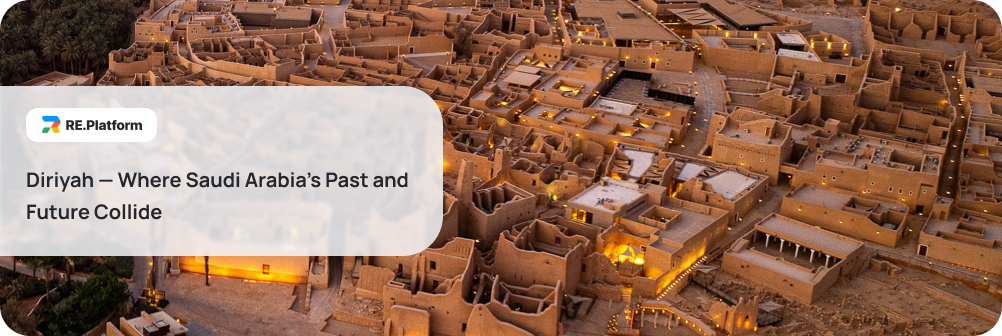
Located on the outskirts of Riyadh, Diriyah is one of the oldest and most historically important locations in the Kingdom. It is often referred to as the birthplace of the Saudi state, known for its traditional Najdi architecture, mud-brick structures, and UNESCO-recognized heritage sites.
But today, the area is also becoming one of the most ambitious luxury urban developments anywhere in the Middle East.
That combination — ancient history surrounded by ultra-modern investment, hospitality, retail, and luxury real estate — is exactly what makes Diriyah feel so unique.
A Historic City Rebuilt as a Luxury Destination
For decades, Diriyah was viewed primarily as a cultural and historical site.
Now, the area is being transformed into a massive lifestyle and tourism destination designed to attract millions of visitors, luxury hospitality brands, international investors, and affluent residents from around the world.
High-end hotels, luxury residences, fine dining, boutique retail, pedestrian zones, museums, entertainment spaces, and modern public infrastructure are all being integrated directly around preserved historical architecture.
Very few places in the world attempt development at this scale while simultaneously preserving centuries-old urban identity.
That tension between heritage and futuristic urbanism is what makes Diriyah so visually striking.
Why Diriyah Feels Different From Other Megaprojects
Unlike projects such as The Line or The Mukaab — which focus heavily on futuristic architecture and large-scale spectacle — Diriyah’s identity is built around atmosphere.
The area combines:
- traditional Najdi design,
- luxury hospitality,
- desert aesthetics,
- walkable urban spaces,
- palm-lined public areas,
- and highly curated architectural preservation
into an environment that feels simultaneously ancient and futuristic.
At night especially, the district becomes almost cinematic.
Warm sandstone colors, illuminated mud-brick structures, luxury courtyards, outdoor restaurants, and carefully integrated lighting systems create an atmosphere that feels radically different from both modern Riyadh and most global luxury destinations.
Diriyah by the Numbers
| Indicator | Estimated Scale |
|---|---|
| UNESCO Heritage Status | Yes |
| Main Historical Landmark | At-Turaif District |
| Development Positioning | Luxury heritage megaproject |
| Main Location | Northwest Riyadh |
| Planned Visitors | Tens of millions annually |
| Core Identity | Heritage + luxury urban development |
Jeddah Tower — The Skyscraper Designed to Reach Higher Than Any Building on Earth
For years, Dubai’s Burj Khalifa dominated the global conversation around supertall skyscrapers.
Saudi Arabia wants to go even further.
Jeddah Tower — previously known as Kingdom Tower — was designed with one goal that immediately captured worldwide attention:
to become the tallest building ever constructed.
And even though the project experienced delays and years of uncertainty, it remains one of the most iconic architectural symbols tied to Saudi Arabia’s transformation ambitions.
Because the tower is not simply about height.
It represents Saudi Arabia’s attempt to position itself inside the global competition for architectural prestige, urban influence, and mega-scale development.
A Tower Built to Redefine Global Scale
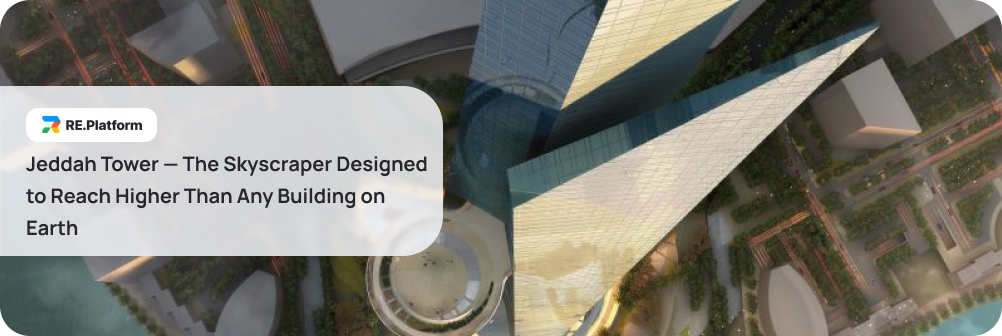
Located in Jeddah along Saudi Arabia’s Red Sea coast, the tower was designed to rise more than one kilometer into the sky — surpassing the Burj Khalifa and potentially becoming the first structure in history to officially cross the 1,000-meter threshold.
Even by modern megaproject standards, that scale feels almost unreal.
The project quickly became one of the most recognizable skyscraper concepts in the world because the dimensions themselves sounded almost impossible.
And visually, the design reinforced that feeling.
Unlike bulky or overly complex towers, Jeddah Tower uses an elegant tapered structure that appears almost impossibly thin relative to its height, giving the building a distinctly futuristic silhouette against the skyline.
Why Jeddah Tower Became So Famous
Part of the reason the tower became globally iconic is because height itself still carries enormous symbolic power in architecture.
The world’s tallest building is never just another real estate project.
It becomes:
- a national statement,
- a tourism magnet,
- a branding tool,
- and a symbol of ambition.
That effect became even stronger because Saudi Arabia was not previously viewed as a country competing directly in ultra-modern skyscraper culture on the same level as Dubai, Shanghai, or New York.
Jeddah Tower changed that perception almost immediately.
The project signaled that Saudi Arabia was willing to compete at the absolute highest level of global architecture and urban spectacle.
Jeddah Tower by the Numbers
| Indicator | Estimated Scale |
|---|---|
| Planned Height | 1,000+ meters |
| Main Location | Jeddah, Saudi Arabia |
| Global Goal | Tallest building in the world |
| Main Functions | Luxury residences, hotel, offices, observation decks |
| Architectural Style | Ultra-slender futuristic tower |
| Global Status | One of the world’s most ambitious skyscraper projects |
Trojena — The Desert Mountain Resort Where Saudi Arabia Plans to Build Snow
Of all the futuristic places currently being built in Saudi Arabia, Trojena may be the one that sounds the least believable.
A mountain resort with outdoor skiing, luxury hotels, lakes, entertainment districts, and year-round tourism infrastructure — in a country globally associated with desert heat.
That contradiction alone is exactly why Trojena became one of Saudi Arabia’s most viral megaprojects almost immediately after its announcement.
For many people outside the Kingdom, the idea sounded almost impossible:
Saudi Arabia building a futuristic mountain destination designed around winter tourism and outdoor alpine experiences.
And yet, construction and infrastructure development continue moving forward inside the NEOM region.
A Completely Different Side of Saudi Arabia
One of the reasons Trojena fascinates international audiences is because the project completely breaks the stereotypical image many people still have of Saudi Arabia.
Instead of endless desert landscapes and high temperatures, Trojena is centered around:
- mountain terrain,
- cooler climate zones,
- outdoor sports,
- luxury resorts,
- nature tourism,
- and futuristic leisure infrastructure.
The region itself sits in one of Saudi Arabia’s highest mountain areas, where winter temperatures become dramatically lower than in most parts of the country.
That natural geography made Trojena possible in the first place.
Why Trojena Went Viral Around the World
Part of Trojena’s global popularity comes from pure contrast.
The idea of snow and ski resorts inside Saudi Arabia immediately creates curiosity because it clashes so aggressively with global expectations.
That curiosity became even stronger after futuristic renderings of the project started spreading online:
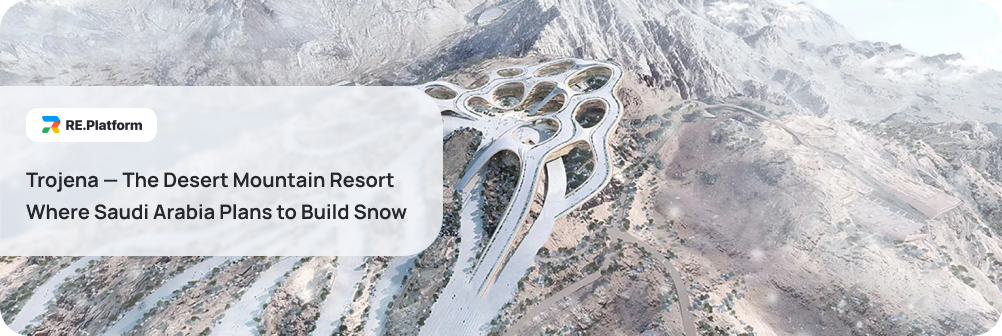
glass architecture built into mountain landscapes, artificial lakes surrounded by luxury resorts, illuminated cliffside developments, and futuristic leisure districts hidden inside rocky terrain.
Visually, the project looks closer to a sci-fi alpine city than to anything most people associate with the Middle East.
And that visual shock factor helped Trojena become one of Saudi Arabia’s most recognizable developments internationally.
Trojena by the Numbers
| Indicator | Estimated Scale |
|---|---|
| Main Location | NEOM mountain region |
| Elevation | Up to ~2,600 meters |
| Core Positioning | Luxury mountain tourism destination |
| Main Attractions | Skiing, resorts, lakes, outdoor sports |
| International Recognition | Host of the 2029 Asian Winter Games |
| Main Identity | Futuristic alpine resort in the desert |