Browse by category


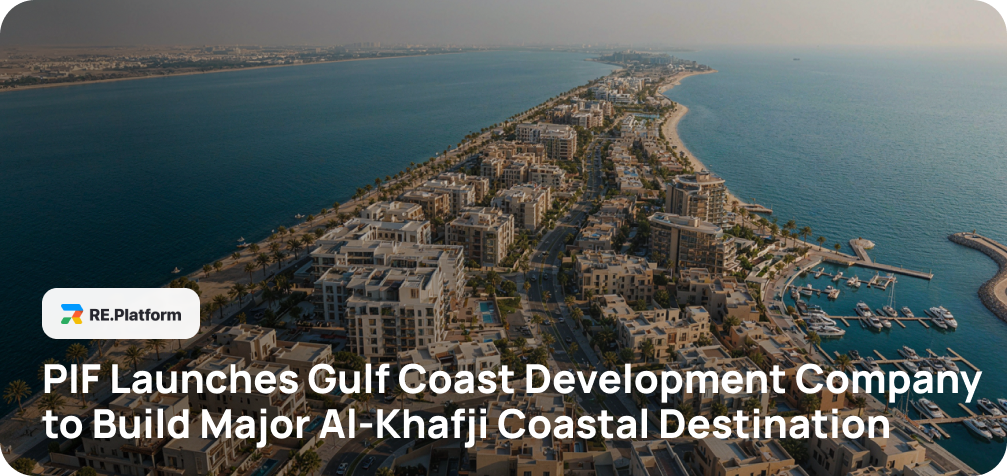
Saudi Arabia’s Public Investment Fund has launched a new real estate company to develop one of the largest new coastal destinations in the northern Eastern Province.
Gulf Coast Development Company will lead the development of an integrated residential and tourism destination in Al-Khafji, close to the border with Kuwait. The project will span approximately 20 square kilometers and include a 10-kilometer waterfront along the Arabian Gulf.
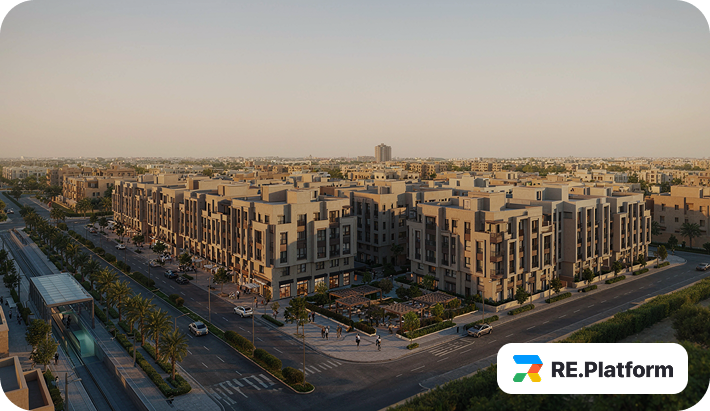
When completed, the development is expected to contain more than 16,000 residential units, around 1,400 hotel keys, eight residential neighborhoods and a range of commercial, tourism, educational and public facilities.
The scale of the project makes it more than another housing development. It is part of a broader effort to create new urban centers outside Saudi Arabia’s largest real estate markets and attract investment into regions that have historically received less attention than Riyadh, Jeddah and the Kingdom’s main giga-project destinations.
Table of Contents
What is Gulf Coast Development Company?
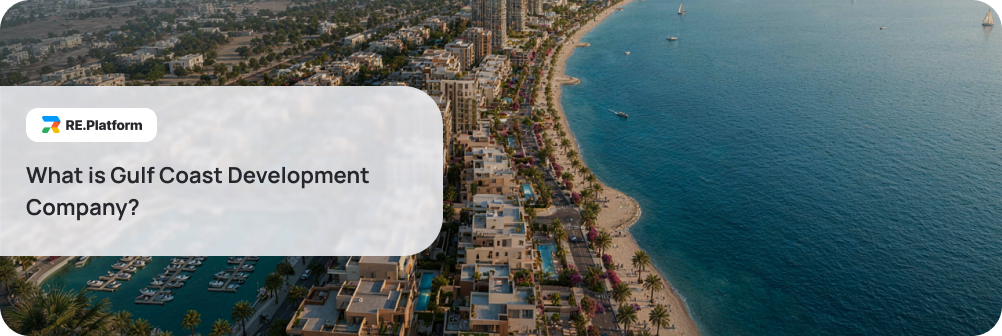
Gulf Coast Development Company is a newly launched PIF-backed company created specifically to develop the Al-Khafji coastal destination.
PIF announced the company on September 7, 2026. The project will be developed with participation from private-sector partners and local and regional investors. The company sits within PIF’s Urban Development and Livability ecosystem, one of the six ecosystems identified in the fund’s 2026–2030 strategy. That positioning is important.
Saudi Arabia’s next stage of real estate development is increasingly focused not only on launching landmark projects, but also on creating functioning urban districts with housing, tourism, public infrastructure and commercial activity integrated within the same development.
Al-Khafji is one of the latest examples of this approach.
Gulf Coast Development Project: Key Figures
The announced scale of the Al-Khafji project is substantial.
| Indicator | Planned Scale |
|---|---|
| Total development area | Around 20 sq km |
| Waterfront | Around 10 km |
| Residential neighborhoods | 8 |
| Housing units | More than 16,000 |
| Hotel keys | Around 1,400 |
| First phase completion | 2030 |
| Development phases | 3 |
The project will also include commercial facilities, tourism infrastructure, educational facilities, public amenities and dedicated boat marinas. The first phase is scheduled for completion in 2030 and is expected to deliver three neighborhoods. That means the development will unfold over a long time horizon rather than entering the market as a single large delivery.
Why Al-Khafji?
Al-Khafji occupies a strategically unusual position within Saudi Arabia’s real estate map.
The city is located in the far north of the Eastern Province, close to Kuwait and directly on the Arabian Gulf. This gives the project access to several potential demand sources rather than relying only on the local residential market. PIF specifically highlighted accessibility from Saudi Arabia, Kuwait and other Gulf states as one of the project’s advantages.
That makes the development relevant to three different markets at once:
residential demand from the Eastern Province, tourism and leisure demand from the wider Gulf, and cross-border investment from nearby GCC markets.
This is different from a conventional suburban project built primarily to absorb population growth within a large Saudi city.
The Al-Khafji development is being positioned as a regional destination.
More Than 16,000 New Homes
The residential component is one of the most important parts of the project.
More than 16,000 housing units are planned across eight neighborhoods.
For comparison, this is large enough to create an entirely new urban district rather than simply expand the existing housing stock with several compounds or apartment buildings.
The project also fits into a wider pattern visible across the Saudi real estate market: large developers are increasingly building mixed-use communities in which housing is combined with hospitality, retail, education and leisure infrastructure.
This model can create stronger long-term demand because residents do not depend entirely on infrastructure outside the development.
For developers, however, it also makes project execution more complex. Thousands of residential units, multiple neighborhoods, phased releases and different product types require much more sophisticated inventory, pricing and sales management than a single residential project.
Tourism Will Be a Major Part of the Development
Around 1,400 hotel keys are planned alongside the residential component. This confirms that Gulf Coast Development Company is not treating Al-Khafji as a housing-only opportunity.
Tourism has become one of the central components of Saudi Arabia’s economic diversification strategy, and coastal destinations have emerged as an important part of the country’s development pipeline.
PIF described the project as a response to growing demand for accommodation and tourism options in the northern Eastern Province. The location may also help create weekend and short-stay demand from Kuwait because of Al-Khafji’s proximity to the border.
Marinas and waterfront facilities are expected to reinforce the leisure component of the destination.
Why the Project Matters for the Eastern Province
Most international attention around Saudi real estate still concentrates on Riyadh, Jeddah, NEOM and the Red Sea.
The Al-Khafji announcement shows that development is becoming more geographically distributed. The Eastern Province already contains some of Saudi Arabia’s most important economic centers, including Dammam, Al Khobar, Dhahran and Jubail.
Al-Khafji extends that development story further north. The project could create new residential supply, increase hospitality capacity and encourage private-sector development around the destination.
PIF also expects the development to create direct and indirect economic opportunities for the local community.
Private-Sector Participation Is Central to the Project
Another important feature is the role of private capital.
PIF said Gulf Coast Development Company will work with private-sector partners as well as local and regional investors.
This reflects a broader change in Saudi Arabia’s development model. Government-backed entities still play a major role in establishing large projects, but an increasing share of execution, financing, hospitality, construction and supporting infrastructure is expected to involve private companies. For investors and developers, this means large PIF-backed destinations can generate opportunities beyond the project owner itself.
Construction firms, hospitality operators, retailers, service companies and residential developers may all become part of the wider development ecosystem.
Al-Khafji and Saudi Arabia’s New Real Estate Geography
Saudi Arabia’s real estate transformation is no longer limited to a small number of flagship destinations. New projects are appearing across Riyadh, Jeddah, Madinah, Makkah and the Eastern Province, while PIF-backed entities are also investing in secondary cities and regional destinations.
The Gulf Coast Development Company project is significant because it brings large-scale integrated development to an area that has traditionally had a much smaller profile in the national property market. The project also reinforces one of the clearest trends in Saudi real estate in 2026: capital is moving beyond individual buildings and isolated compounds toward complete destinations.
These projects combine residential supply, hospitality, commercial activity, infrastructure and public space within a single development strategy.
What Happens Next?
Development will take place in three phases.
The first phase, expected to be completed in 2030, will include three residential neighborhoods and establish the initial tourism and community infrastructure.
More information about individual residential products, developers, pricing, sales schedules and investment opportunities has not yet been publicly detailed. For buyers, this means the project remains at an early development stage. For the Saudi property market, however, the direction is already clear. Al-Khafji is being prepared for a much larger role in the Eastern Province’s residential and tourism economy.
FAQ
What is Gulf Coast Development Company?
Gulf Coast Development Company is a PIF-backed real estate company launched in September 2026 to develop a major residential and tourism destination in Al-Khafji.
Where is the project located?
The development is located in Al-Khafji in Saudi Arabia’s Eastern Province, close to the Kuwaiti border and the Arabian Gulf.
How large is the Al-Khafji project?
The project will cover approximately 20 square kilometers and include around 10 kilometers of waterfront.
How many homes will be built?
More than 16,000 housing units are planned across eight residential neighborhoods.