Browse by category


Just a few years ago, Saudi Arabia’s residential real estate market was largely associated with villas, gated family compounds, and expensive private residences for wealthy local buyers. In 2026, however, the structure of demand looks completely different. Apartments have gradually become the dominant urban housing format — from compact studios for young professionals to large family units in modern residential communities across Riyadh, Jeddah, and the Eastern Province.
This shift is not only about population growth or large-scale construction activity. Saudi Arabia has become significantly more urbanized over the past several years. Riyadh alone continues attracting international companies, engineers, consultants, IT specialists, executives, and investors connected to major economic projects across the Kingdom.
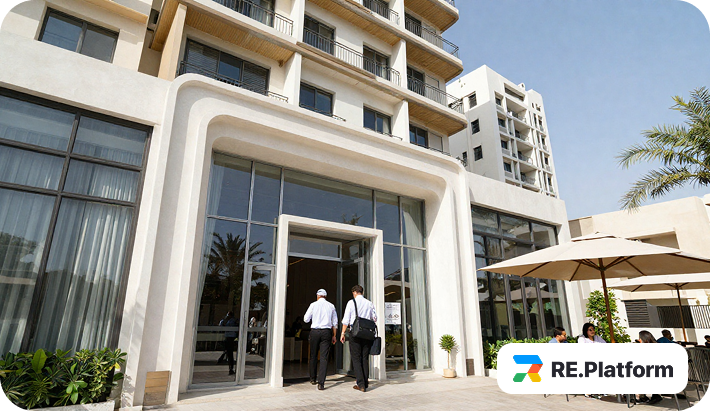
As a result, buyer expectations have also evolved. More people are looking for modern apartments with parking, security, integrated infrastructure, and convenient access to business districts rather than traditional standalone housing.
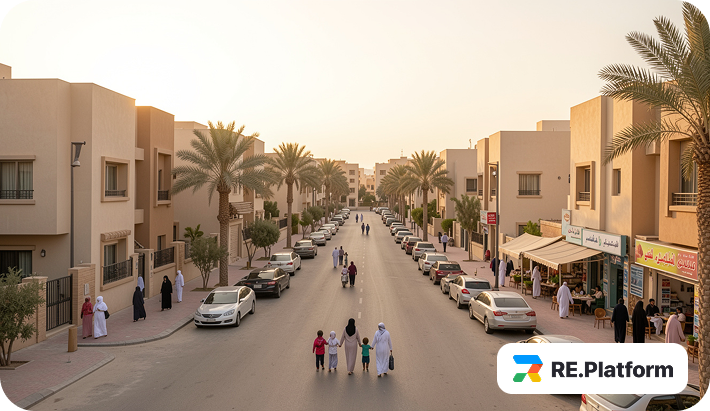
At the same time, there is one important reality foreign buyers often misunderstand: there is no single “average apartment price” in Saudi Arabia. The gap between districts is enormous. In practice, the market operates as several completely different submarkets layered inside the same city.
Some buyers enter the market with a budget of SAR 280,000–350,000, while others focus exclusively on North Riyadh, where quality apartments often start at SAR 700,000 or higher.
That is why the question “How much does an apartment cost in Saudi Arabia?” always depends on the city, district, building quality, and apartment type.
Table of Contents
What Types of Apartments Are Available in Saudi Arabia
Studio Apartments and Compact Units
Studios remain the most affordable entry point into the Saudi residential market. These units are commonly purchased by young professionals, first-time buyers, or investors targeting long-term rental demand.
In Riyadh, studio apartments are typically found inside newer mid-range residential projects. Most units range between 40 and 60 square meters and increasingly include amenities such as underground parking, security systems, fitness facilities, and landscaped communal areas.
The average studio apartment price in Riyadh in 2026 is approxim
One-Bedroom and Two-Bedroom Apartments
This is currently the core segment of the Saudi apartment market. One-bedroom and two-bedroom apartments are especially popular among families, expatriates, and buy-to-rent investors.
Average prices in Riyadh currently look like this:
| Apartment Type | Average Price |
|---|---|
| Studio Apartment | SAR 202,000 |
| One-Bedroom Apartment | SAR 334,000 |
| Two-Bedroom Apartment | SAR 527,000 |
Interestingly, two-bedroom apartments now represent the most expensive mainstream apartment segment in Riyadh. The reason is straightforward: family demand continues growing faster than supply in many desirable districts.
In newer northern developments, these apartments are increasingly sold inside fully integrated residential communities with swimming pools, retail spaces, private security, and lifestyle-oriented infrastructure.
Premium Apartments and Luxury Residences
At the top end of the market, pricing is driven not only by size, but also by district prestige, developer reputation, finishing quality, and project branding.
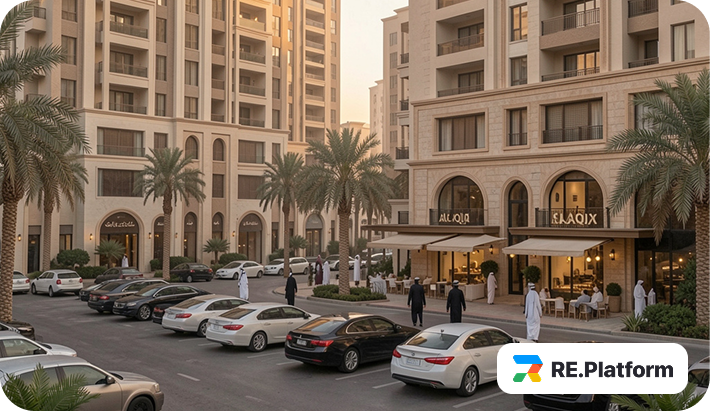
Luxury apartment developments are becoming increasingly common in districts such as Al Narjis, Al Yasmin, Qurtubah, and several emerging northern corridors of Riyadh.
Saudi Arabia is also seeing the expansion of branded residences — projects that combine residential ownership with hospitality-style services, designer interiors, concierge systems, and premium lifestyle amenities.
How Much Do Apartments Cost in Saudi Arabia in 2026?
Although residential construction activity is growing across the Kingdom, Riyadh remains the country’s primary pricing benchmark. Most major residential developments, international investments, and large-scale housing demand are concentrated there.
Quick Overview of Riyadh Apartment Prices
| Metric | Average Value |
|---|---|
| Average apartment price in Riyadh | SAR 730,000 |
| Average price per square meter | SAR 4,500 |
| Minimum realistic entry budget | From SAR 280,000 |
| Average studio apartment price | SAR 202,000 |
| Average one-bedroom apartment price | SAR 334,000 |
| Average two-bedroom apartment price | SAR 527,000 |
| Most expensive district | Al Narjis |
| Most affordable district | Al Shifa |
Why Apartment Prices Vary So Much Across Riyadh
The defining characteristic of Riyadh’s apartment market is the enormous price difference between districts.
For example, average apartment prices per square meter in Al Narjis reach approximately SAR 8,500, while Al Shifa averages closer to SAR 1,940 per square meter. That represents a difference of more than four times.
In practice, this means Riyadh is not one apartment market — it is several completely different housing markets operating inside the same city.
Northern Riyadh typically requires a starting apartment budget between SAR 500,000 and SAR 750,000, while entry-level apartments in southern districts may still start near SAR 280,000.
Northern Riyadh Has Become a Premium Residential Market
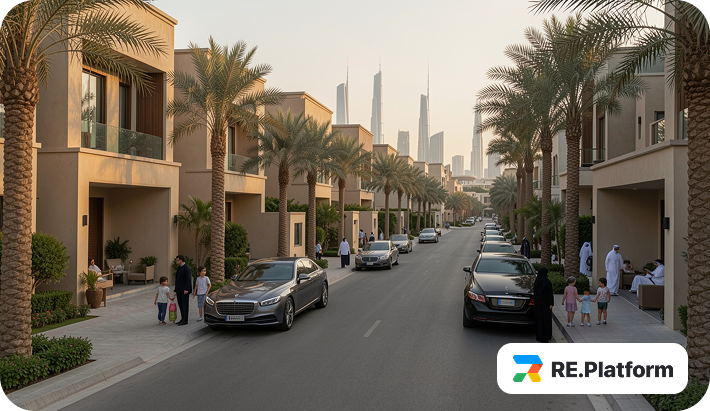
Over the last several years, North Riyadh has evolved into the city’s primary premium residential zone.
Districts such as Al Narjis, Al Yasmin, Al Malqa, and Qurtubah now attract much of the city’s new development activity. Infrastructure expansion, business growth, and modern mixed-use projects continue driving demand higher in these areas.
What makes Riyadh particularly interesting is that even neighboring districts can have significantly different pricing structures.
| District | Average Price per Sq. Meter |
|---|---|
| Al Yasmin | ~SAR 3,700 |
| Al Malqa | ~SAR 3,400 |
| Al Narjis | ~SAR 8,500 |
Small differences in infrastructure, road connectivity, accessibility, and project quality often create substantial pricing gaps.
Affordable Districts Do Not Always Mean Poor Quality
One of the most common mistakes foreign buyers make is assuming cheaper districts automatically mean low-quality housing.
That is not necessarily true in Saudi Arabia.
For example, Al Munsiyah still offers two-bedroom apartments around SAR 337,000 — nearly three times cheaper than comparable units in Al Narjis. For many families, however, it remains a practical and attractive residential option.
Another interesting case is Al Rimal. The district has a relatively low average price per square meter at around SAR 2,220, but median property prices still approach SAR 784,000. This usually indicates that apartments in the area are simply larger on average.
Construction Quality Strongly Impacts Pricing
In Saudi Arabia, location alone does not determine apartment value.
A newly developed residential project and an older building within the same district can easily differ in price by 30–50%.
This is especially visible in Riyadh, where some districts are rapidly modernizing while older residential stock still remains in circulation.
Buyers therefore need to evaluate:
- Project age
- Developer reputation
- Construction quality
- Community infrastructure
- Parking availability
- Apartment layout and usable space
Without considering these factors, simple price-per-square-meter comparisons can become misleading.
Conclusion
Saudi Arabia’s apartment market in 2026 is no longer a niche sector aimed only at wealthy local buyers or institutional investors. Today, the market offers a broad range of housing options — from compact studio apartments priced near SAR 200,000 to luxury residences in North Riyadh worth several million riyals.
The most important thing buyers should understand is that apartment prices in Saudi Arabia are shaped far more by district quality, infrastructure, and project standards than by the city itself.
Riyadh, in particular, now operates as several different residential markets at once. Northern districts continue moving deeper into the premium segment, while southern and eastern areas still provide more accessible opportunities for both residents and investors.
For investors, this means one thing clearly: the Saudi apartment market can no longer be evaluated superficially. Buying property in Riyadh today requires understanding not only the apartment itself, but also the long-term trajectory of the district, the quality of the development, and the broader direction of urban expansion across the city.