Browse by category


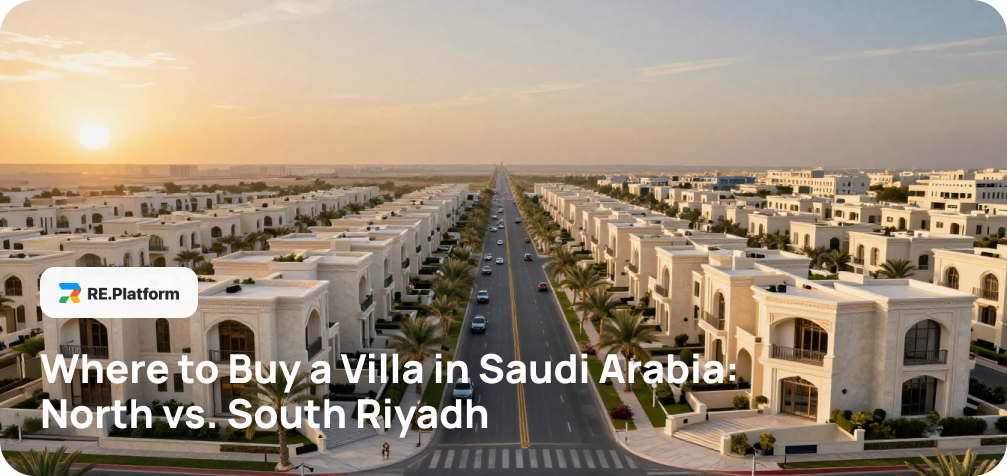
For years, the Saudi residential market was dominated by apartments, compounds, and traditional family housing. That balance is now shifting. Riyadh’s rapid expansion under Vision 2030, combined with population growth, new infrastructure, and rising purchasing power among upper-middle-income families, has turned villas into one of the most competitive segments in the Kingdom’s residential sector.
The capital is no longer growing outward slowly. It is expanding aggressively through new districts, metro connectivity, mixed-use developments, business corridors, and large-scale urban transformation projects. That expansion changed how buyers evaluate residential property. A villa in Riyadh today is not simply a family home. It is increasingly treated as a long-term asset tied to land scarcity, district prestige, infrastructure access, and future appreciation potential.
Villa demand has accelerated particularly in northern Riyadh, where new business districts, international schools, luxury retail, and premium infrastructure continue attracting high-income Saudi families and expatriate executives. At the same time, southern Riyadh remains one of the few areas where buyers can still access comparatively affordable villa inventory with larger land plots and lower entry prices.
This has created one of the most important strategic questions in the Riyadh residential market:
Should buyers prioritize the prestige and appreciation potential of North Riyadh, or the affordability and long-term expansion opportunity of South Riyadh?
That decision increasingly depends on whether the buyer is focused on lifestyle, capital appreciation, rental demand, or entry-level affordability.
Saudi Arabia’s broader residential market continues to show strong momentum in 2026, particularly in Riyadh, where villa demand remains one of the fastest-growing segments. Multiple market analyses point to sustained residential price growth, strong migration into the capital, and continued pressure on supply in premium districts.
Table of Contents
Why Villas Remain So Popular in Riyadh
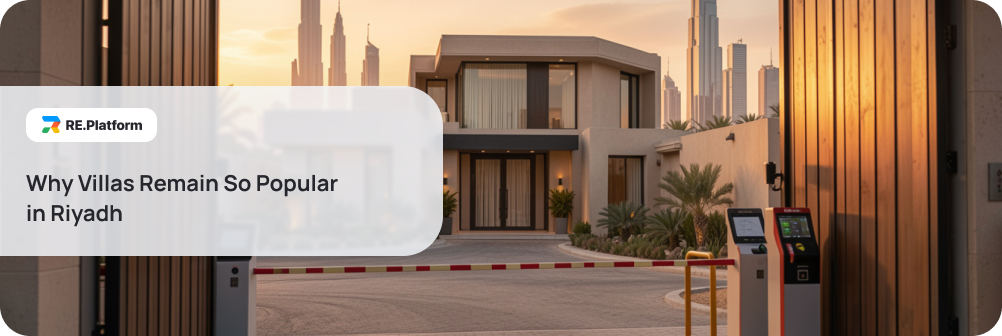
Unlike many global cities where apartments dominate urban living, Riyadh still maintains a strong preference for larger family-oriented housing. Villas remain deeply connected to Saudi lifestyle expectations around privacy, family space, multi-generational living, and private amenities.
Even younger buyers entering the market increasingly prioritize townhouse-style or compact villa developments over high-density apartment living. Developers have adapted accordingly. Across Riyadh’s newer districts, villa communities now integrate smart-home systems, gated layouts, landscaped streets, fitness infrastructure, and retail zones directly into residential planning.
Several macroeconomic trends are reinforcing villa demand:
- Population growth inside Riyadh continues accelerating.
- Regional headquarters relocating into Riyadh are increasing executive housing demand.
- Mortgage accessibility has expanded through government-backed programs.
- Infrastructure megaprojects continue reshaping residential desirability.
- Land scarcity in premium districts is pushing villa prices upward.
Riyadh also differs from coastal Saudi cities because its economic gravity remains highly centralized. Proximity to financial districts, government institutions, and corporate hubs directly affects residential pricing.
That is why geographic positioning inside Riyadh matters more than ever.
North Riyadh: The Premium Residential Engine
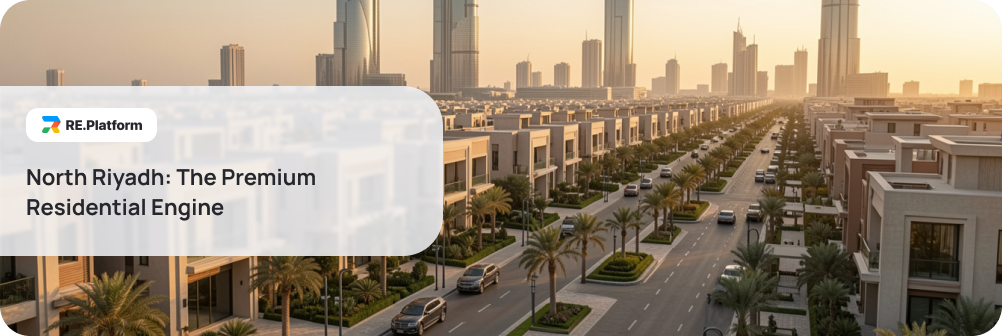
North Riyadh has effectively become the capital’s flagship residential corridor.
Districts such as Al Narjis, Al Yasmin, Al Malqa, Al Aqiq, Al Nakhil, Al Sahafa, and Al Rahmaniyah are now associated with premium family living, strong infrastructure, and long-term appreciation potential. Many of Riyadh’s highest-performing villa districts are concentrated in this northern zone.
The reason is not accidental.
North Riyadh sits closest to several of the city’s most important economic and urban drivers:
- King Abdullah Financial District (KAFD)
- Riyadh Metro expansion
- King Salman Park
- Sports Boulevard
- Major highway corridors
- International schools and business hubs
- Premium retail and hospitality zones
These projects transformed northern Riyadh from a suburban expansion area into the city’s primary high-income residential market.
Today, villa buyers in North Riyadh are often purchasing future scarcity as much as they are purchasing housing itself.
Typical Buyer Profile in North Riyadh
The northern market attracts:
| Buyer Type | Main Motivation |
|---|---|
| High-income Saudi families | Prestige, schools, infrastructure |
| Executives and expatriates | Proximity to business districts |
| Investors | Long-term capital appreciation |
| Developers | Strong demand and pricing power |
| International buyers | Premium district exposure |
Unlike purely speculative markets, North Riyadh’s villa demand is supported by real end-user demand. Families actively want to live there, not simply invest there.
That distinction matters because it creates more resilient pricing behavior during market fluctuations.
Villa Prices in North Riyadh
North Riyadh is now the most expensive residential zone in the capital for villas.
Current listings and market platforms show average villa asking prices exceeding SAR 4 million in many northern districts, while premium inventory can move significantly higher depending on land size, architecture, and proximity to major infrastructure corridors.
Approximate Villa Pricing in North Riyadh (2026)
| District | Typical Villa Price Range (SAR) | Market Position |
|---|---|---|
| Al Narjis | 3.3M – 10.5M | High-growth premium district |
| Al Yasmin | 3M – 6.5M | Family-oriented upscale market |
| Al Nakhil | 5M – 8M+ | Established luxury area |
| Al Rahmaniyah | 6M – 8.5M+ | Mature high-end residential zone |
| Al Malqa | 3.5M – 6M | Strong investor demand |
One of the strongest advantages of North Riyadh is liquidity. Premium villas in northern districts generally sell faster, attract stronger financing demand, and maintain better resale positioning compared to secondary districts elsewhere in the city.
However, higher pricing also creates a major barrier to entry.
That is where South Riyadh enters the discussion.
South Riyadh: Affordability, Scale, and Long-Term Growth
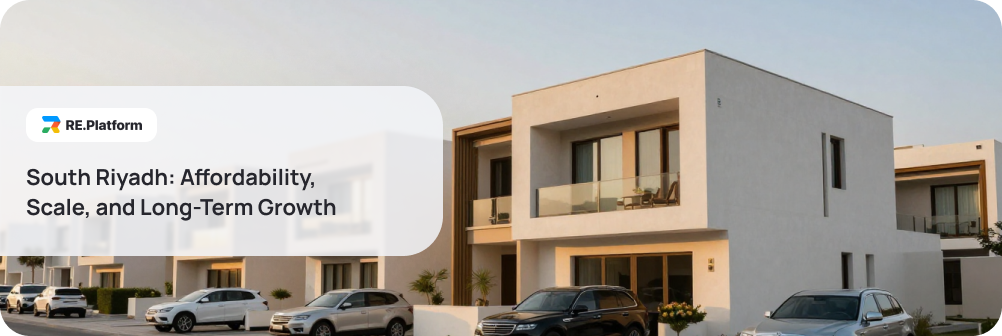
South Riyadh operates under a very different residential dynamic.
Historically, the southern districts developed with more industrial adjacency, lower land values, and less infrastructure investment compared to the north. For many years, buyers associated South Riyadh with affordability rather than prestige.
But Riyadh’s expansion is changing that equation.
As northern prices continue climbing, many Saudi families are shifting attention toward southern districts where villas remain significantly more accessible. Developers are also increasingly targeting these areas with newer gated communities and mid-market residential projects.
The southern market now appeals to buyers who prioritize:
- Larger land plots
- Lower entry prices
- Long-term appreciation potential
- Family affordability
- Future infrastructure upside
This is especially important because Riyadh’s housing demand is no longer limited to luxury buyers. The city’s broader population growth requires scalable family housing across multiple income brackets.
South Riyadh increasingly fills that role.
The Core Difference Between North and South Riyadh
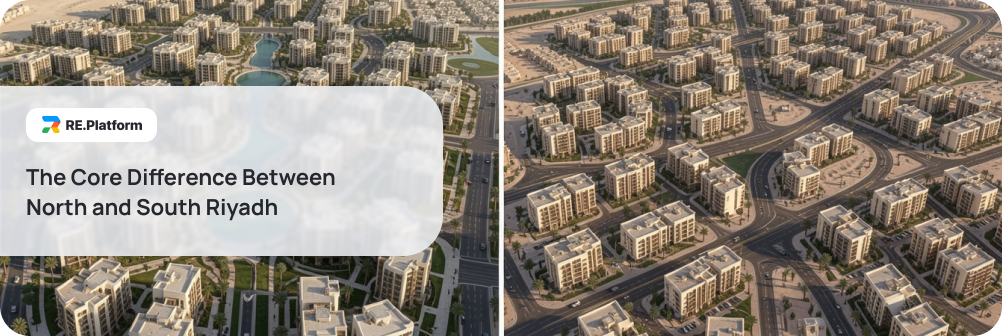
The market difference is no longer simply “luxury versus affordability.”
The real distinction is this:
North Riyadh is driven by immediate desirability and prestige.
South Riyadh is driven by accessibility and future urban expansion.
That creates two very different investment profiles.
| Factor | North Riyadh | South Riyadh |
|---|---|---|
| Price Level | High | Moderate |
| Infrastructure Quality | Premium | Improving |
| International Demand | Strong | Limited |
| Rental Demand | Executive & premium family | Mid-market family |
| Capital Appreciation | Strong but mature | Higher upside potential in selected zones |
| Land Availability | Limited | More available |
| Lifestyle Positioning | Luxury urban living | Practical family-oriented living |
| Entry Barrier | High | More accessible |
Infrastructure Is Reshaping the Entire Market
Infrastructure may ultimately become the biggest factor separating future winners from weaker districts.
Northern Riyadh already benefits from integrated urban planning, highway connectivity, premium schools, commercial districts, and large-scale public projects.
South Riyadh is still catching up.
However, this gap is gradually narrowing as Riyadh’s expansion forces the city outward. Infrastructure investments linked to Vision 2030 are beginning to reshape development priorities across broader sections of the capital.
This creates an interesting market dynamic:
- Buyers seeking immediate premium living continue targeting the north.
- Buyers seeking long-term appreciation at lower entry prices increasingly evaluate southern districts.
In many ways, South Riyadh today resembles where parts of North Riyadh stood a decade ago before major infrastructure acceleration transformed valuations.
The Hidden Risk Buyers Often Ignore
Many international investors entering Riyadh focus too heavily on headline growth statistics while ignoring urban geography.
That can lead to poor acquisition decisions.
In Riyadh, location dispersion matters enormously. Two villas with similar specifications may perform completely differently depending on district positioning, infrastructure access, and surrounding development quality.
A lower-priced villa in a weak-growth district may ultimately underperform a more expensive property in a stronger corridor.
At the same time, overpaying for prestige without considering future supply pipelines can also reduce long-term returns.
The most successful buyers increasingly evaluate:
- Infrastructure trajectory
- Future district density
- Road connectivity
- Nearby commercial development
- School ecosystems
- Metro accessibility
- Land scarcity
- Demographic migration patterns
The Riyadh villa market is no longer a simple residential market. It is becoming an urban strategy market.
So, Where Should Buyers Actually Purchase a Villa?
For buyers prioritizing lifestyle quality, prestige, executive positioning, and stronger liquidity, North Riyadh remains the safest long-term residential choice in Saudi Arabia’s capital.
The area already functions as Riyadh’s premium residential backbone, and major Vision 2030 projects continue reinforcing that status. However, South Riyadh should not be dismissed as merely an affordable alternative.
For buyers entering the market with limited capital, focusing on larger land exposure, or targeting long-term urban expansion, southern districts may offer stronger percentage upside over the next development cycle. The Riyadh villa market is increasingly splitting into two parallel realities:
One driven by immediate premium demand.
The other driven by the future expansion of the city itself.
Understanding that difference is now essential for anyone buying residential property in Saudi Arabia in 2026.