Browse by category


Riyadh is no longer simply the political capital of Saudi Arabia. In 2026, it has become one of the fastest-transforming cities in the world.
A city that was once viewed primarily as a conservative business destination is now positioning itself as a global economic and lifestyle hub. International corporations are relocating regional headquarters into the capital, mega-projects under Vision 2030 continue reshaping the skyline, and entirely new residential districts are emerging across the city.
For expats, Riyadh today offers a very different reality compared to just a few years ago. Tax-free salaries, expanding entertainment options, growing international communities, and a rapidly modernizing urban environment are attracting everyone from bankers and consultants to engineers, teachers, medical professionals, and startup founders.
But there is one challenge every newcomer quickly discovers: Riyadh is enormous.
Choosing the wrong district can completely change the experience of living in Saudi Arabia. A neighborhood that looks attractive on paper may translate into endless traffic, exhausting school commutes, isolation from the expat community, or limited access to daily conveniences. On the other hand, the right location can dramatically improve lifestyle quality, social integration, and long-term comfort.
This guide breaks down the best areas to live in Riyadh for expats in 2026, comparing rental prices, schools, transportation, lifestyle, safety, and the unique atmosphere of each district.
Table of Contents
Understanding Riyadh: Why Geography Defines Everything
Before looking at individual neighborhoods, it is important to understand how Riyadh itself is structured.
The city is heavily divided along a north-south axis, and this geographic split influences almost every aspect of residential life — from pricing and infrastructure to commute times and lifestyle quality.
North Riyadh has become the city’s premium residential zone. This is where most international schools, modern compounds, multinational offices, luxury malls, and upscale residential projects are concentrated. It is also where the majority of the international expat community prefers to live.
Central Riyadh offers a more urban experience. Districts here are denser, more walkable, and closer to the city’s commercial core.
Southern and eastern districts remain significantly more affordable, but they are also more traditionally Saudi in character. While some expats appreciate the cultural immersion and lower costs, these areas generally lack the international infrastructure many foreign residents expect.
One crucial factor defines daily life in Riyadh more than anything else: traffic.
Even after the launch of Riyadh Metro, the city remains highly car-dependent. A 15-minute drive at midnight can easily become a 90-minute commute during morning rush hour. Living close to work and schools is not simply a convenience in Riyadh — it is often the difference between enjoying the city and feeling overwhelmed by it.
Al Nakheel — The Gold Standard for Expat Families
If long-term expats in Riyadh had to choose one district for family life, most would immediately mention Al Nakheel.
Over the years, Al Nakheel has established itself as one of the most comfortable and balanced residential districts for international families in Saudi Arabia.
What makes the area especially attractive is the combination of several critical factors rarely found together in Riyadh:
- proximity to top international schools;
- family-oriented compounds;
- strong community atmosphere;
- modern infrastructure;
- convenient access to northern business districts.
The district sits near some of Riyadh’s most respected international schools, including AISR and BISR. For families with children, this alone can justify the premium pricing, since school transportation across Riyadh can become exhausting when living farther away.
Al Nakheel offers a mixture of villas, gated compounds, and modern apartment complexes. Many compounds include swimming pools, gyms, tennis courts, playgrounds, and shared social spaces that create a genuine community atmosphere for expat families.
Average Rental Prices in Al Nakheel (2026)
| Property Type | Average Annual Rent |
|---|---|
| 2-bedroom apartment | SAR 65,000–95,000 |
| 3-bedroom apartment | SAR 90,000–140,000 |
| Compound villa | SAR 130,000–220,000 |
| Standalone villa | SAR 150,000–300,000+ |
Rental prices in Al Nakheel have increased significantly since 2023 due to the rapid influx of international professionals relocating to Riyadh under Vision 2030 initiatives.
Diplomatic Quarter (DQ) — Prestige, Security, and Green Space
The Diplomatic Quarter occupies a unique position within Riyadh’s residential landscape.
Originally developed to host embassies and diplomatic missions, the district gradually evolved into one of the most prestigious residential areas in the capital.
What separates DQ from the rest of Riyadh is its atmosphere.
It is one of the few parts of the city with abundant greenery, walkable spaces, parks, cycling paths, and a calmer pace of life. Many expats describe it as feeling more like a carefully planned diplomatic enclave than a typical Gulf city district.
Security is another major advantage. Controlled access points, visible but discreet security presence, and a highly regulated environment make DQ particularly attractive for families and first-time expats relocating to Saudi Arabia.
Average Rental Prices in DQ
| Property Type | Average Annual Rent |
|---|---|
| 2-bedroom apartment | SAR 70,000–110,000 |
| 3-bedroom apartment | SAR 100,000–160,000 |
| Villa | SAR 180,000–350,000 |
The primary downside is location. For professionals working in KAFD or northern business corridors, commuting from DQ can become time-consuming.
Hittin — Riyadh’s New Premium Lifestyle District
Just a few years ago, Hittin was simply another rapidly developing northern neighborhood. By 2026, it has become one of Riyadh’s trendiest and most desirable residential districts.
The rise of Hittin is closely connected to the expansion of KAFD and Riyadh’s transformation into a regional financial hub.
Professionals working in banking, consulting, technology, and multinational corporations increasingly choose Hittin because of its modern housing stock and lifestyle infrastructure.
Unlike more traditional family-oriented districts such as Al Nakheel, Hittin feels distinctly contemporary. High-rise residential towers, rooftop amenities, modern cafes, luxury retail, and smart-home apartments create an environment many expats compare more to Dubai than traditional Riyadh.
The district is particularly popular among young professionals and couples without children.
Average Rental Prices in Hittin
| Property Type | Average Annual Rent |
|---|---|
| 2-bedroom apartment | SAR 75,000–120,000 |
| 3-bedroom apartment | SAR 110,000–170,000 |
| Luxury apartment / penthouse | SAR 200,000–400,000+ |
The biggest advantage of Hittin is lifestyle access. Riyadh Boulevard, Via Riyadh, U Walk, and numerous premium restaurants have turned the district into one of the city’s main entertainment hubs.
Al Muhammadiyah — The Most Balanced Choice
For many expats, Al Muhammadiyah offers the best overall balance between price, convenience, and quality of life.
Positioned between northern Riyadh and the central districts, the area combines a strong expat presence with more reasonable rental costs compared to Hittin or Al Nakheel.
Al Muhammadiyah does not feel ultra-luxurious like KAFD, but it also avoids the density and congestion of central Riyadh.
Residents appreciate the calmer suburban atmosphere, lower-density development, and relatively convenient access to schools and business areas.
Average Rental Prices in Al Muhammadiyah
| Property Type | Average Annual Rent |
|---|---|
| 2-bedroom apartment | SAR 50,000–80,000 |
| 3-bedroom apartment | SAR 75,000–120,000 |
| Compound villa | SAR 100,000–180,000 |
For mid-budget expat families, it remains one of the most rational residential choices in Riyadh.
Olaya — Urban Living in the Heart of Riyadh
Olaya is Riyadh’s commercial and urban core.
This is where much of the city’s business activity, restaurants, cafes, shopping centers, and nightlife are concentrated. While northern districts focus more on suburban family living, Olaya delivers a genuine metropolitan experience.
The district is especially attractive for:
- young professionals;
- single expats;
- couples without children;
- employees working in the CBD.
Its greatest advantage is connectivity. Olaya benefits from some of Riyadh’s best metro access and allows residents to live with less dependence on long daily car commutes.
Average Rental Prices in Olaya
| Property Type | Average Annual Rent |
|---|---|
| Studio / 1-bedroom | SAR 35,000–60,000 |
| 2-bedroom apartment | SAR 55,000–90,000 |
| 3-bedroom apartment | SAR 80,000–130,000 |
For families with children, however, Olaya can feel too dense, noisy, and traffic-heavy compared to northern residential districts.
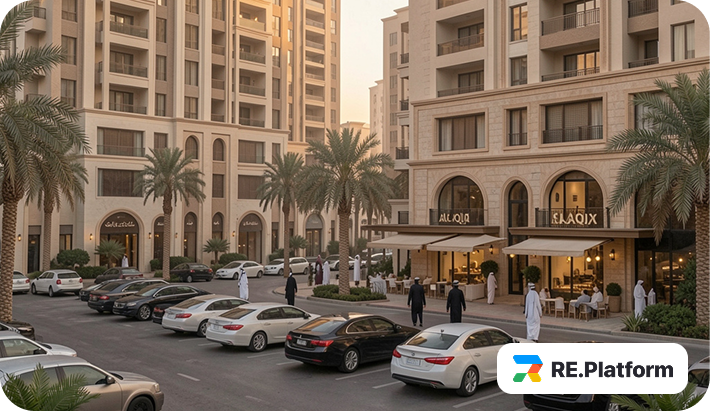
Al Malqa — One of Riyadh’s Fastest-Rising Residential Areas
Al Malqa has quietly become one of the most promising residential districts for expats in Riyadh.
Its appeal comes from a simple formula: newer housing at slightly more accessible pricing.
Much of the residential stock in Al Malqa was developed after 2021, meaning apartments and villas tend to offer more modern layouts, updated infrastructure, and higher construction standards compared to older neighborhoods.
Average Rental Prices in Al Malqa
| Property Type | Average Annual Rent |
|---|---|
| 2-bedroom apartment | SAR 50,000–85,000 |
| 3-bedroom apartment | SAR 75,000–120,000 |
| Modern villa | SAR 110,000–190,000 |
For many expats, Al Malqa represents the middle ground between premium northern districts and more budget-oriented alternatives.
Al Yasmin — Affordable Without Sacrificing Too Much Comfort
Not every expat arrives in Riyadh with an executive-level relocation package.
That is exactly why Al Yasmin continues to attract residents looking for decent quality of life without paying premium northern Riyadh prices.
Over the past several years, the district has improved considerably, with new retail centers, restaurants, medical facilities, and upgraded residential developments.
Average Rental Prices in Al Yasmin
| Property Type | Average Annual Rent |
|---|---|
| 2-bedroom apartment | SAR 35,000–55,000 |
| 3-bedroom apartment | SAR 50,000–80,000 |
| Villa | SAR 80,000–140,000 |
While it lacks the luxury atmosphere of Hittin or Al Nakheel, the value-for-money ratio remains extremely attractive.
KAFD — Living Inside Riyadh’s Future
King Abdullah Financial District already feels like a separate futuristic city within Riyadh.
Once criticized as overly ambitious, KAFD has now become one of the strongest symbols of Saudi Arabia’s Vision 2030 transformation.
The district hosts:
- international banks;
- financial regulators;
- consulting firms;
- luxury residential towers;
- fine dining venues;
- integrated metro stations;
- high-end public spaces.
Living in KAFD means living directly inside Riyadh’s new economic core.
Average Rental Prices in KAFD
| Property Type | Average Annual Rent |
|---|---|
| 1-bedroom apartment | SAR 80,000–130,000 |
| 2-bedroom apartment | SAR 120,000–200,000 |
| 3-bedroom apartment | SAR 180,000–300,000+ |
KAFD remains Riyadh’s most expensive residential cluster and primarily targets executives and high-income professionals.
Final Thoughts: Where Should Expats Live in Riyadh in 2026?
There is no universally perfect district in Riyadh.
The best area depends entirely on budget, family structure, work location, and lifestyle priorities.
In simple terms:
| Expat Profile | Best District |
|---|---|
| Families with children | Al Nakheel |
| Diplomats and premium lifestyle seekers | Diplomatic Quarter |
| Young professionals | Hittin / Olaya |
| Mid-budget families | Al Muhammadiyah |
| Best value-for-money | Al Malqa |
| Budget-conscious expats | Al Yasmin |
| Finance sector and luxury lifestyle | KAFD |
The most important thing to understand about Riyadh in 2026 is that the city is evolving at extraordinary speed.
Neighborhoods that feel merely “good” today may become some of the capital’s most desirable districts within just a few years.
For many expats, the biggest risk is no longer choosing the wrong neighborhood.
It is waiting too long before becoming part of Riyadh’s transformation.