Browse by category


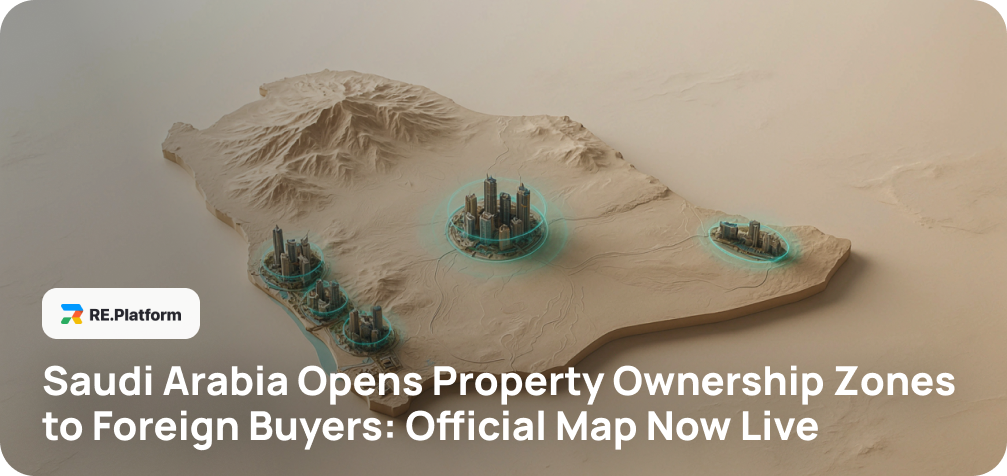
Saudi Arabia has taken one of the most important steps yet in opening its real estate market to international buyers. The Kingdom has formally approved the geographic zones where non-Saudis can own property, while the government-backed Saudi Properties platform now provides an interactive map showing where foreign ownership is permitted.
This changes the practical reality of the market.
The updated Law of Real Estate Ownership by Non-Saudis had already entered into force on January 22, 2026. At that stage, however, one major question remained unresolved for buyers: where exactly could a foreign individual or company purchase property?
That uncertainty has now been largely removed.
On June 23, 2026, Saudi Arabia’s Council of Ministers approved both the executive regulations and the designated geographic zones for non-Saudi real estate ownership. REGA, the Real Estate General Authority, now directs foreign buyers to Saudi Properties as the official platform for the ownership process.
Table of Contents
What Has Actually Changed
The most important change is not simply that a new law exists. The Kingdom now has the regulatory infrastructure needed to apply it.
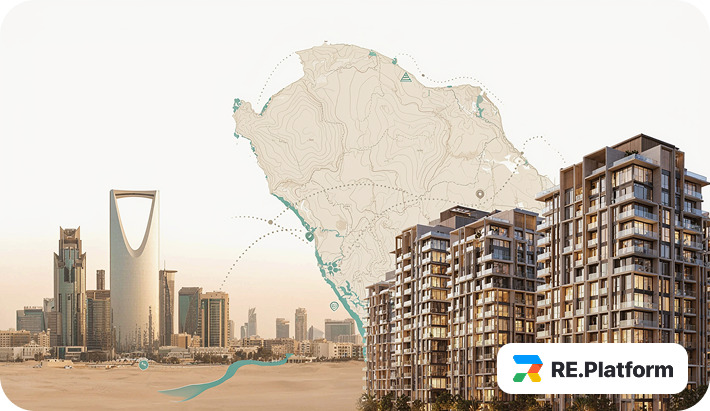
Saudi Properties displays the approved ownership zones through interactive maps. According to REGA, these maps can show permitted ownership percentages, the types of real estate rights available to non-Saudis, applicable duration limits and the specific rules governing each geographic area.
That distinction matters because foreign ownership in Saudi Arabia is not based on a blanket nationwide rule. It depends on the buyer category, the location of the property and the rights permitted within that zone.
For investors, this means property eligibility can now be checked against an official government source rather than relying solely on developer marketing or broker claims.
Which Areas Are Open to Foreign Property Ownership
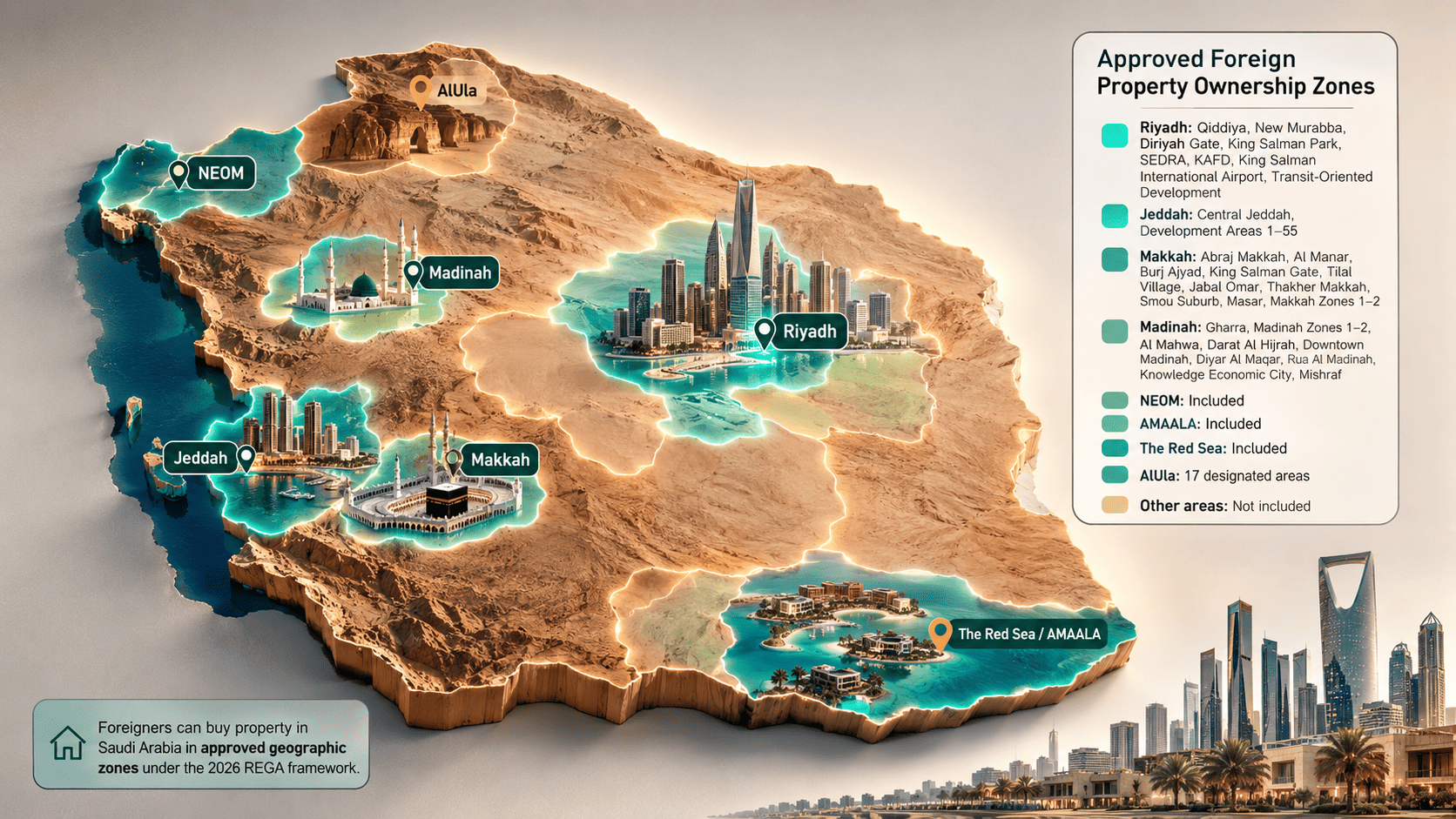
The approved geography covers major urban development areas, giga-projects, tourism destinations and special economic zones.
In Riyadh, the designated areas include Qiddiya, New Murabba, Sports Boulevard and Arts District, Diriyah Gate, King Salman Park, SEDRA, King Abdullah Financial District, King Salman International Airport and Transit-Oriented Development areas.
This is significant because many of these locations sit directly within the capital’s long-term expansion corridors. Foreign ownership is therefore being connected not only to established residential districts, but also to some of the most important new development zones in the city.
Jeddah follows a different model. The approved geography includes Central Jeddah together with Development Areas 1 through 55 across Jeddah Governorate.
The framework also extends beyond Riyadh and Jeddah.
AlUla contains 17 designated areas, while major projects including NEOM, AMAALA and The Red Sea are included within the approved scope. Special economic territories such as Jazan Special Economic Zone, Ras Al Khair Special Economic Zone and King Abdullah Economic City are also part of the framework.
What About Makkah and Madinah
Makkah and Madinah are included in the new geographic framework, but they remain subject to special restrictions.
Approved areas in Makkah include Abraj Makkah, Al Manar, Burj Ajyad, King Salman Gate, Tilal Village, Jabal Omar, Thakher Makkah, Smou Suburb, Masar and additional designated zones.
In Madinah, approved areas include Gharra, Al Mahwa, Darat Al Hijrah, Downtown Madinah, Diyar Al Maqar, Rua Al Madinah, Knowledge Economic City, Mishraf and other designated areas.
However, this does not mean that every foreign individual can now purchase real estate in the two holy cities.
Under Article 2 of the law, ownership or other real rights in Makkah and Madinah are limited to Muslim non-Saudi natural persons. Different provisions may apply to certain corporate structures under the law.
Can Non-Residents Buy Property in Saudi Arabia
Yes.
The updated framework applies not only to foreign residents already living in the Kingdom but also to non-resident individuals and foreign companies, subject to the relevant requirements.
REGA states that residents can apply through Saudi Properties using their Iqama details. Non-residents are also covered by the system and must complete the required digital identification process before proceeding with ownership applications.
The executive regulations add further requirements for non-resident individuals. Before acquiring property or other real rights, a non-resident must obtain an approved digital identity, open a bank account in Saudi Arabia in their own name and obtain a Saudi mobile number linked to that identity.
Foreign companies must register with the Ministry of Investment before purchasing property and disclose their direct and indirect ownership structure as part of that process.
Foreign Residents Have an Additional Option
There is an important distinction between residents and non-residents.
A non-Saudi individual who is legally resident in Saudi Arabia may own one residential property for personal use outside the designated geographic zones. Makkah and Madinah are excluded from this rule.
This means the zone system is not the only ownership route available to every foreign buyer. Residency status matters.
What Taxes and Fees Apply?
The opening of foreign ownership zones does not remove existing transaction costs.
Saudi Arabia applies a 5% Real Estate Transaction Tax to real estate disposals, subject to the exemptions provided by law. ZATCA confirms that the tax is calculated on the value of the real estate transaction.
There is also a separate REGA fee under the new non-Saudi ownership regulations. For dispositions of real rights by non-Saudis in Riyadh, Jeddah Governorate, Makkah and Madinah, the executive regulations set this fee at 2%. Transactions outside the locations specified in Article 9 are subject to a zero rate for this particular REGA fee.
For investors, this means the headline purchase price should never be treated as the full acquisition cost.
Why the New Map Matters
Until June 2026, Saudi Arabia had already changed the legal framework for foreign ownership, but investors still lacked one of the most important pieces of the system: a confirmed geographic map.
That gap created a difficult market environment. Developers could promote future projects to international audiences, but buyers still had to wait for clarity on whether a specific location would fall within an approved ownership area.
The new map changes that.
A foreign buyer can now start with the official geographic framework, verify the relevant zone and then move on to evaluating the development itself.
That is a much more mature structure than the market had at the beginning of the year.
This Does Not Mean Every Property Is Open to Foreign Buyers
The change is substantial, but it should not be overstated.
Saudi Arabia has not created a completely unrestricted property market for foreigners.
A property may be located in an approved city but outside an eligible geographic zone. Different ownership rights or maximum ownership percentages may apply within different zones. Makkah and Madinah retain special restrictions. The buyer must also satisfy the rules applicable to their category.
The correct interpretation is therefore straightforward:
Foreign property ownership in Saudi Arabia is now operational under a defined legal and geographic framework — but eligibility still has to be checked property by property and zone by zone.
That is a much stronger position than the market was in only a few months ago.
FAQ
Can foreigners buy property in Saudi Arabia in 2026?
Yes. The updated law is in force, and approved geographic ownership zones are now available through the official Saudi Properties platform. Eligibility depends on location, buyer status and the rights permitted within the relevant zone.
Where can foreigners buy property in Riyadh?
Approved areas include Qiddiya, New Murabba, Diriyah Gate, King Salman Park, SEDRA, KAFD and several other strategic development zones.
Can foreigners buy property in Jeddah?
Yes, subject to the designated geographic framework. Central Jeddah and Development Areas 1 through 55 are included in the approved scope.
Can a non-resident buy Saudi real estate?
Yes. Non-residents are covered by the law, although they must complete specific identification, banking and Saudi mobile registration requirements before ownership.
Can foreigners buy property in Makkah and Madinah?
Foreign natural persons may own property or acquire permitted real rights within designated zones only if they are Muslim.
Where can buyers check the official zones?
The official source is the Saudi Properties portal operated under the REGA framework. REGA specifically directs users to its interactive geographic ownership maps.