Browse by category


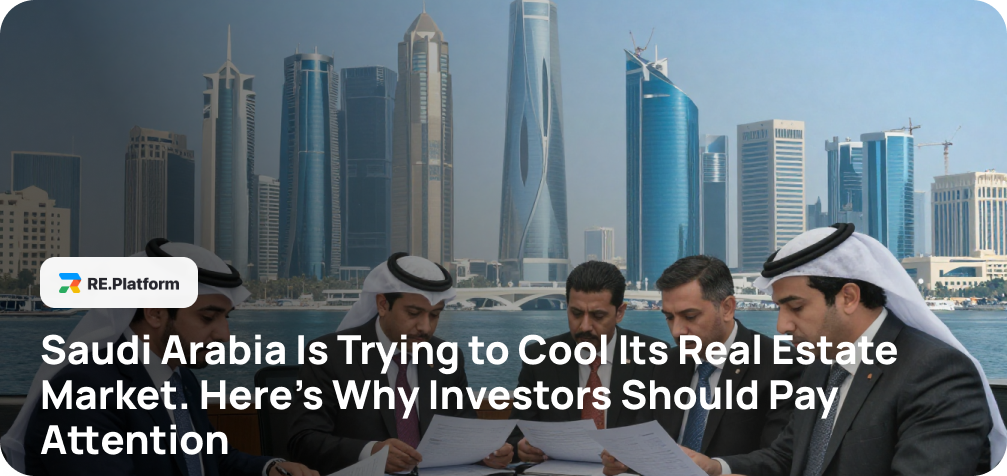
For the last several years, Saudi Arabia’s real estate market has often been described in one direction: growth. Riyadh rents climbed sharply, major development projects attracted global attention, foreign ownership rules moved forward, and investor interest in the Kingdom increased.
But the latest signals from the market tell a more complicated story. Saudi Arabia is not only trying to grow its real estate sector. It is also trying to cool parts of it down.
That may sound negative at first. In reality, it may be one of the most important signs that the market is entering a more mature phase.
Government action, rent controls, pressure on idle land, new supply measures and weaker residential price data all point to the same direction: Saudi Arabia wants a real estate market that is less speculative, more transparent and more accessible for end users. For investors, this does not mean the opportunity is disappearing. It means the rules of the opportunity are changing.
Table of Contents
What Happened?
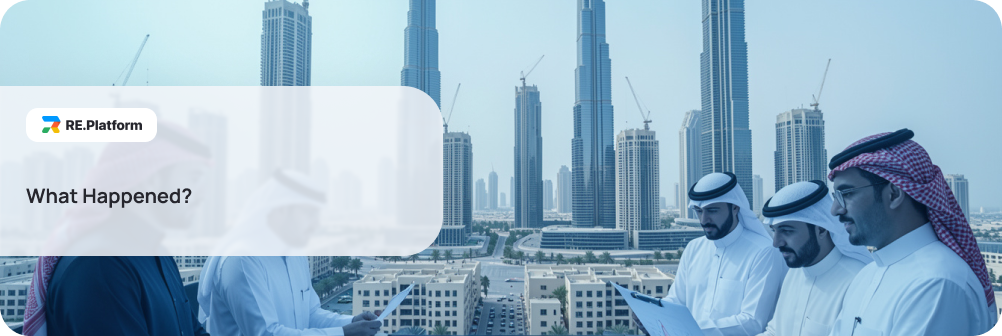
Recent market data shows that Saudi real estate prices are no longer moving only upward. The General Authority for Statistics reported that Saudi Arabia’s real estate price index declined by 1.6% year-on-year in Q1 2026. The residential sector fell more sharply, down 3.6% year-on-year, with residential land prices, apartment prices and villa prices all showing pressure.
That is a significant shift from the narrative that Saudi property prices can only rise. It also comes after several government measures designed to stabilize the market, especially in Riyadh, where housing costs had become one of the most visible pressure points.
The most important measure was the five-year freeze on rent increases for residential and commercial properties within Riyadh’s urban boundaries, effective from September 25, 2025. The Real Estate General Authority stated that landlords cannot increase the total rental value of existing or new contracts in Riyadh during the freeze period.
At the same time, Saudi Arabia has continued to tighten the framework around idle land and undeveloped plots. The goal is clear: reduce land hoarding, encourage development and increase usable supply.
Together, these measures show that the government is not trying to stop the real estate market. It is trying to rebalance it.
This Is Not a Market Crash. It Is a Repricing.
A cooling market is not the same as a collapsing market.
In Saudi Arabia’s case, the better word is repricing. Some parts of the market had moved too quickly, especially where demand, land scarcity, speculation and limited supply pushed prices and rents higher. When that happens, government intervention becomes more likely.
The Q1 2026 decline in real estate prices should be read in that context. A fall in residential land and apartment prices does not automatically mean weak long-term demand. It may mean that the market is adjusting after a period of rapid growth.
For investors, that distinction matters. A crash destroys confidence and liquidity. A repricing can create better entry points, force more realistic valuations and push buyers to focus on real demand rather than market hype.
The strongest investors do not only buy when headlines are positive. They buy when the price, location and income logic make sense.
Why the Government Wants to Cool the Market
Saudi Arabia has a clear reason to cool parts of its real estate market: affordability.
Riyadh has become one of the Kingdom’s most important economic engines. It is attracting companies, workers, government activity, international events and major development projects. That creates demand for housing, offices, retail and mixed-use real estate.
But rapid demand can create a problem. If rents and property prices rise too fast, the market becomes harder for residents, businesses and long-term investors. Housing affordability becomes a political and economic issue. Office costs can pressure companies. Land speculation can slow development.
A more balanced market is better for Saudi Arabia’s long-term goals. The Kingdom does not only need higher real estate prices. It needs more homes, better supply, stronger transparency, more efficient land use and a market that can support population growth, foreign investment and business expansion without becoming overheated.
That is why rent controls, land policies and ownership reforms should be viewed together. They are part of a broader attempt to make the real estate sector more institutional.
What This Means for Buyers
For homebuyers, a cooling market can be positive.
It reduces the pressure to rush. When prices are rising aggressively, buyers often feel they must act quickly before the market moves further. That can lead to poor decisions: overpaying, ignoring location risks, accepting weak layouts or buying in districts they do not fully understand.
A cooler market gives buyers more room to compare options. They can look at different districts, check rental evidence, compare new supply, review infrastructure and negotiate more carefully.
In Riyadh, this is especially important because the city is not one single market. Hittin, Al Malqa, Al Narjis, Al Aqiq, Al Sahafa, Al Yasmin and Al Arid all have different demand drivers. Some are more premium. Some are more family-oriented. Some are more apartment-led. Some are more growth-driven.
A buyer should not ask only whether Riyadh is rising or falling. The better question is: which district, which project, which property type and which price?
What This Means for Investors
For investors, the message is even more important.
The Saudi real estate market is becoming less forgiving of lazy assumptions. It is no longer enough to say, “Saudi Arabia is growing, so every property will perform.” That may have sounded convincing during the hottest phase of the market, but it is not a serious investment strategy.
Investors now need to focus on fundamentals:
| Question | Why it matters now |
|---|---|
| Is the property priced correctly? | Cooling markets expose overpaid assets. |
| Is there real tenant demand? | Rent growth can no longer be assumed everywhere. |
| What is the net yield? | Maintenance, vacancy, service costs and taxes matter more. |
| Is the location liquid? | Some districts will hold value better than others. |
| Is the unit easy to rent or resell? | Generic properties may struggle if supply increases. |
| What regulation applies? | Rent controls and ownership rules affect returns. |
This is a shift from hype-driven investing to professional selection.
Apartments near business districts, family homes in strong residential areas and well-located units in growth corridors may still perform. But weak properties in poor micro-locations will become harder to justify.
Why Riyadh Still Matters
Cooling does not make Riyadh less important. If anything, it makes Riyadh more important to analyze properly.
The capital remains the center of Saudi Arabia’s economic transformation. It is linked to government activity, headquarters demand, major employment growth, KAFD, large-scale infrastructure and international events such as Expo 2030. These forces continue to support long-term housing demand.
But investors need to separate long-term demand from short-term pricing.
A strong city can still have overpriced assets. A growing district can still contain weak projects. A premium location can still produce poor yield if the entry price is too high. A cheaper area can still be risky if infrastructure and demand are not mature enough.
That is why Riyadh should be approached district by district. Al Aqiq and Al Sahafa may be more relevant for business-side apartment demand. Al Malqa and Al Yasmin may appeal to families and long-term residents. Al Arid and Al Narjis may offer growth-district exposure. Hittin may remain more of a premium villa and capital-value story.
The city remains attractive, but the easy narrative is gone.
Why This Could Be Good News for Serious Investors
A cooling market often scares short-term buyers, but it can help serious investors.
When prices move too fast, bad deals can hide behind market momentum. Developers can sell weak projects more easily. Landowners can demand unrealistic prices. Buyers may accept poor terms because they believe the market will keep rising.
When the market cools, quality matters more.
That is good for investors who do their homework. They can negotiate harder, compare better, avoid speculative pricing and focus on assets with real demand. They can also avoid being pushed into rushed decisions by fear of missing out.
Saudi Arabia’s real estate market is not becoming less interesting. It is becoming more selective.
What Investors Should Do Now
Investors looking at Saudi real estate in 2026 should adjust their process.
First, they should treat national market data as a signal, not a final answer. A 1.6% decline in the overall index does not tell the full story. Riyadh, Jeddah, Dammam and smaller cities can move differently. Districts inside Riyadh can move differently as well.
Second, they should calculate returns conservatively. In Riyadh, the rent freeze means investors should not build their model around automatic rent increases. The property should work at today’s achievable rent.
Third, they should pay more attention to supply. New housing can support affordability, but it can also create competition for landlords. If many similar apartments enter one district, weaker units may face vacancy or lower rent.
Fourth, investors should check the legal side carefully. Saudi Arabia is opening more of its market to foreign ownership, but eligibility, approved areas, registration and ownership structures still matter.
Fifth, they should compare micro-locations. In a cooling market, being “in Riyadh” is not enough. Being in the right district, near the right roads, with the right tenant base, matters much more.
The Bottom Line
Saudi Arabia is not walking away from real estate growth. It is trying to make that growth more sustainable.
The cooling of property prices, the Riyadh rent freeze, pressure on undeveloped land and clearer ownership rules all point toward a more regulated market. That may reduce speculative heat, but it can also create a healthier environment for long-term buyers and serious investors.
For investors, the lesson is clear: Saudi real estate still deserves attention, but the market now requires more discipline.
The opportunity is not simply “buy Saudi property because the market is booming.” The opportunity is to understand where demand is real, where pricing has adjusted, where regulation protects stability and where long-term growth still supports value.
Saudi Arabia is trying to cool its real estate market. Smart investors should not ignore that. They should study it.