Browse by category


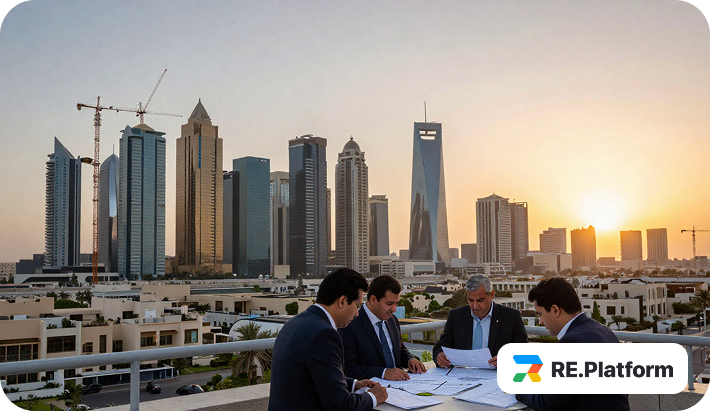
Saudi Arabia is no longer a distant real estate market watched only by regional developers and institutional capital.
In 2026, the Kingdom is increasingly being discussed as one of the most ambitious property growth stories in the world. Vision 2030, government-backed megaprojects, large-scale infrastructure investment, and the rapid transformation of Riyadh are changing how international buyers evaluate Saudi Arabia’s real estate potential.
For years, British buyers looking abroad focused on familiar overseas property markets such as Dubai, Spain, Portugal, or parts of Southern Europe. But that map is starting to expand.
Saudi Arabia is now entering the radar of UK buyers who are looking beyond mature markets and searching for earlier-stage growth opportunities. From ultra-modern residential districts in Riyadh to luxury hospitality and resort projects along the Red Sea, the Kingdom is becoming harder to ignore.
The appeal is not only about price growth or the idea of finding “the next Dubai.” For many British investors, Saudi Arabia represents something more strategic: a large economy opening its real estate sector, a capital city being rebuilt around global business ambitions, and a market that still feels early compared to more established investment destinations.
That does not mean the opportunity is simple.
Saudi Arabia remains a more complex market than Dubai or traditional European property destinations. Foreign ownership rules are still evolving, local regulations matter, and buyers need to understand the difference between headline growth and real investable opportunities.
But one thing is clear: Saudi Arabia has entered the international property conversation — and UK buyers are starting to pay attention.
Table of Contents
Why UK Buyers Are Starting to Pay Attention to Saudi Arabia
The growing interest from British buyers is being driven by a combination of long-term economic transformation, large-scale infrastructure expansion, and the perception that Saudi Arabia still represents an “early-stage” real estate market compared to more mature international destinations.
At the center of this shift is Vision 2030 — Saudi Arabia’s national transformation strategy aimed at diversifying the economy beyond oil and positioning the Kingdom as a global hub for business, tourism, finance, technology, and investment.
Real estate sits at the core of that transformation.
Government-backed megaprojects, entirely new urban districts, luxury tourism developments, and massive infrastructure investment are reshaping both Riyadh and Saudi Arabia’s broader property market at a pace few global investors expected several years ago.
For many UK buyers, the appeal is becoming increasingly difficult to ignore.
Compared to highly mature markets like London — where prices remain elevated and yields have compressed significantly — Saudi Arabia still appears to offer stronger long-term upside potential. Even when compared to Dubai, many investors increasingly view Riyadh as a market that is still in a much earlier phase of expansion.
This “early market” narrative has become one of the biggest psychological drivers behind growing international interest.
At the same time, economic and diplomatic ties between the United Kingdom and Saudi Arabia continue strengthening across investment, infrastructure, finance, energy, and technology sectors. That growing relationship is helping increase international confidence around the Kingdom’s long-term development trajectory.
Several projects in particular have become central to the global Saudi Arabia narrative:
- King Abdullah Financial District (KAFD) in Riyadh,
- NEOM,
- Diriyah,
- and The Red Sea Project.
Together, these developments are reshaping international perception of Saudi Arabia from a traditionally oil-focused economy into one of the world’s largest urban and investment transformation stories.
Main Factors Driving UK Buyer Interest in Saudi Arabia
| Factor | Why It Matters to UK Buyers |
|---|---|
| Vision 2030 | Long-term government-backed economic transformation |
| Riyadh Growth | One of the fastest-changing business capitals in the GCC |
| Earlier Market Cycle | Perception of higher upside compared to London or Dubai |
| Luxury Megaprojects | NEOM, Red Sea Project, Diriyah, and KAFD attract global attention |
| Competitive Pricing | Lower entry prices compared to many mature global cities |
| UK–Saudi Economic Relations | Growing business and investment cooperation |
| Infrastructure Expansion | Massive investment into transport, tourism, and urban development |
| International Positioning | Saudi Arabia increasingly viewed as a future global investment hub |
For many British buyers, Saudi Arabia is no longer viewed simply as a regional Gulf market.
Increasingly, it is being seen as one of the few major economies where large-scale urban development, international capital, and government-backed transformation are all accelerating simultaneously.
What UK Buyers Are Actually Looking for in Saudi Arabia
While international interest toward Saudi Arabia is growing broadly, British buyers are not entering the market randomly.
Clear patterns are already emerging around the types of properties, cities, and projects attracting the strongest attention from UK-based investors and overseas buyers.
Unlike traditional domestic Saudi demand — which historically focused heavily on large standalone villas — many internationally oriented buyers are concentrating on modern apartments, branded residences, mixed-use communities, and premium master-planned developments connected to Riyadh’s expansion and the Kingdom’s luxury tourism strategy.
Property Types Attracting the Most Interest From UK Buyers
| Property Type | Why It Appeals to UK Buyers |
|---|---|
| Luxury Apartments | Lower entry prices, strong rental positioning, proximity to business districts |
| Branded Residences | International luxury standards and hotel-linked lifestyle |
| Villas & Townhouses | Premium family-oriented living in master-planned communities |
| Off-Plan Projects | Long-term appreciation tied to Vision 2030 megaprojects |
| Mixed-Use Communities | Integrated lifestyle, retail, hospitality, and residential infrastructure |
Saudi Cities Generating the Strongest UK Buyer Interest
| City / Area | Main Investment Narrative |
|---|---|
| Riyadh | Business growth, infrastructure expansion, “early-stage Dubai” narrative |
| North Riyadh | Luxury compounds, KAFD proximity, premium residential growth |
| Jeddah | Red Sea lifestyle and luxury waterfront developments |
| NEOM | Speculative long-term megaproject investment |
| Diriyah | Ultra-premium heritage and luxury residential positioning |
| The Red Sea Project | Luxury tourism and branded resort residences |
Knight Frank research shows that Riyadh currently dominates international investor attention, with roughly 55% of surveyed global buyers identifying the capital as their primary area of interest inside Saudi Arabia. Jeddah followed closely at 46%, while Madinah and Makkah also attracted strong international attention due to religious tourism and long-term hospitality demand.
At the same time, branded residences are emerging as one of the fastest-growing segments among internationally oriented buyers. Around 77% of surveyed investors expressed interest in branded residential projects tied to luxury hospitality and globally recognized lifestyle concepts.
Can UK Buyers Legally Purchase Property in Saudi Arabia?
Saudi Arabia has gradually started opening parts of its real estate market to foreign ownership, although the system still operates under clear regulations and investment restrictions.
For many UK buyers, one of the biggest surprises is that foreign ownership inside the Kingdom is now possible — but the process depends heavily on residency status, property type, and location.
Foreign residents holding a valid Saudi iqama are generally allowed to purchase property for personal residential use, particularly inside approved investment zones and major urban areas such as Riyadh and Jeddah.
At the same time, Saudi Arabia’s Premium Residency program has significantly expanded opportunities for internationally oriented buyers and expatriates. Under this framework, eligible foreign residents — including UK nationals — can own property without requiring a local sponsor, rent out real estate assets, and operate businesses inside the Kingdom.
However, the market still comes with important limitations.
Foreign ownership rules remain more regulated than in mature international markets such as Dubai or the United Kingdom itself. Certain areas remain restricted, and approval procedures can vary depending on the purpose of ownership and the type of property being acquired.
Key Rules UK Buyers Need to Understand
| Area | Current Reality in Saudi Arabia |
|---|---|
| Residential Ownership | Allowed for eligible foreign residents in approved zones |
| Premium Residency Holders | Can own property without local sponsor |
| Rental Activity | Foreign owners may lease approved properties |
| Business Ownership | Possible through Premium Residency framework |
| Mecca & Medina | Direct foreign ownership remains restricted |
| Investment Alternatives | REITs and property funds may provide indirect exposure |
One of the most important restrictions still applies to Mecca and Medina, where direct foreign ownership remains prohibited due to the religious significance of both cities.
However, international investors may still gain indirect exposure to these markets through regulated real estate investment structures and publicly accessible property investment funds connected to hospitality and pilgrimage-related development.
As Saudi Arabia continues opening its property market under Vision 2030, many analysts expect the foreign ownership framework to evolve further over the coming years — particularly as Riyadh positions itself as a more globally integrated investment destination.
Additional Costs UK Buyers Should Consider
Like any international property market, buying real estate in Saudi Arabia involves additional transaction and administrative costs beyond the property price itself.
For UK buyers entering the Saudi market for the first time, understanding these expenses early is important — especially since the legal and regulatory framework still differs significantly from the United Kingdom and other mature overseas property destinations.
| Expense | Typical Cost |
|---|---|
| Real Estate Transaction Tax | ~5% |
| Property Registration Fees | ~1% |
| Legal & Administrative Costs | Varies by transaction |
| Due Diligence & Documentation | Additional legal expenses may apply |
| Financing Costs | Depends on lender and residency status |
| Maintenance & Service Charges | Common in compounds and branded residences |
Hiring a local legal advisor familiar with Saudi real estate regulations is strongly recommended for foreign buyers. Ownership structures, registration requirements, and investment approvals can vary depending on the type of property and the buyer’s residency status.
A Market Still in Transformation
For UK buyers, Saudi Arabia’s real estate market represents both opportunity and uncertainty at the same time.
The Kingdom is undergoing one of the largest economic and urban transformation programs currently happening anywhere in the world. Vision 2030, megaprojects, infrastructure expansion, and the rapid growth of Riyadh are reshaping how international investors view Saudi Arabia’s long-term real estate potential.
For many British buyers, that creates a rare combination:
- a market that still feels relatively early,
- strong government-backed development momentum,
- and growing international attention toward Saudi Arabia’s property sector.
Whether investors are searching for long-term capital appreciation, exposure to large-scale urban growth, or access to one of the Middle East’s fastest-changing economies, Saudi Arabia is becoming increasingly difficult to ignore.
At the same time, the market is still evolving.
Foreign ownership regulations continue developing, investment rules remain more nuanced than in mature global markets, and buyers entering Saudi Arabia for the first time need to understand both the opportunities and the practical realities of the market itself.
Like any international real estate investment, success ultimately depends on careful research, local market understanding, and a clear long-term strategy.
But one thing is becoming increasingly clear in 2026:
Saudi Arabia is no longer just a regional Gulf market. It is becoming part of the global real estate conversation — and UK buyers are starting to move with it.
Describe what you are interested in and we will contact you.
Looking to buy property in Saudi Arabia?