Browse by category



For expats renting or buying property in Saudi Arabia, the apartment handover is one of the most important moments in the entire lease. It is the point where the listing, viewing, contract and payment finally become a real home — and it is also the point where future deposit disputes often begin.
Many tenants focus on finding the apartment and signing the Ejar contract. That is only half the process. The other half is proving the condition of the unit when you receive it and when you return it.
A small scratch, weak AC, leaking bathroom, missing key, stained sofa or broken appliance may not feel urgent on move-in day. Months later, the same item can become a deduction from the security deposit. This is especially true for furnished and semi-furnished apartments, where every included item becomes part of the practical rental record.
The safest approach is simple: treat handover as documentation, not just key collection. Walk through the apartment carefully. Take photos and videos. Check AC, plumbing, electricity, appliances, furniture, parking, keys and meters. Make sure the condition is recorded clearly through the relevant Ejar process and in your own written records.
In Saudi Arabia, a good handover protects both sides. The landlord has a record of the unit’s condition. The tenant has proof of what existed before move-in. The contract becomes easier to enforce because the condition of the apartment is no longer based on memory.
Table of Contents
Quick Answer: What Should Expats Check During Apartment Handover in Saudi Arabia?
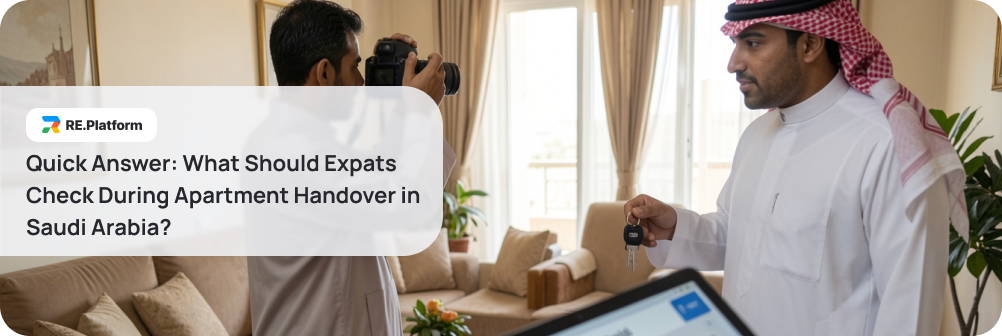
Expats should check the apartment’s condition before move-in and again before move-out. The most important items are AC, water pressure, leaks, electricity, walls, floors, doors, windows, kitchen, bathrooms, appliances, furniture, keys, access cards, parking, utility meters and any included items. Tenants should document everything with photos and videos and make sure the move-in and move-out condition is recorded through the Ejar handover process where applicable.
| Handover stage | What to check | Why it matters |
|---|---|---|
| Before move-in | Apartment condition, AC, plumbing, electricity, furniture, appliances | Prevents paying for pre-existing damage |
| At key collection | Keys, access cards, parking, meters, included items | Confirms what you actually received |
| First 7 days | Report defects in writing and complete required documentation | Creates a clear record early |
| During lease | Keep maintenance requests and repair records | Helps prove what happened during tenancy |
| Before move-out | Clean, repair tenant-caused damage, photograph condition | Reduces deposit dispute risk |
| At final handover | Compare against move-in record and confirm deductions | Protects refund and avoids surprise claims |
The biggest mistake is accepting the apartment verbally and leaving documentation for later. Move-in day is when the record should start.
Why Handover Matters More Than Expats Expect
Apartment handover can feel like a formality. The broker gives you keys, the landlord says the unit is fine, you walk through quickly, and everyone wants to finish. That is exactly why problems happen.
A tenant may discover after moving in that one AC unit is weak, a bathroom leaks, the water heater does not work, curtains are damaged, the washing machine shakes, the sofa has stains or the parking access card is missing. If those issues are not recorded early, they can become difficult to prove later.
For expats, the risk is higher because the rental process may already feel unfamiliar. Newcomers may not know what should be documented, how maintenance responsibility works, which items are considered normal wear and tear, or how deposits are handled.
Handover is not only about damages. It is about responsibility. When the apartment is received, the tenant becomes responsible for using it properly. When the apartment is returned, the landlord expects it to be in acceptable condition. The move-in record is what separates old problems from new ones.
That record matters for unfurnished apartments, but it is even more important for furnished apartments. If the unit includes beds, sofa, refrigerator, washing machine, curtains and kitchen equipment, every item should be documented.
A clean handover gives both sides less to argue about.
Ejar Check-In and Check-Out: The Contract Record Matters
Ejar is not only a rental contract platform. It also supports documentation around the condition of the residential unit during check-in and check-out. This is important because the condition of the unit at the start and end of the lease is directly linked to deposit protection and dispute prevention.
The electronic check-in and check-out process is designed to document the condition of the rental unit using forms agreed by the parties. The idea is straightforward: if both sides approve the unit condition at move-in and move-out, there is a clearer basis for refunding or deducting from the security deposit.
For tenants, this means handover should not be treated casually. If a defect exists at move-in, it should be documented. If an item is missing, it should be noted. If the unit is furnished, the inventory should be checked. If the apartment has existing damage, the tenant should not rely on verbal reassurance.
For landlords, the same process protects the property. If the tenant causes damage during the lease, the move-in record helps show that the problem was not there at the beginning.
The practical rule is simple: the handover form, the contract and your own photos should tell the same story.
Before Move-In: Prepare Before You Collect the Keys
A proper handover starts before the key collection. Do not arrive empty-handed and assume the apartment will be ready.
Before the appointment, ask the landlord, broker or property manager to confirm what will be handed over. This includes keys, parking access, building access cards, remote controls, appliance manuals, furnished inventory, utility information and maintenance contact details.
Bring a phone with enough storage and battery. Take wide photos of every room and close-up photos of anything damaged. Record short videos while walking through the apartment. Use natural light if possible. Do not rush.
If the apartment is furnished, ask for an inventory list before or during handover. If there is no list, create your own record. If the apartment is unfurnished, document that too. It should be clear that you did not receive furniture or appliances that were never included.
Before signing off on handover, make sure the actual apartment matches the agreed unit. Check the floor, unit number, layout, parking and included items.
| Before key collection | Why it matters |
| Confirm unit number and floor | Avoids confusion with another unit |
| Ask for inventory list | Essential for furnished apartments |
| Bring phone charger/power bank | Photos and videos are critical |
| Prepare checklist | Prevents rushed inspection |
| Confirm maintenance contact | Needed for early defects |
| Check payment and deposit record | Keeps financial documentation aligned |
| Ask about Ejar handover steps | Ensures formal record is completed |
Preparation sounds basic, but it changes the quality of the entire handover.
Move-In Checklist: Start With the Building
Do not start inside the apartment. Start with the building. The condition of the common areas often tells you how the property is managed.
Check the entrance, elevators, corridors, staircases, lighting, security, waste area and parking. If the building feels poorly managed, the apartment may create future maintenance problems even if the unit itself looks fine.
Look for signs of water leaks in common areas, broken lights, dirty corridors, unreliable elevators, weak security, poor waste management or unclear parking. These issues may not appear in the rental contract, but they affect daily life.
| Building area | What to check |
| Entrance | Cleanliness, access, door condition |
| Elevators | Working condition, noise, delays |
| Corridors | Lighting, smell, cleanliness |
| Staircases | Safety and emergency access |
| Parking | Assigned space, access card, shade, entry route |
| Security | Building access, guard, cameras if available |
| Waste area | Cleanliness and distance from unit |
| Maintenance | Visible signs of neglect |
If you notice building-level issues, document them. They may not affect deposit directly, but they can help if you later need to explain maintenance or access problems.
Check AC Carefully
Air conditioning is one of the most important items in any Saudi apartment. A unit can look good during viewing but become uncomfortable if the AC is weak, noisy, leaking or poorly maintained.
Turn on every AC unit. Let it run for several minutes. Check whether the air becomes cold, whether the unit makes unusual noise, whether water leaks, whether remote controls work and whether vents are clean. In central AC apartments, check whether air reaches all rooms evenly.
If an AC unit is not cooling properly, document it immediately. Do not accept “it will be fine later” without a written maintenance commitment.
| AC check | What to look for |
| Cooling | Does each room cool properly? |
| Noise | Any rattling, grinding or loud vibration? |
| Leakage | Any water dripping or ceiling stains? |
| Remote controls | Do all functions work? |
| Filters/vents | Are they clean or clogged? |
| Central AC | Is cooling even across rooms? |
| Maintenance history | When was it last serviced? |
AC problems are not minor in Saudi Arabia. They affect comfort, electricity use, sleep and family life. They should be treated as core handover items.
Check Water, Plumbing and Bathrooms
Bathrooms and plumbing should be inspected slowly. Water problems can become expensive and disruptive if they are missed during handover.
Run taps in the kitchen and bathrooms. Check hot and cold water. Flush toilets. Look under sinks. Check drainage speed. Open shower areas. Look for leaks, stains, mold, loose fixtures, weak pressure, broken shower heads or damaged sealant.
Pay attention to smells. A persistent drain smell can indicate a plumbing issue. Also check ceilings and walls near bathrooms for water stains or paint bubbles.
| Plumbing area | What to check |
| Kitchen sink | Leaks, drainage, water pressure |
| Bathroom sinks | Leaks under cabinet, faucet condition |
| Toilets | Flush, leakage, stability |
| Showers | Hot water, drainage, pressure |
| Water heater | Working condition, visible leaks |
| Drains | Smell, slow drainage |
| Walls/ceilings | Stains, mold, paint bubbles |
| Fixtures | Broken handles, loose parts |
Take close-up photos of any existing stain, crack, mold or leakage. If the issue is serious, request written confirmation that it will be repaired.
Check Electricity, Lighting and Internet Readiness
Electrical issues may not be visible at first glance. During handover, switch on lights, test outlets where possible and check whether major appliances can run without problems.
If the apartment includes built-in appliances, test them. If it is unfurnished, confirm outlet placement for refrigerator, washing machine, oven, TV and internet router. Poor outlet placement can make setup more expensive or inconvenient.
Check the electrical panel if accessible. Ask where it is located. Confirm whether the apartment has fiber or internet provider access. In some buildings, internet setup may take time, so it is better to know before moving in.
| Electrical item | What to check |
| Lights | Working switches and fixtures |
| Outlets | Location and visible damage |
| Electrical panel | Access and labeling |
| Kitchen outlets | Appliance readiness |
| Washing machine outlet | Placement and safety |
| Internet access | Fiber/provider availability |
| Doorbell/intercom | Working condition |
| Smoke detectors if present | Condition and battery |
For expats working remotely or moving with family, internet readiness can be as important as furniture. Do not leave it until after move-in.
Walls, Floors, Doors and Windows
Walls and floors are common sources of deposit disputes. Scratches, stains, cracks and broken tiles should be documented before the tenant starts living in the apartment.
Walk through every room and photograph walls from several angles. Look for nail holes, paint damage, stains, cracks, moisture marks and previous repairs. Check floors for broken tiles, scratches, loose panels or stains. Open and close all doors and windows. Check locks, handles, hinges and seals.
| Area | What to document |
| Walls | Cracks, stains, holes, paint damage |
| Floors | Scratches, broken tiles, stains |
| Doors | Locks, handles, hinges, scratches |
| Windows | Opening, closing, seals, cracks |
| Balcony if any | Drainage, railing, floor condition |
| Built-in wardrobes | Doors, shelves, damage |
| Curtain rails | Missing or damaged rails |
| Paint condition | Existing marks and repairs |
Do not assume small marks are too small to record. A move-in photo takes seconds. A move-out argument can take weeks.
Kitchen Handover: Cabinets, Appliances and Ventilation
Kitchens deserve special attention because they combine plumbing, electricity, appliances, cabinets and ventilation. Problems here are common and easy to miss during a quick viewing.
Open every cabinet. Check hinges, shelves, water damage, stains and smells. Turn on the hood or ventilation if installed. Check the sink, drain, countertop, wall tiles and appliance spaces. If a refrigerator, oven, microwave or washing machine is included, inspect and photograph each item.
In unfurnished apartments, confirm whether kitchen cabinets are included. In Saudi Arabia, tenants should not assume that an unfurnished apartment has a complete kitchen setup unless it is clearly shown and confirmed.
| Kitchen item | What to check |
| Cabinets | Hinges, shelves, water damage |
| Countertop | Cracks, burns, stains |
| Sink | Leaks, drainage, pressure |
| Hood/ventilation | Working condition |
| Refrigerator | Cooling, smell, shelves |
| Oven/stove | Working condition and cleanliness |
| Washing machine area | Water outlet, drainage, electricity |
| Tiles/walls | Stains, cracks, damage |
For furnished and semi-furnished apartments, photograph appliances with model numbers if visible. This helps identify what was included at move-in.
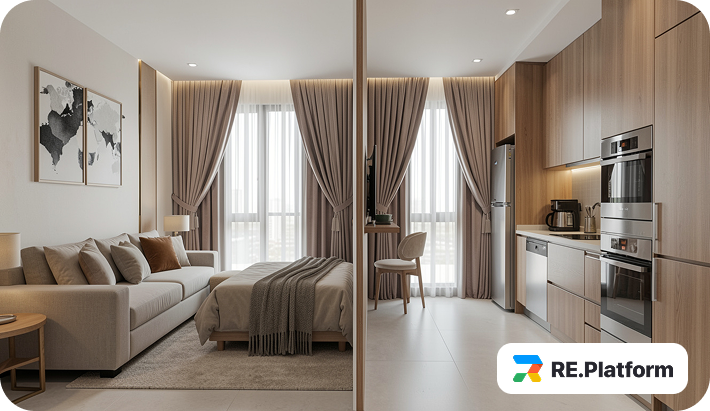
Furnished Apartments Need an Inventory
Furnished apartments require a more detailed handover than unfurnished units. The landlord is providing furniture and appliances, and the tenant may be held responsible for damage beyond normal use.
The inventory should list every major item: beds, mattresses, sofa, chairs, dining table, TV, refrigerator, washing machine, curtains, carpets, kitchen appliances and any included small items. It should also mention the condition of those items.
If the apartment has furniture but no inventory list, create your own photo record and send it to the landlord or broker in writing. That record should show existing stains, scratches, broken handles, worn mattresses, damaged curtains, missing remotes, appliance dents or anything else that could later be disputed.
| Furnished item | What to record |
| Beds | Frame condition, mattress stains, damage |
| Sofa | Stains, tears, scratches |
| Dining table/chairs | Marks, loose legs, scratches |
| Curtains | Stains, missing hooks, damage |
| Refrigerator | Interior shelves, cooling, smell |
| Washing machine | Condition, noise, leaks |
| TV/electronics | Working condition, remotes |
| Kitchenware | Included quantity and condition |
| Carpets/rugs | Stains, burns, wear |
| AC remotes | Count and condition |
A furnished apartment can be convenient, but it creates more documentation work. Do not skip it.
Keys, Access Cards, Parking and Meters
The apartment itself is only part of handover. Access matters too.
Count every key and access item. This may include apartment keys, building keys, parking remote, gate card, elevator card, mailbox key, storage room key and AC remotes. Confirm whether parking is assigned or first-come, first-served. If assigned, photograph the parking space or number.
Check utility meters where possible. Record electricity and water readings if available and relevant. This helps avoid paying for previous usage or unclear starting balances.
| Access item | What to confirm |
| Apartment keys | Number and working condition |
| Building access card | Working condition |
| Parking remote/card | Access and assigned space |
| Mailbox key | Included or not |
| Storage key | If storage is included |
| AC remotes | Count and condition |
| Meter readings | Electricity/water start point |
| Intercom/access system | Working condition |
If something is missing, document it immediately. Missing access items can later be treated as tenant responsibility if not recorded at the start.
What to Do in the First 7 Days
The first week matters. Some issues only appear after you start living in the apartment: weak AC at night, drainage smell, appliance failure, internet access problems, water leaks, noisy neighbors or parking access issues.
Use the first seven days to test the apartment properly. Run AC in all rooms. Use showers. Cook once. Test appliances. Check water heater. Confirm parking access. Try internet installation. Make a written list of problems and send it through the proper channel.
If the Ejar handover process or check-in form applies, make sure it is completed within the required window. Do not wait until the end of the month to report move-in defects.
| First-week task | Why it matters |
| Test AC during peak heat | Weak cooling may not appear immediately |
| Use all bathrooms | Drainage and leaks may show after use |
| Run appliances | Hidden faults become visible |
| Check parking access | Avoid daily access issues |
| Attempt internet setup | Provider/building issues can take time |
| Report defects in writing | Creates early record |
| Keep photos/videos | Supports future deposit protection |
A defect reported in the first week is much easier to defend than a defect raised months later.
Maintenance Responsibility: Clarify It Early
Maintenance can become a major source of conflict if responsibilities are vague. During handover, ask who handles repairs and how requests should be submitted.
Some repairs are landlord responsibility. Some may be tenant responsibility if caused by misuse. Some may depend on contract terms. The tenant should not rely on assumptions.
Clarify:
- who repairs AC;
- who repairs appliances in a furnished unit;
- who pays for plumbing issues;
- who handles building-level problems;
- how urgent maintenance is requested;
- whether there is a property manager;
- what response time is realistic;
- whether repairs must be approved before the tenant arranges them.
Keep maintenance requests in writing. If you speak by phone, follow up with a message summarizing the issue. Keep photos, invoices and dates.
Good maintenance documentation is not only useful during the lease. It can protect the tenant at move-out if the landlord later claims the tenant ignored a problem.
Security Deposit: How Handover Affects Refunds
The security deposit is one of the main reasons handover matters. The deposit is designed to protect the landlord if the apartment is returned with damage beyond agreed use. But tenants also need protection from unfair deductions.
A clear move-in record makes the deposit discussion more objective. If a sofa was already stained, a wall was already scratched or an appliance was already broken, the tenant should not be charged for it at move-out. If the tenant caused damage during the lease, the landlord has a clearer basis to request a deduction.
The best deposit protection is a complete record:
| Deposit protection step | Why it matters |
| Written inventory | Shows what was included |
| Move-in photos | Shows original condition |
| Move-in videos | Gives room-level context |
| Early defect report | Proves problems existed from start |
| Maintenance records | Shows tenant acted responsibly |
| Move-out cleaning | Reduces deduction risk |
| Final photos | Shows return condition |
| Written handover confirmation | Closes the record |
Tenants should not treat the deposit as lost money. But they should also not expect a smooth refund without evidence. The better the documentation, the stronger the tenant’s position.
Move-Out Handover: Do Not Wait Until the Last Day
Move-out handover should start before the final day. If you leave everything until the last few hours, you may not have time to clean, repair small issues, photograph the unit or resolve disagreements.
Start by reviewing your move-in photos and inventory. Check what has changed. Repair tenant-caused minor damage where reasonable. Clean the apartment properly. Remove personal items. Return furniture to its original position if required. Make sure appliances are clean and working.
Before final handover, photograph every room again. Use the same angles as move-in if possible. Record walls, floors, kitchen, bathrooms, furniture, appliances, balcony, parking and keys.
| Before move-out | What to do |
| Compare with move-in record | Identify possible disputes early |
| Clean the apartment | Reduces deduction claims |
| Repair tenant-caused damage | Cheaper than deposit deduction |
| Remove personal items | Avoid disposal charges |
| Check furniture inventory | Confirm all items remain |
| Photograph everything | Creates final proof |
| Record keys/access cards | Confirms return |
| Confirm meter readings | Avoid unclear utility claims |
Move-out is where documentation turns into deposit protection.
Normal Wear vs Damage
Not every mark should automatically become a deposit deduction. Apartments are used, and normal wear is part of living. But the line between normal wear and damage can be disputed.
Normal wear may include minor fading, light marks from normal use or small signs of aging. Damage is usually more serious: broken fixtures, large stains, holes, burns, missing items, cracked tiles, appliance damage from misuse or unauthorized alterations.
| Usually normal wear | More likely damage |
| Light paint fading | Large wall holes |
| Minor floor wear | Broken tiles |
| Small marks from normal use | Deep scratches or burns |
| Natural appliance aging | Misuse or broken parts |
| Light curtain wear | Torn or missing curtains |
| General mattress wear | Major stains or damage |
The best way to reduce argument is to document the starting condition. If an item was already worn at move-in, that should be recorded. If it became damaged during tenancy, the tenant should address it before move-out where possible.
What If the Landlord Disagrees?
If the landlord disagrees about the apartment condition, stay calm and return to documentation. Do not rely on emotion, voice messages or memory.
Use the move-in photos, move-out photos, inventory, maintenance records and handover forms. Compare the same item at the beginning and end of the lease. If a deduction is proposed, ask for the reason and evidence. If repairs are claimed, ask for itemized amounts where appropriate.
If the dispute is serious, use official support channels and seek professional advice when needed. Avoid informal arguments that are not recorded. Keep all communication clear, factual and dated.
A strong tenant position usually depends on three things: contract, evidence and timing. The earlier and cleaner your records are, the easier it is to defend your case.
Handover Checklist for Furnished Apartments
Furnished apartments need a separate checklist because the risk is higher.
| Category | Items to check |
| Bedroom | Bed frame, mattress, wardrobe, curtains, lights |
| Living room | Sofa, chairs, table, TV, curtains, carpet |
| Kitchen | Refrigerator, oven, stove, microwave, cabinets, washing machine |
| Bathrooms | Mirrors, cabinets, water heater, shower, drainage |
| Electronics | TV, remotes, routers, appliances |
| AC | Units, remotes, cooling, leaks |
| Inventory | Count all listed items |
| Condition | Stains, scratches, dents, broken parts |
| Cleaning | Mattress, sofa, kitchen, bathroom condition |
For every furnished item, take at least one wide photo and one close-up photo if there is damage. If a mattress, sofa or appliance is already stained or worn, document it immediately.
Handover Checklist for Unfurnished Apartments
Unfurnished apartments have fewer furniture-related disputes, but the unit itself still needs careful documentation.
| Category | Items to check |
| Walls | Cracks, holes, stains, paint damage |
| Floors | Scratches, broken tiles, stains |
| AC | Cooling, remote, leaks, noise |
| Kitchen | Cabinets, sink, drainage, ventilation |
| Bathrooms | Leaks, water pressure, drainage, water heater |
| Windows | Locks, seals, cracks |
| Doors | Handles, locks, scratches |
| Parking | Space, access, remote/card |
| Utilities | Meter readings, electrical panel, outlets |
| Cleaning | General condition at receipt |
For unfurnished apartments, also document what is not included. If the unit has no furniture, no appliances or no curtains, that should be clear from the record.
Explore Saudi Residential Projects With RE.Platform
For expats, handover is part of the rental journey. For buyers and investors, it is a reminder that property value depends on real usability, not only listing photos.
RE.Platform helps users compare residential projects, locations and property types across Saudi Arabia and the GCC. In a market where tenants are becoming more selective, details such as maintenance, layout, parking, building quality and handover readiness matter more.
A property that is easy to live in is easier to rent. A property that is easy to document is easier to manage. That is where practical real estate value begins.
The Practical Answer
Apartment handover in Saudi Arabia should be treated as a formal inspection, not a quick key exchange. Expats should check the building, apartment, AC, plumbing, electricity, kitchen, bathrooms, furniture, appliances, parking, keys, meters and maintenance process before accepting the unit.
Everything important should be documented with photos, videos, written notes and the relevant Ejar handover process. Any defect should be reported early. Furnished apartments need a detailed inventory. Move-out should be prepared before the final day, not rushed at the last moment.
The best handover is the one that leaves very little room for disagreement.