Browse by category


Finding an apartment in Saudi Arabia can feel confusing for new expats. Listings are scattered across different apps, some agents work mainly through WhatsApp, many apartments are advertised in Arabic, and the official rental process is not always obvious to someone arriving from outside the Kingdom.
The safest way to find a legitimate apartment in Saudi Arabia is to treat the process as three separate steps: search, verification and contract. Property apps and brokers help you discover apartments. In-person viewing helps you confirm that the unit is real and livable. Ejar is where the rental relationship should become properly documented.
That distinction matters. A listing is not a lease. A WhatsApp conversation is not proof of rights. A viewing is not a guarantee. A deposit request is not automatically legitimate. For expats, the goal is not only to find an apartment that looks good online. The goal is to move from a listing to a real apartment, a verified counterparty, a clear contract and a documented payment process.
This guide explains how expats can search for apartments in Saudi Arabia, which platforms to use, when a broker is useful, what to check during a viewing, how Ejar fits into the process and which red flags should stop you before you pay.
Table of Contents
Quick Answer: How Should Expats Find a Legit Apartment in Saudi Arabia?
Expats should search through known property apps, licensed brokers, compound offices or employer-supported channels, then verify the apartment in person, check the broker or office, confirm the contract terms, and complete the rental process through Ejar before making rent payments. Apps such as Aqar, Bayut and Haraj can help with discovery, but the official rental relationship should be documented through Ejar and handled through legitimate real estate channels.
| Step | What to do | What to avoid |
|---|---|---|
| Search | Use known apps, brokers, compound offices and local real estate offices | Trusting one random WhatsApp listing |
| Shortlist | Compare area, rent, building age, photos, furnishing and payment terms | Choosing only by low price |
| Verify | Visit the apartment, check the building and confirm who represents the owner | Paying because the photos look convincing |
| Contract | Use Ejar and make sure the lease terms match what was agreed | Relying only on verbal promises |
| Payment | Pay through approved/documented channels after the contract is clear | Sending deposits or rent to personal accounts too early |
| Move-in | Record the unit condition, keys, parking and included items | Accepting the handover without documentation |
The simplest rule is this: use apps for search, use viewing for reality, use Ejar for the contract, and do not let urgency push you into informal payments.
Why Apartment Hunting in Saudi Arabia Feels Difficult for Expats
Apartment hunting in Saudi Arabia is not always difficult because there is no supply. It is difficult because the market can be hard to read when you are new.
Some listings are Arabic-first. Some landlords or brokers prefer phone calls and WhatsApp instead of email. Some apartments move through local offices rather than polished online listings. Some compounds do not publish full availability or pricing online. Some listings look real but are outdated, duplicated or poorly described. Some agents respond quickly; others disappear after the first message.
For expats, the confusion usually comes from three gaps.
The first is the platform gap. A newcomer may not know whether to use Aqar, Bayut, Haraj, a compound website, a local broker, employer support or direct neighborhood search. Each channel can be useful, but each has limitations.
The second is the language and local-process gap. A listing may not explain clearly whether the apartment is furnished, semi-furnished or unfurnished. It may not mention whether AC is installed, whether parking is included, whether rent is monthly or annual, or whether the broker is licensed.
The third is the trust gap. Expats often do not know when it is safe to pay, how Ejar works, whether a broker is legitimate, what counts as a red flag or how to protect themselves during viewing and handover.
That is why the right process matters more than the right app. A good search process can protect you even in an imperfect market. A bad process can expose you even on a familiar platform.
Where Expats Actually Search for Apartments in Saudi Arabia
There is no single best place to find an apartment in Saudi Arabia. The right channel depends on the city, budget, language ability, family situation, timing and whether you want a compound, furnished unit or standard residential apartment.
| Search channel | Best for | Main limitation |
| Aqar | Broad local apartment search, price discovery, area scanning | Listings still need verification |
| Bayut Saudi | English-friendly browsing, polished property search experience | Supply may be narrower in some areas |
| Haraj | Local classifieds and broader marketplace-style search | Arabic-first and requires more caution |
| Local brokers | Access to area-level supply, negotiation and paperwork | Broker must be verified |
| Real estate offices | Neighborhood-level supply and local market knowledge | Less convenient for remote search |
| Compound offices | Family relocation and compound lifestyle | Pricing and availability may not be fully public |
| Employer or relocation support | First arrival, document support, commute planning | Not always provided |
| Serviced apartments | Temporary stay before documents and long-term lease are ready | Can become expensive long term |
Aqar is often useful for understanding local rents and available units. Bayut may feel more familiar for international users. Haraj can show local supply but requires stronger filtering. Brokers and local offices can be valuable when you do not speak Arabic, have limited time or need help navigating the process.
The safest approach is to use several channels, but apply the same verification rules to all of them.
Aqar, Bayut and Haraj: What Each Platform Is Good For
Aqar is one of the most common starting points for apartment hunting in Saudi Arabia. It can help expats understand available apartments, rent ranges, neighborhoods, building age, number of rooms and local market supply. For someone new to Riyadh, Jeddah, Khobar or Dammam, Aqar can be useful for building a first view of the market.
But Aqar should be treated as a discovery tool, not as a guarantee. A listing can help you find a lead. It does not replace viewing, broker verification, Ejar documentation or proper payment discipline.
Bayut Saudi can be useful for expats because the interface and listing style may feel more familiar. It can be easier for English-language browsing and for comparing apartments in a more structured way. The trade-off is that it may not always show the same depth of local supply as Arabic-first or local platforms.
Haraj is different. It is a broader marketplace, not only a clean property search environment. It can include real estate listings, but the user needs to be more careful. For expats who do not read Arabic well or do not understand local listing language, Haraj can be useful but risky if used without proper verification.
The right way to think about these platforms is simple:
| Platform | Use it for | Do not use it for |
| Aqar | Market scanning, apartment leads, local rent comparison | Blind payments or assuming every listing is verified |
| Bayut | English-friendly search and structured browsing | Assuming it covers the whole market |
| Haraj | Local classifieds and additional leads | Trusting anonymous offers without verification |
A platform can show you an apartment. It cannot replace due diligence.
Ejar Is Not the Search App — It Is the Contract Layer
Many expats confuse listing platforms with the official rental process. They are not the same.
A listing app helps you find apartments. A broker or real estate office helps with access, viewing, negotiation and paperwork. Ejar is the contract and rental relationship layer that documents the agreement and supports the rights of the landlord, tenant and broker.
This distinction is essential.
If an apartment is listed on an app, that does not mean the lease is official. If a broker sends photos, that does not mean the owner has approved the rental. If someone lets you view the unit, that does not mean you should transfer money immediately.
The safer path is:
| Stage | What happens |
| Search | You find potential apartments through apps, brokers, offices or compounds |
| Viewing | You inspect the real unit and confirm it matches the listing |
| Verification | You check the broker, office, ad details and owner/representative process |
| Agreement | You confirm rent, deposit, payment schedule, maintenance and included items |
| Ejar | The rental contract is documented through the official rental network |
| Payment | Rent is paid through proper documented channels after the contract is clear |
| Handover | You document condition, keys, parking, meters and included items |
The safest rental process is not built on trust alone. It is built on documentation.
Choose by Commute, Documents and Lifestyle — Not District Hype
Before searching for apartments, expats should decide what they are actually optimizing for. Many newcomers start with district names. That is not always the best approach.
In Saudi cities, commute can shape daily life more than the apartment itself. Riyadh in particular is large, car-oriented and traffic-sensitive. Jeddah can also be difficult if work, schools and daily services are far apart. In Khobar and Dammam, routes, workplace location and family routines matter heavily.
Start with these questions:
- Where is your office?
- Will you drive, use a driver, rely on ride-hailing or use public transport where available?
- Are schools part of the decision?
- Do you need a compound or a regular apartment?
- Do you need furnished, semi-furnished or unfurnished?
- Are you staying temporarily or signing for a full year?
- Do you already have Iqama, local number and banking access?
- Will your employer pay housing directly or reimburse later?
- Can you handle semi-annual or annual rent payments if required?
- Do you need to be close to hospitals, supermarkets, malls or family services?
A cheaper apartment far from work may not be cheaper if it adds hours of driving every week. A nice furnished unit may not work for a family if it lacks storage or school access. A good-looking district may not fit if your daily routine is somewhere else.
For expats, the right apartment is not the one with the best online photos. It is the one that fits work, documents, payments, family needs and daily logistics.
How to Read a Saudi Apartment Listing Like a Local
Apartment listings in Saudi Arabia can be short, inconsistent or missing details that matter to expats. You need to read them with suspicion, not panic.
First, check the basics: location, rent, number of rooms, building age, furnished status and whether the apartment is family-only, bachelor-friendly or suitable for your household. Then look at the practical details: AC, kitchen cabinets, appliances, parking, elevator, floor level, maintenance and payment schedule.
The most important missing details are often the most expensive ones.
| Listing detail | Why it matters |
| Exact or approximate location | Determines commute, neighborhood quality and daily services |
| Building age | Affects maintenance, AC, plumbing, elevators and insulation |
| Furnished status | Changes move-in cost and deposit risk |
| AC included or not | Critical in Saudi climate |
| Kitchen cabinets | Expensive and inconvenient if missing |
| Appliances | Fridge and washing machine can change first-month cost |
| Parking | Important in Riyadh, Jeddah and family buildings |
| Payment schedule | Annual or semi-annual rent can create cash-flow pressure |
| Broker identity | Helps verify who you are dealing with |
| Ad/license reference | Useful for checking legitimacy where available |
Be careful with listings that are unusually cheap, have only generic photos, avoid location details, pressure you to pay quickly or cannot explain how the Ejar contract will be handled.
A legitimate apartment does not need to be perfect. But the information around it should become clearer as you move closer to signing.
When to Use a Broker — and How to Check One
Expats do not always need a broker, but a good broker can save time. This is especially true if you do not speak Arabic, are moving with family, need to coordinate school and commute, have limited time for viewings or need help understanding local rental terms.
A broker can help identify realistic areas, arrange viewings, communicate with landlords, clarify payment schedules and coordinate the Ejar process. But the broker also becomes a risk point if you do not verify who you are dealing with.
Before relying on a broker, check whether they represent a real office or licensed activity, whether they can clearly explain their commission, whether they can show the apartment in person, whether they are willing to document the lease through Ejar and whether they avoid pushing informal payments.
| Broker check | Good sign | Red flag |
| Identity | Real office, company name, clear contact details | Only a personal WhatsApp number |
| License/authorization | Can provide real estate activity or ad reference where relevant | Avoids questions about license or office |
| Viewing | Can arrange access to the actual unit | Pushes payment before viewing |
| Commission | Clear fee and when it is due | Vague or changing commission |
| Ejar | Explains contract documentation process | Says Ejar is unnecessary |
| Payment | Payment follows documented agreement | Requests personal transfer to “reserve” |
The purpose of a broker is to make the process safer and easier. If the broker makes the process more opaque, walk away.
Apartment Viewing Checklist Before You Say Yes
Viewing is where an online listing becomes real. Never treat the viewing as a formality.
Look at the building before you look at the apartment. The entrance, elevators, corridors, parking and cleanliness tell you how the property is managed. Then inspect the unit carefully. Turn on lights. Test AC. Check water pressure. Open windows. Listen for noise. Look for leaks, smells, broken fixtures or signs of poor maintenance.
| Area | What to check |
| Building | Entrance, elevators, cleanliness, security, maintenance |
| Apartment | Layout, natural light, smells, noise, windows, floor condition |
| AC | Cooling, noise, filters, service condition |
| Kitchen | Cabinets, ventilation, appliances, water pressure |
| Bathrooms | Leaks, drainage, water heater, mold, fixtures |
| Parking | Assigned spot or street parking |
| Internet | Fiber availability or provider access |
| Furnishing | Mattress, sofa, appliances, curtains, inventory |
| Neighborhood | Traffic, supermarket, pharmacy, mosque, school/work route |
| Maintenance | Who fixes what and how requests are handled |
For furnished apartments, inspect the items included in the unit. For unfurnished apartments, check what you will need to buy immediately. For semi-furnished apartments, ask for a written list of what stays.
The viewing is not only about liking the apartment. It is about finding problems before those problems become your responsibility.
Red Flags: When a Listing Is Probably Not Worth It
Some red flags should stop the process immediately. Others should make you slow down and verify more.
Do not proceed if the advertiser asks for a deposit before proper documentation, refuses to meet, avoids showing the apartment, uses only personal bank transfer, pressures you with “many people want it,” offers a price far below the area, sends suspicious links, or cannot explain how the Ejar contract will be created.
Common warning signs include:
| Red flag | Why it matters |
| “Pay now to block the apartment” | Often used to create urgency before verification |
| Personal bank transfer before contract | Weak protection and high scam risk |
| No Ejar process | Contract rights may be unclear |
| No in-person viewing | Apartment may not exist or may not match photos |
| Too cheap for the area | Often a bait tactic |
| Generic photos | May be stolen or reused |
| WhatsApp-only communication | Harder to verify |
| Broker refuses license/office questions | Accountability problem |
| Suspicious payment links | Fraud risk |
| Pressure and urgency | Designed to stop due diligence |
A legitimate apartment should survive basic questions. A legitimate broker should not be offended by verification. A legitimate landlord should not need you to send money before the process is clear.
Payment Rules: When and How Expats Should Pay Rent
Payment is where many rental problems begin. Expats should be especially careful because they may not yet know local norms, payment schedules or official channels.
Do not pay rent or deposit only because someone sent photos, gave you an access code or told you the apartment will be gone tomorrow. Do not transfer money to a personal account before the contract terms are clear. Do not rely on screenshots or informal promises.
The safest principle is: payment should follow documentation, not replace it.
Before paying, confirm:
- the apartment is the same unit you viewed;
- the landlord or representative is legitimate;
- the rent, deposit and payment schedule match the agreement;
- the contract is being documented through Ejar;
- the payment channel is documented;
- broker commission is clear;
- maintenance and included items are written down.
For residential leases, Ejar’s digital payment process helps create a clearer record of rent payments. This is important because informal payments can become difficult to prove if there is a dispute.
If someone pushes you to pay outside a documented process, pause. A real apartment will still require proper paperwork. Urgency is not a substitute for proof.
What If You Are New and Still Waiting for Iqama?
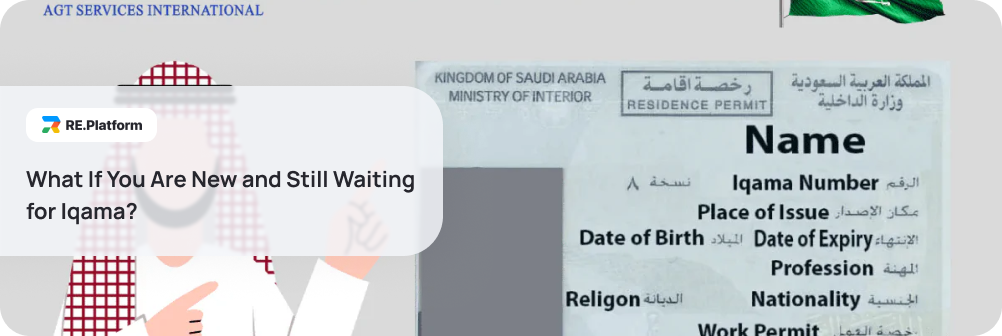
Many expats start looking for housing before their Saudi residency setup is complete. This is one of the most common relocation problems.
If you arrive before your Iqama, local mobile number, Absher access or bank setup is ready, do not rush into an informal long-term lease. Many expats use a hotel, serviced apartment, employer accommodation or short-term furnished stay for the first weeks while documents are completed.
This is not always the cheapest solution, but it can prevent bigger problems. A temporary stay gives you time to understand commute, districts, schools, apartment quality, payment expectations and the formal rental process.
Once your local documents and phone access are ready, it becomes easier to move into a standard Ejar-backed rental process. The tenant side of residential contract registration requires valid identification and a mobile number registered in Absher, so newcomers should coordinate timing with their employer or relocation contact.
The practical advice is simple: do not solve a document problem with an unofficial housing shortcut. Use temporary accommodation if needed, then sign properly when you are ready.
Compounds vs Regular Apartments: A Different Search Process
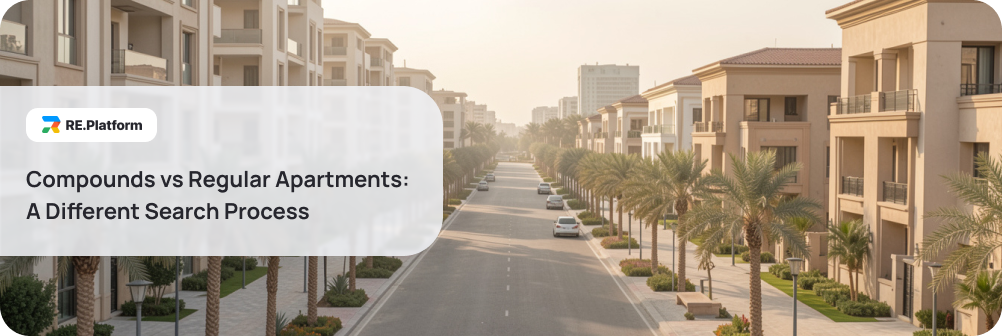
Expats looking for compounds should expect a different search process from regular apartments.
Compounds often operate through direct contact, sales offices, waiting lists, relocation agents or employer recommendations. Prices may not be fully visible online, and availability can change quickly. Some compounds are aimed at families, some at executives, and some at company housing arrangements.
Regular apartments have broader supply and are easier to compare through apps and brokers. They can offer better city access and more pricing options, but they require more responsibility from the tenant: viewing, verifying the broker, checking the building, understanding payment terms and confirming Ejar documentation.
| Option | Search process | Best for |
| Compound | Direct inquiry, waiting list, relocation support, office contact | Families, first-year relocation, soft landing |
| Regular apartment | Apps, brokers, local offices, viewings | Professionals, couples, long-term residents, value-focused tenants |
| Serviced apartment | Online booking, operator contact, flexible stay | First weeks, business trips, temporary housing |
The choice is not only about lifestyle. It is also about how much support you need during the rental process.
For expats arriving with family, compounds can reduce uncertainty. For expats who already know the city or want more local flexibility, regular apartments may make more sense.
Suggested Search Timeline for Expats
The biggest mistake is starting too late and then making a rushed payment. A safer search timeline gives you room to compare and verify.
| Timing | What to do |
| 4–6 weeks before arrival | Research city, work location, commute, temporary stay and likely districts |
| Before arrival | Ask employer about Iqama timing, housing allowance and temporary accommodation |
| First week in Saudi Arabia | Get local phone setup, understand commute and visit target areas |
| Weeks 1–3 | View apartments, compare rent, meet brokers and check buildings |
| Before signing | Confirm Ejar process, payment schedule, broker fee and included items |
| Move-in | Document condition, keys, parking, meters, AC and furnishings |
In Riyadh, it is reasonable to allow several weeks for a serious apartment search, especially if you have a family, strict commute requirements or a limited budget. In Jeddah, Khobar and Dammam, the search may be easier or harder depending on location and supply, but the same process applies.
Do not assume you will solve everything in a weekend. The apartment you choose will affect your commute, sleep, family routine and monthly budget. It deserves more than a rushed viewing.
Final Checklist: How to Find a Legit Apartment in Saudi Arabia
Use this checklist before committing to any apartment.
- Search through known apps, brokers, offices, compounds or employer-supported channels.
- Compare several listings before deciding what a fair rent looks like.
- Avoid listings that are far cheaper than similar units in the same area.
- Visit the actual apartment in person whenever possible.
- Check the building, parking, AC, water pressure, maintenance and neighborhood.
- Verify the broker or real estate office.
- Ask for ad or license details where available.
- Do not send money only to “reserve” a unit.
- Do not rely only on WhatsApp promises.
- Confirm rent, deposit, commission and payment schedule in writing.
- Make sure the lease is documented through Ejar.
- Pay through proper documented channels.
- Record the unit condition before moving in.
- Keep copies of all contract, payment and handover records.
A legitimate apartment search is not complicated, but it requires discipline. The danger is not that every listing is fake. The danger is skipping verification because the apartment looks good or the move feels urgent.
What Rental Search Behavior Tells Buyers and Investors
The expat rental search process also tells buyers and investors something important about Saudi real estate demand.
Tenants value clarity. They want real photos, accurate pricing, working AC, parking, clear furnishing status, reliable maintenance, transparent payment terms and an Ejar-ready process. They also value locations that make daily life easier: work access, schools, supermarkets, healthcare, transport and family services.
For investors, this matters. An apartment that is easy to find, easy to verify, easy to view and easy to document will usually be more attractive than a unit that only looks good in photos. Rental demand is not only about location or price. It is also about friction.
Properties with clear management, professional marketing, practical layouts, documented leasing and good maintenance are better positioned for serious tenants. This is especially true in a market where expats, families and corporate tenants are becoming more selective.
A good rental property is not just a physical unit. It is a trust experience.
Explore Saudi Residential Projects With RE.Platform
RE.Platform helps buyers and investors compare residential projects, locations and property types across Saudi Arabia and the GCC. For expats, understanding the rental process is often the first step toward understanding the broader housing market.
Many people rent first to learn the city. They test commute patterns, compare neighborhoods, understand building quality and decide whether a regular apartment, compound or long-term property investment makes sense. That rental experience can later shape buying decisions.
Let's buy property in Saudi Arabia right now!
Describe what you are interested in and we will contact you.
Send requestIn a market where listings, brokers, Ejar, regulations and project quality all matter, structured information becomes valuable. RE.Platform is built to make real estate comparison clearer — not only for people looking at one apartment, but for buyers and investors trying to understand where long-term demand may come from.
The Practical Answer
Expats can find legitimate apartments in Saudi Arabia, but they should not treat the process as a simple online search. The safest path is to separate discovery from verification and verification from contract.
Use platforms and brokers to find options. Visit the apartment before committing. Check the broker or office. Read the listing carefully. Confirm furnishing, parking, AC, payment schedule and maintenance. Do not pay informal deposits. Use Ejar for the rental contract and documented payment flow.
The apartment market can feel messy when you first arrive, but the process becomes much clearer when you know what each step is supposed to do.
Apps help you find. Viewing helps you confirm. Ejar helps you document. Payment should come only after the path is clear.
If You Still Have a Questions
Where do expats find apartments in Saudi Arabia?
Expats usually search through platforms such as Aqar, Bayut and Haraj, local real estate brokers, real estate offices, compound offices, employer support and serviced apartment operators. The best channel depends on the city, budget, language ability and whether the tenant wants a regular apartment, compound or temporary furnished stay.
What is the safest way to rent an apartment in Saudi Arabia?
The safest way is to search through known channels, view the actual apartment, verify the broker or office, confirm the lease terms, document the contract through Ejar and pay through proper documented channels. Avoid informal deposits and personal transfers before the process is clear.
Is Aqar safe for apartment hunting?
Aqar can be useful for finding apartments and understanding the local market, but it should be treated as a discovery platform. Tenants should still verify the listing, view the apartment, check the broker and complete the rental contract through Ejar.
Is Bayut useful in Saudi Arabia?
Bayut can be useful for expats because it offers a structured and more familiar property search experience. It may be especially helpful for English-language browsing, but users should still verify listings and follow the normal Ejar rental process.
Can foreigners use Haraj to find apartments?
Foreigners can use Haraj, but they should be cautious. Haraj is a broader marketplace and can be more Arabic-first than dedicated property platforms. Any listing found there should be verified carefully before viewing or payment.
Do I need a broker to rent in Saudi Arabia?
A broker is not always required, but expats may benefit from one if they do not speak Arabic, have limited time, are moving with family, need help with local areas or want support with viewings and paperwork. The broker should be verified before any payment.
How do I check if a real estate broker is legitimate?
Ask for the broker’s office details, company name, license or advertisement reference where applicable, commission structure and Ejar process. Be cautious if the broker only uses a personal number, refuses verification or pushes for personal transfers before documentation.
What is Ejar used for?
Ejar is used to document and regulate rental contracts in Saudi Arabia. It helps structure the relationship between tenant, landlord and broker, and supports contract documentation, payment tracking and rental-sector transparency.
Is Ejar a property search app?
No. Ejar is not primarily a property search app. Listing platforms and brokers help tenants find apartments, while Ejar is used to document the rental relationship and manage the official contract process.
Should I pay a deposit before Ejar?
Be very careful with any request to pay a deposit before the contract and counterparty are clear. A deposit should be tied to a documented process, not only a WhatsApp promise or a personal transfer request.
Can I rent an apartment before I get Iqama?
Many new expats use temporary accommodation, serviced apartments or employer-provided housing while waiting for Iqama and local setup. For a standard Ejar-backed rental process, tenants usually need valid identification and local mobile access, so timing should be coordinated with the employer or relocation contact.
How long does it take to find an apartment in Saudi Arabia?
It depends on the city, budget and requirements. In major cities, expats should allow several weeks for a serious search, especially if they need a family apartment, specific commute, furnished unit, compound or tight budget.
Should expats choose a compound or regular apartment?
Compounds can be better for families and newcomers who want a softer landing, more services and a familiar environment. Regular apartments can offer better city access, broader supply and stronger value, but require more independent verification and setup.
What should I check during apartment viewing?
Check the building entrance, elevators, parking, AC, water pressure, kitchen, bathrooms, windows, noise, lighting, internet availability, furnishing, maintenance process and neighborhood. Also confirm that the actual unit matches the listing.
What are the biggest red flags in Saudi rental listings?
Major red flags include unusually low rent, pressure to pay quickly, no viewing, personal bank transfer requests, no Ejar process, vague broker identity, generic photos, suspicious links and refusal to provide office or license details.
How should rent be paid in Saudi Arabia?
Rent should be paid through proper documented channels after the rental contract is clear. For residential contracts, Ejar digital payment channels help provide a stronger payment record and reduce disputes.
Are furnished apartments easier for new expats?
Furnished or serviced apartments are often easier for the first weeks or months because they reduce setup work. However, tenants should still inspect furniture, appliances, AC and inventory before signing.
What should families check before renting?
Families should check commute, school access, parking, storage, AC, maintenance, building safety, noise, nearby services and whether the apartment is family-friendly. They should also consider whether a compound or regular apartment better fits the first year in Saudi Arabia.
Can I trust apartment photos online?
Photos are useful but not enough. They may be outdated, selective or reused. Always view the actual apartment or ask for a live walkthrough if you are not yet in Saudi Arabia, then verify details before payment.
What should I do if a broker asks for money to reserve the apartment?
Pause and verify. Ask for contract details, Ejar process, office information and documentation. Do not send money to a personal account only to “hold” an apartment unless the process is fully verified and documented.
Is it better to start with temporary accommodation?
For many expats, yes. Temporary accommodation can be a safer first step while documents are completed, commute is tested and long-term areas are compared. It may cost more upfront, but it can prevent a rushed and risky lease decision.