Browse by category


For expats moving to Saudi Arabia, the choice between a furnished and unfurnished apartment is rarely just about furniture. It is about cash flow, timing, lease risk, lifestyle and how much uncertainty you want to absorb during the first weeks in a new country.
A furnished apartment can make relocation easier. It saves time, reduces the need to buy furniture immediately and gives newcomers a faster landing. That is useful for short assignments, first arrivals, consultants, single professionals and people who are still learning the city.
An unfurnished apartment can be better value over a longer period. The rent may be lower, the tenant has more control over quality, and the apartment can be set up properly for family life. But the first month can be expensive. Beds, mattresses, curtains, appliances, delivery, cleaning, internet setup and kitchen items can arrive at the same time as rent, deposit and broker fees.
The overlooked middle option is semi-furnished. In many cases, this is the most practical format for expats in Saudi Arabia: the apartment may already have air conditioning, kitchen cabinets or selected appliances, while the tenant buys beds, sofas and personal furniture.
The right decision depends on one question: are you paying for convenience because you need it now, or are you setting up a home that needs to make sense for the next year or two?
Table of Contents
Quick Answer: Furnished, Semi-Furnished or Unfurnished?
Expats staying in Saudi Arabia for less than six months usually benefit from a furnished or serviced apartment. Expats staying for six to twelve months should strongly consider semi-furnished options. Families and long-term residents staying for more than a year often get better value from unfurnished or semi-furnished apartments, as long as they can manage the initial setup cost.
| Housing type | Best for | Main advantage | Main risk |
|---|---|---|---|
| Furnished apartment | Short stays, first arrivals, single professionals, consultants | Fast move-in and lower setup effort | Higher rent, uneven furniture quality, more deposit risk |
| Semi-furnished apartment | Expats staying 6–18 months, couples, flexible relocations | Balance between convenience and value | The tenant must verify exactly what is included |
| Unfurnished apartment | Families, long-term residents, budget-conscious tenants | More control and stronger long-term value | High first-month setup cost |
| Serviced apartment | Executives, project workers, temporary stays | Maximum convenience and flexibility | Often expensive as a long-term solution |
The mistake is comparing rent only. A furnished apartment may look expensive but save thousands in setup costs and days of work. An unfurnished apartment may look cheaper but require a larger first-month budget. The real comparison is not monthly rent versus monthly rent. It is total cost, convenience and risk over the expected stay.
The Real Decision Is About Time Horizon
The shorter the stay, the more valuable convenience becomes. The longer the stay, the more expensive convenience can become.
If you are coming to Saudi Arabia for three months, a furnished apartment is usually the cleaner choice. You do not want to spend the first two weeks buying furniture, arranging deliveries and setting up appliances. If you are arriving for a new job and your family will come later, a furnished or serviced unit can buy time while you understand the city.
If you are staying for two years, the logic changes. Paying a monthly premium for furniture you did not choose may make less sense. A family may prefer better mattresses, safer furniture, more storage and appliances selected for daily use. A long-term tenant may recover the setup cost over time by paying lower rent.
The break-even point is not the same for everyone. It depends on rent difference, furniture cost, delivery cost, family size, employer support and whether you can resell furniture later.
A simple rule works well: choose furnished when uncertainty is high; choose unfurnished when stability is high; choose semi-furnished when you need a practical middle ground.
What “Furnished” Usually Means in Saudi Arabia
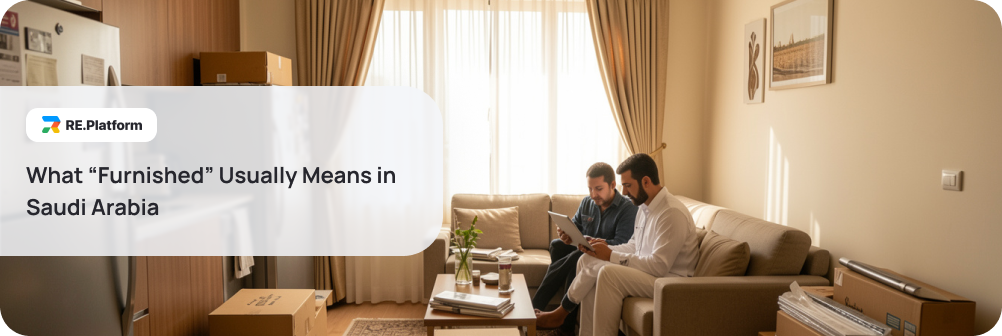
A furnished apartment in Saudi Arabia usually includes basic furniture and selected appliances. It may come with beds, mattresses, sofa, dining table, refrigerator, washing machine, curtains, air conditioning and a fitted kitchen. Some higher-end or serviced units may also include kitchenware, internet, cleaning or utility support.
But “furnished” is not a quality guarantee.
One furnished apartment may be genuinely move-in ready. Another may simply have old furniture placed inside to justify a higher rent. The photos may show a clean living room, but they rarely tell you whether the mattress is comfortable, the washing machine is reliable, the sofa is stained, the AC cools properly or the kitchen equipment is usable.
That is why furnished apartments need careful inspection. You are not only renting the apartment. You are renting the condition of everything inside it.
Before signing, check the essentials. Open the refrigerator. Test the washing machine if possible. Ask about AC servicing. Look at the mattress. Check curtains and storage. Confirm whether internet is included. Ask who repairs appliances if they fail. If the unit is advertised as furnished, ask for an inventory list.
The most important line for expats is this: furnished means faster move-in, not automatically better living.
What “Unfurnished” Can Mean — and Why Expats Misread It
Unfurnished apartments in Saudi Arabia can be more empty than many expats expect. In some countries, an unfurnished apartment still comes with a fitted kitchen, appliances, curtains or basic built-ins. In Saudi Arabia, you should not assume that.
An unfurnished unit may not include beds, sofa, refrigerator, washing machine, curtains, TV, kitchen equipment or internet. In some cases, tenants also need to check whether air conditioning is installed and whether kitchen cabinets are already fitted.
This is where many relocation budgets break. The tenant compares the rent and sees that the unfurnished apartment is cheaper. Then the first month arrives: bed, mattress, fridge, washing machine, curtains, sofa, delivery, assembly, kitchen equipment, cleaning and internet setup. Suddenly the cheaper apartment requires a significant cash outlay before life becomes comfortable.
| Item | Furnished | Semi-furnished | Unfurnished |
| Bed and mattress | Usually included | Sometimes not included | Usually not included |
| Sofa and dining table | Usually included | Sometimes not included | Usually not included |
| Refrigerator | Often included | Sometimes included | Usually not included |
| Washing machine | Often included | Sometimes included | Usually not included |
| Air conditioning | Usually included | Often included, but still check | Must be checked |
| Kitchen cabinets | Usually included | Often included | Must be checked |
| Curtains | Often included | Sometimes included | Usually not included |
| Internet | Sometimes in serviced units | Rarely included | Usually not included |
| Kitchenware | Sometimes included | Rarely included | Not included |
The practical approach is to stop asking whether the apartment is furnished or unfurnished and start asking what is actually included.
Semi-Furnished Apartments: The Format Many Expats Should Look For
Semi-furnished apartments can be the smartest option for expats who want to avoid the hardest setup problems without paying the full premium of a furnished unit.
The exact definition varies. In one apartment, semi-furnished may mean AC, kitchen cabinets and curtains. In another, it may include major appliances such as a refrigerator or washing machine. In a third, it may mean very little. The label is useful only when the included items are listed clearly.
The best semi-furnished apartment removes the expensive or complicated parts of setup. Air conditioning, kitchen readiness, curtains and major appliances are the items that matter most. Beds and sofas are easier to buy based on personal preference.
This format often works well for couples, families arriving with some time to settle, and expats staying for at least six months but not ready to commit to a full home setup from scratch. It can also be useful if the tenant wants better furniture than a landlord would provide but does not want to deal with every appliance and fixture.
Semi-furnished is not automatically better than furnished or unfurnished. It is better when the included items are expensive, functional and clearly documented.
Cost Logic: The Rent Premium vs the Setup Bill
A furnished apartment usually costs more because the landlord is selling convenience. An unfurnished apartment usually costs less because the tenant accepts the setup burden. Semi-furnished sits between the two.
But the true cost is not visible in the rent line alone.
| Cost factor | Furnished | Semi-furnished | Unfurnished |
| Rent | Usually higher | Middle range | Usually lower |
| Initial setup cost | Low | Medium | High |
| Furniture purchases | Minimal | Partial | Significant |
| Appliance purchases | Usually low | Depends on included items | Often significant |
| Delivery and assembly | Minimal | Possible | Likely |
| Flexibility | Strong for short stays | Balanced | Strong for long stays |
| Deposit dispute risk | Higher | Medium | Lower, but still possible |
| Long-term value | Often weaker | Often balanced | Often stronger |
The better formula is:
Real cost = rent + setup cost + delivery + utilities + deposit risk + time cost
A furnished apartment can be the cheaper decision for three months. An unfurnished apartment can be the cheaper decision for two years. A semi-furnished apartment may win when the tenant wants to avoid the biggest setup costs but still control furniture quality.
The financial question is not “Which rent is lower?” It is “How long do I need to live there before this choice starts making sense?”
Short-Term Stays: Why Furnished Usually Wins
For stays under six months, furnished usually wins. The tenant gets speed, simplicity and flexibility.
This is especially true for consultants, project workers, executives on short assignments, people in probation periods and newcomers who are not ready to choose a long-term district. A furnished or serviced apartment lets them test the commute, understand the city and avoid buying furniture before they know where they actually want to live.
The same applies when one family member arrives first. If the employee moves to Saudi Arabia before the spouse and children, a furnished apartment can work as a temporary base. It reduces pressure while the family decides whether to live near schools, near work, in a compound, in a regular apartment or in a quieter residential district.
The downside is that short-term convenience can become an expensive habit. A furnished apartment that makes sense for three months may not make sense for two years. Once the tenant understands the city and the job situation is stable, it is worth reassessing.
Furnished housing should often be seen as a landing tool, not necessarily a long-term strategy.
Long-Term Stays: Why Unfurnished Often Wins
For long-term stays, unfurnished apartments often offer better value. The tenant pays once for furniture and appliances instead of paying a monthly premium for the landlord’s furniture.
Unfurnished also gives more control. Families can choose proper mattresses, storage, child-friendly furniture and appliances that match daily routines. Long-term residents can build a more comfortable home instead of accepting a generic furnished package.
But the first month can be heavy. Rent, deposit, broker fee, furniture, appliances, curtains, delivery, cleaning and internet may all arrive at once. If the employer pays housing late or salary has not yet arrived, this can create pressure.
That does not mean unfurnished is bad. It means unfurnished requires planning. The tenant should estimate setup cost before signing. If the setup budget is too high, semi-furnished may be more realistic.
Unfurnished is often the better long-term decision, but only if the tenant has the cash flow and time to make it work.
Families vs Single Professionals
The right choice changes by household type. A single professional, a couple and a family with children are not solving the same problem.
| Tenant type | Usually better option | Why |
| Single professional | Furnished or semi-furnished | Faster move-in and less setup |
| Couple | Semi-furnished or unfurnished | Better balance between comfort and cost |
| Family with children | Semi-furnished or unfurnished | More control over beds, storage, safety and appliances |
| Consultant or project worker | Furnished or serviced | Short stay and low commitment |
| Long-term expat | Unfurnished | Stronger value and customization |
| New arrival without a car | Furnished or serviced | Avoids immediate logistics |
| Employer-paid housing | Furnished may be worth it | Convenience may matter more than savings |
Families should be careful with fully furnished apartments. Furniture quality matters more when children live there. Storage matters. Mattress quality matters. Appliance reliability matters. A furnished apartment can look elegant in listing photos but be impractical for daily family life.
Single professionals can often accept smaller furnished units if the location is strong and the stay is short. For them, commute and speed may matter more than owning the furniture.
The best choice is the one that fits the household, not the one that sounds more convenient in theory.
Does the City Change the Decision?
This is a Saudi-wide question, but the city changes the available options.
In Riyadh, furnished and serviced apartments are common in corporate relocation scenarios, especially near business hubs and high-demand urban areas. They are useful for people arriving quickly, but furnished premiums can become expensive if the stay turns long term.
In Jeddah, lifestyle and mobility can shape the decision more sharply. A furnished apartment may be convenient, but location matters heavily. A cheaper furnished unit far from work or daily services can quickly become inconvenient, especially for someone without a car.
In Khobar and Dammam, the decision often connects to corporate work, family life and Eastern Province mobility. Furnished units may work for short assignments, while semi-furnished and unfurnished options can be stronger for families and longer stays.
In smaller Saudi cities, the tenant may not have a perfect range of choices. The priority then becomes practical: AC, kitchen readiness, appliances, parking, commute, Ejar documentation, deposit protection and building maintenance.
The city changes the market depth. It does not change the decision logic.
Hidden Costs of Unfurnished Apartments
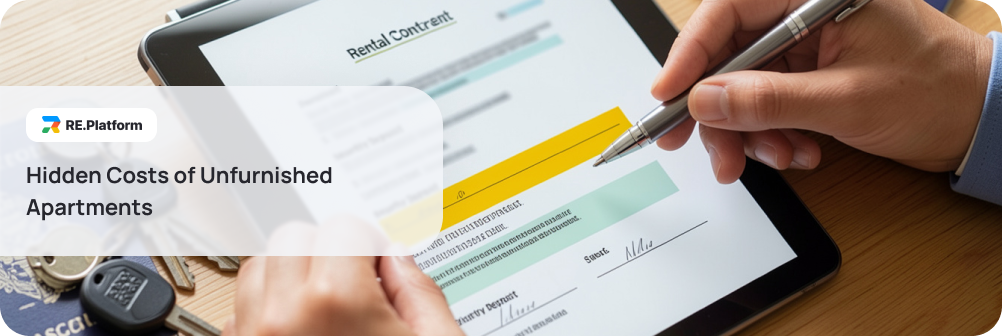
Unfurnished apartments can look cheaper until the tenant starts listing everything missing. The rent may be lower, but the setup bill can be serious.
The common costs include beds, mattresses, sofa, dining table, refrigerator, washing machine, oven, microwave, curtains, kitchen equipment, cleaning, delivery, assembly, internet setup and moving costs. Depending on the unit, tenants may also need to check AC servicing, kitchen readiness and basic fixtures.
The most underestimated costs are not always the large items. Curtains, delivery, assembly, kitchen basics and cleaning can add up quickly. The tenant may also lose time coordinating multiple suppliers, especially without a car or local support.
| Setup item | Why it matters |
| Bed and mattress | Needed immediately |
| Refrigerator | Major first-week appliance |
| Washing machine | Essential for families and long stays |
| Curtains | Privacy, sunlight and heat control |
| Sofa and dining table | Quality-of-life cost |
| Kitchen equipment | Often forgotten until move-in |
| Delivery and assembly | Can be difficult without local support |
| Internet setup | May take time depending on building and provider |
| Cleaning before move-in | Often necessary even in newer apartments |
Before choosing unfurnished, build a basic setup estimate. If the first-month cost becomes uncomfortable, semi-furnished may be the better decision.
Furnished Apartments: What to Check Before Signing
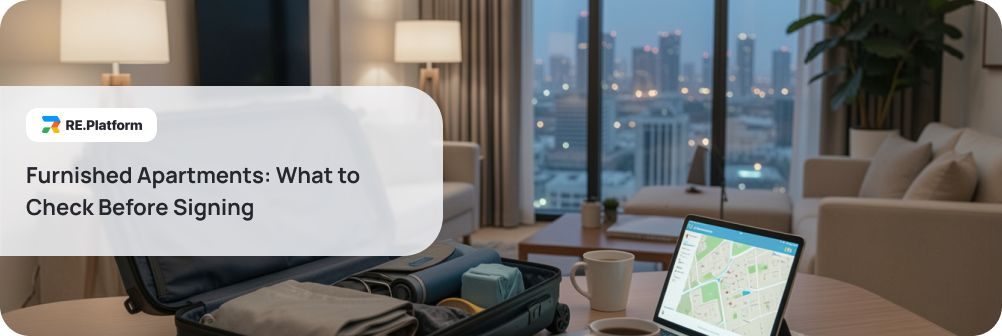
A furnished apartment should be inspected more carefully than an unfurnished one because there are more items that can fail, disappoint or cause disputes.
Start with the mattress, sofa and appliances. Then check AC performance, curtains, storage, refrigerator, washing machine, oven, microwave, water pressure, lighting and kitchen equipment. Ask whether internet is included, whether utilities are separate and who handles appliance repairs.
Do not assume that a furnished apartment includes everything needed for normal living. A bed without a good mattress is a problem. A kitchen without basic equipment is not fully ready. A washing machine that barely works can become a daily frustration.
| Furnished apartment check | Why it matters |
| Mattress condition | Directly affects daily comfort |
| Sofa and chairs | Common source of stains and damage disputes |
| Appliance age | Old appliances may fail quickly |
| AC performance | Critical in Saudi climate |
| Curtains and blinds | Privacy and heat control |
| Kitchen equipment | Determines whether the unit is truly move-in ready |
| Internet | May or may not be included |
| Cleaning condition | Affects move-in experience |
| Inventory list | Protects deposit and reduces disputes |
| Replacement policy | Important if appliances break |
A furnished apartment should make life easier. If it creates uncertainty around every item, the premium is not doing its job.
Deposit Risk Is Higher in Furnished Apartments
Furnished apartments usually carry higher deposit risk because more items are included in the lease. Every stain, scratch, missing item or appliance issue can become a move-out dispute.
This does not mean furnished apartments are unsafe. It means inventory matters.
The tenant should ask for a written inventory before or at handover. The inventory should list furniture, appliances, curtains, electronics and any included kitchen items. It should also record existing damage. If there is no formal inventory, the tenant should create a photo and video record and share any issues in writing immediately.
Before moving in, record walls, floors, sofa, beds, mattresses, tables, chairs, appliances, curtains, bathroom fixtures, kitchen surfaces and AC units. If something is damaged, stained, missing or not working, document it before daily use begins.
At move-out, repeat the process. Clean the unit, record the condition, return keys properly and ask for written confirmation of any deductions.
The strongest deposit protection is not arguing later. It is documenting earlier.
What to Ask the Landlord or Broker
The right questions can prevent most furnished versus unfurnished problems. Ask them before signing, not after move-in.
| Question | Why it matters |
| What exactly is included? | Avoids vague furnished or semi-furnished claims |
| Are AC units installed and serviced? | Essential in Saudi Arabia |
| Are kitchen cabinets included? | Major setup issue in unfurnished units |
| Are appliances included? | Fridge and washing machine can change the budget |
| Who repairs appliances? | Furnished units often create responsibility disputes |
| Is internet included? | Common confusion in furnished and serviced units |
| Is there an inventory list? | Protects the deposit |
| Can I remove or replace furniture? | Important for families and long stays |
| What is the payment schedule? | Helps manage cash flow |
| Is the lease documented through Ejar? | Supports contract clarity |
| How is the deposit handled? | Reduces move-out disputes |
| What happens if I leave early? | Important for expats with uncertain plans |
A professional landlord or broker should answer clearly. If the response is vague, the apartment may still be real, but the risk is higher.
How Ejar and Handover Fit Into the Decision

Ejar matters for furnished and unfurnished apartments because the lease should document the core terms: rent, payment method, deposit and the obligations of each side. For furnished apartments, the handover process becomes even more important because the apartment contains more items that can be disputed later.
The tenant should read the contract carefully and make sure the commercial terms match what was agreed: rent, payment schedule, deposit, maintenance, utilities, furnishing and contract dates. If the apartment is furnished, the inventory should be treated as part of the practical lease record.
The move-in condition should also be documented. This is not only about protecting the tenant. It also protects the landlord because both sides have a clearer record of the apartment at the start of the lease.
Unfurnished apartments have fewer furniture-related disputes, but they still require handover checks. Walls, floors, AC, plumbing, doors, windows, kitchen, bathrooms and parking should still be recorded.
Whether the apartment is furnished or unfurnished, documentation turns memory into evidence.
Decision Framework: Which Option Should You Choose?
The best option depends on stay length, cash flow, family situation, employer support and how quickly you need to settle.
| Situation | Usually better choice |
| Staying under 6 months | Furnished or serviced apartment |
| Staying 6–12 months | Semi-furnished apartment |
| Staying over 12 months | Unfurnished or semi-furnished |
| Moving alone | Furnished or semi-furnished |
| Moving with family | Semi-furnished or unfurnished |
| Employer covers housing | Furnished may be worth the premium |
| Paying out of pocket | Unfurnished may win long term |
| No car and no local support | Furnished or serviced apartment |
| Want full control over quality | Unfurnished |
| Unsure about city or job location | Furnished or serviced first |
| Planning to buy later | Furnished or semi-furnished while learning the market |
Choose furnished when uncertainty is high and time is limited. Choose unfurnished when the stay is long and value matters more than speed. Choose semi-furnished when you want to avoid the hardest setup costs without paying for a full furniture package.
Should Expats Buy New or Used Furniture?
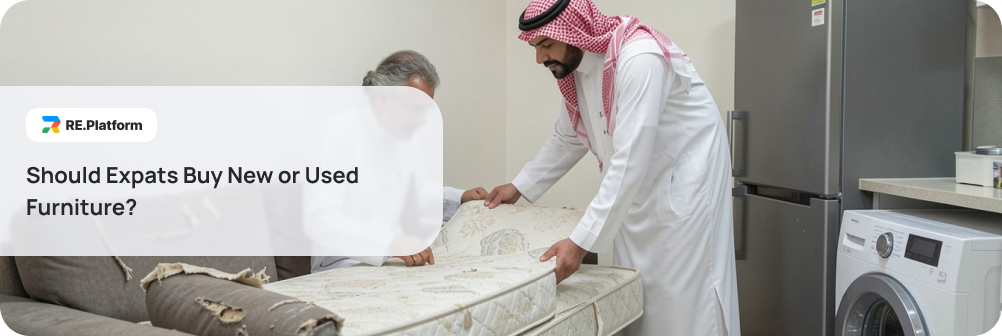
For unfurnished apartments, furniture strategy matters. New furniture gives predictability, cleaner delivery and easier coordination. Used furniture can reduce costs but requires time, inspection and transport planning.
Used furniture can make sense for shorter stays or tighter budgets. It is less attractive if the tenant has no car, no time, no local support or needs reliable delivery quickly. New furniture can make sense for families and long-term residents who want better quality and consistency.
A mixed approach often works best. Buy mattresses and essential appliances carefully. Consider used items for secondary furniture. Avoid overinvesting until you understand how long you will stay and whether you may move again.
The apartment may be temporary even if the furniture feels permanent. The budget should reflect that.
What This Means for Buyers and Investors
The furnished versus unfurnished decision also says something important about the Saudi property market. Tenants are not only looking at rent and location. They are looking at friction.
A rental apartment becomes easier to lease when it solves practical problems: working AC, usable kitchen, appliance space, storage, parking, good handover process, clear maintenance and flexible setup. A beautiful apartment with weak practical details can disappoint tenants quickly.
For investors, furnished apartments can attract short-stay demand, consultants and newly arrived expats. But poor furniture quality can damage satisfaction and create management problems. Unfurnished apartments can attract long-term tenants, but only if the unit is easy to set up and live in. Semi-furnished units can be especially attractive because they reduce the hardest setup barriers without forcing tenants to accept a full furniture package.
The best rental properties do not only photograph well. They reduce the tenant’s work after signing.
Explore Saudi Properties With RE.Platform
For expats and buyers comparing housing options in Saudi Arabia, RE.Platform helps make the search more structured. Instead of looking only at isolated listings, users can compare residential projects, property types, locations and development details across Saudi markets.
The furnished versus unfurnished decision is useful for buyers too. A property is not only a price per square meter. It is a living product. The easier it is to furnish, maintain, document and rent, the stronger its long-term appeal can become.
Let's buy property in Riyadh right now!
Describe what you are interested in and we will contact you.
Send requestFor renters, the decision is about comfort, timing and cash flow. For buyers, it is also about future demand. Apartments that work well for real residents are better positioned in a market where tenants are becoming more selective.
The Practical Answer
Furnished apartments in Saudi Arabia are best when convenience matters more than long-term savings. They work well for short stays, first arrivals, single professionals, consultants and anyone who needs to reduce setup stress. But they should be inspected carefully because furniture quality and deposit risk can vary.
Unfurnished apartments are often better for long-term value. They suit families, longer stays and tenants who want control over furniture, appliances and layout. But they require a serious setup budget and more planning.
Semi-furnished apartments may be the strongest middle ground. They can remove the hardest setup problems while avoiding the full premium of furnished rent.
The best choice is not the apartment with the most furniture. It is the apartment where the cost, contract, included items, deposit and daily lifestyle all make sense for the way you will actually live in Saudi Arabia.
If You Still Have a Questions
Is furnished or unfurnished better in Saudi Arabia?
Furnished is usually better for short stays, first arrivals and single professionals who want fast move-in. Unfurnished is often better for families and long-term expats because it gives more control and can be cheaper over time. Semi-furnished is often the best middle option.
What does unfurnished mean in Saudi Arabia?
Unfurnished can mean the apartment is almost empty. Tenants should not assume that appliances, curtains, kitchen equipment or furniture are included. Always check AC, kitchen cabinets, refrigerator, washing machine and curtains before signing.
Are AC units included in unfurnished apartments in Saudi Arabia?
AC may be included in some apartments, but tenants should always check. Air conditioning is critical in Saudi Arabia, and whether it is installed, serviced and working properly can significantly affect comfort and setup cost.
Are kitchen cabinets included in unfurnished apartments?
Sometimes, but not always. Kitchen cabinets should be checked during the viewing. If the kitchen is not ready, the tenant may face additional setup costs for cabinets, appliances and basic kitchen equipment.
What is a semi-furnished apartment?
A semi-furnished apartment usually includes selected essentials, such as AC, kitchen cabinets, curtains or some appliances, but not a full furniture package. The exact meaning varies, so tenants should ask for a written list of included items.
Is furnished better for short-term stays?
Yes. Furnished or serviced apartments are usually better for stays under six months because they reduce setup time, furniture purchases and delivery problems. They are especially useful for consultants, executives and new arrivals.
Is unfurnished cheaper long term?
Unfurnished can be cheaper long term because the tenant buys furniture once instead of paying a furnished rent premium every month. But it only makes sense if the tenant stays long enough to justify the setup cost.
What should I check in a furnished apartment?
Check the mattress, sofa, appliances, AC, curtains, kitchenware, washing machine, refrigerator, internet, cleaning condition and inventory list. Tenants should also clarify who repairs or replaces appliances if they fail.
How do deposits work for furnished apartments?
Furnished apartments carry higher deposit risk because more items are included. Tenants should document the condition of furniture, appliances and fixtures at move-in with photos, videos and an inventory list.
Should families choose furnished or unfurnished apartments?
Families often benefit from semi-furnished or unfurnished apartments because they can choose their own beds, storage, appliances and child-friendly furniture. Furnished can work for temporary stays, but quality and inventory should be checked carefully.
Should single professionals choose furnished apartments?
Single professionals often find furnished or semi-furnished apartments more practical, especially during the first months in Saudi Arabia. They reduce setup work and make it easier to move quickly.
Is Jeddah different from Riyadh for furnished rentals?
Yes, availability and location dynamics can differ. Riyadh has strong corporate demand for furnished and serviced units in business areas. In Jeddah, location and car access can be especially important. In both cities, tenants should check what is actually included.
Are furnished apartments common in Khobar and Dammam?
Furnished and semi-furnished options exist in the Eastern Province, especially because of corporate and expat demand. The same checks apply: appliances, AC, parking, contract terms, deposit and inventory.
Should I buy new or used furniture in Saudi Arabia?
New furniture is easier and more predictable, but more expensive. Used furniture can save money, especially for shorter stays, but requires inspection, delivery planning and more time. Many expats use a mixed approach.
Can expats rent furnished apartments in Saudi Arabia?
Yes, expats can rent furnished apartments in Saudi Arabia, subject to normal rental documentation and contract requirements. They should still check Ejar documentation, payment terms, deposit, inventory and move-in condition.
What should be written in the inventory?
The inventory should list furniture, appliances, electronics, curtains, kitchen items and visible condition. It should also record existing damage, stains, scratches or missing items before the tenant moves in.
Is a serviced apartment the same as a furnished apartment?
No. A serviced apartment is usually furnished and may include services such as cleaning, utilities, reception or flexible stay terms. A furnished apartment may only include furniture and appliances without hotel-style services.
What is the biggest mistake expats make with unfurnished apartments?
The biggest mistake is underestimating setup cost. Rent may be lower, but furniture, appliances, curtains, delivery, cleaning and internet setup can create a large first-month expense.
What is the biggest mistake expats make with furnished apartments?
The biggest mistake is assuming “furnished” means good quality. Tenants should inspect every major item, ask what is included, clarify maintenance responsibility and document the handover condition.
Should I choose furnished if my employer pays housing?
If the employer covers the cost, furnished may be worth it for convenience, especially during the first year. But even with employer support, tenants should still check quality, inventory, deposit and contract terms.
What is the best option for the first month in Saudi Arabia?
For the first month, furnished or serviced accommodation is often the safest and easiest option. It gives the tenant time to understand the city, commute, districts and rental market before committing to a long-term lease.